
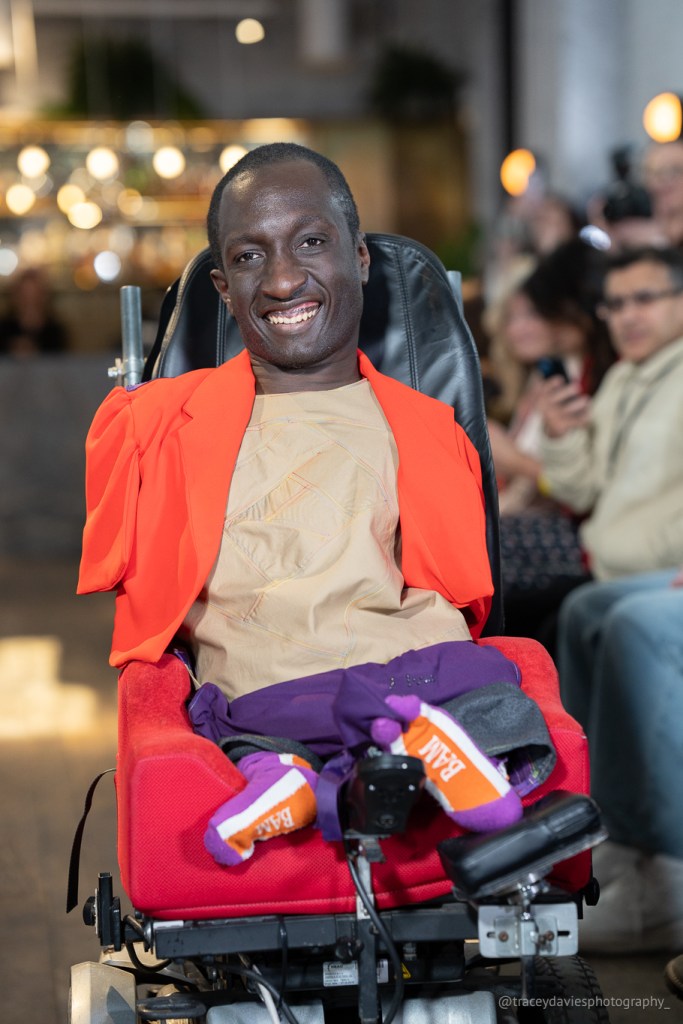
Samanta Bullock’s Future of Fashion Show proves that true style embraces every body, every ability, and every story.
neun Magazine had the honour of attending an unforgettable fashion show where style meets representation. Amongst the expected happenings in London during its bi-annual fashion week, on 22nd February 2025, in an accessible venue in Hammersmith, one woman had been planning to challenge the status quo. The Future of Fashion Show is the brainchild of Samanta Bullock, one of the truly impactful disruptors of the fashion industry, whose mission it is to make it authentic, inclusive and representative.
Before the event, I spoke to the woman in question, Samanta Bullock, a former number one wheelchair tennis player from Brazil, who won the silver medal in the doubles for tennis in the 2007 ParaPanAm Games. Samanta had been playing tennis from the age of eight but became paraplegic when she was 14 years old. She had also been modelling at that time, until the accident, which ended her modelling career back then.
In her words: “I could never understand why I couldn’t be a model any more, because I just wanted to put the chair on the catwalk and be on the catwalk.”
This experience has always been a huge reason in Samanta’s life, so much so that it became the motivation for The Future of Fashion Show, as well as all other inclusive projects she has been working on so far.
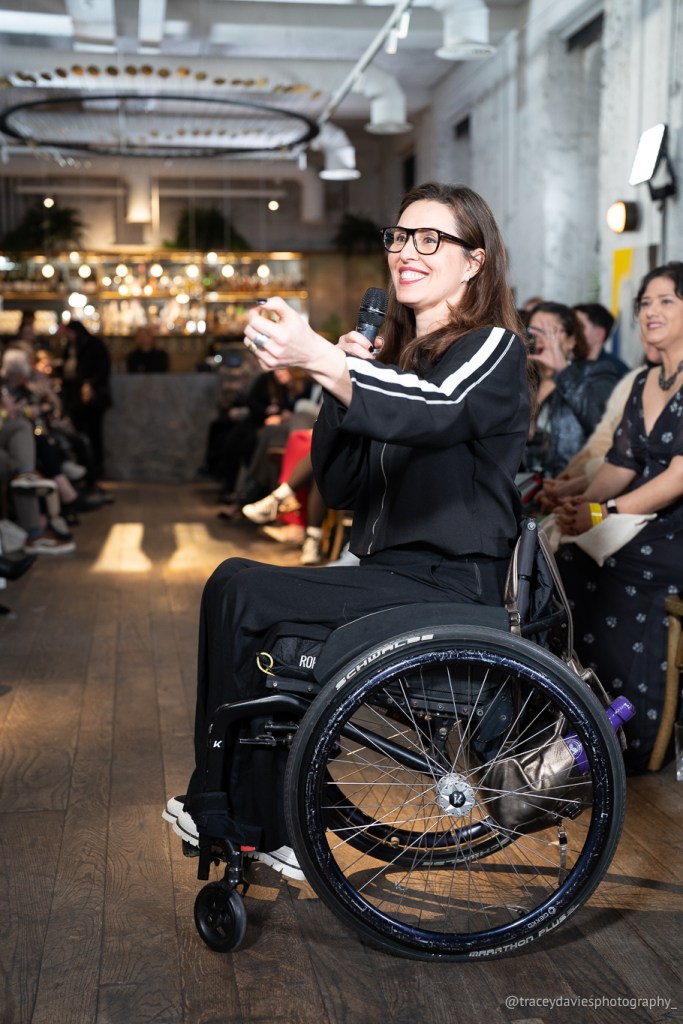
Incidentally, it was sport that allowed Samanta to find a way back to modelling. Because of her profile as a top tennis player in Brazil, she was offered to model for companies selling wheelchairs and tennis products, and she saw an opportunity to return to what she enjoyed:
“Modelling was and is one of my big passions. I love to be on the catwalk. I love to take pictures,” she tells me with a smile that could light up the darkest of rooms and a truly infectious confidence. True to Samanta’s can-do-attitude, after her retirement from tennis, she decided to change careers and the common narrative in fashion.
“I wanted to make a heavy impact on the fashion industry. I could see that sport was and is so much more ahead in terms of inclusivity and representation. We have the Paralympics, so many disabled people are on TV, but in fashion, there was nothing.”
She found it particularly disheartening, given that a much smaller percentage of the population engages in sporting activities. “But with fashion, that’s 100% of the population! Everyone needs clothes!”
Samanta’s mission eventually led her to set up a community interest company, Bullock Inclusion, that has been working tirelessly to push for positive change in the fashion industry. With a partner, she soon began organising fashion shows, such as London Represents, and working with models, to ensure brands that catered for people with a disability would be seen and were modelled by the right people.
And this year, on a Saturday evening in the beautiful halls of Kindred community space, Samanta brought her first solo-produced fashion show, The Future of Fashion, to life.
To start the event, and talking about this small, but powerful disruption of London Fashion Week was a panel of four big names in the fashion industry: Harriet Posner (a fashion educator at Condé Nast College of Fashion & Design), Victoria Jenkins (adaptive fashion designer, founder and CEO of Unhidden), Ryan Zaman (writer, editor and model), and Victoire Kivandou (a campaigner working with fashion brands to champion diversity, inclusion and sustainability). Hosted by Caryn Franklin (a fashion and identity commentator and former BBC TV presenter, they discussed The Future of Fashion, their hopes and dreams for a truly inclusive and accessible space in fashion for every body, but also highlighted the persistent obstacles and barriers faced by those who want to foster and drive sustainable and inclusive change.
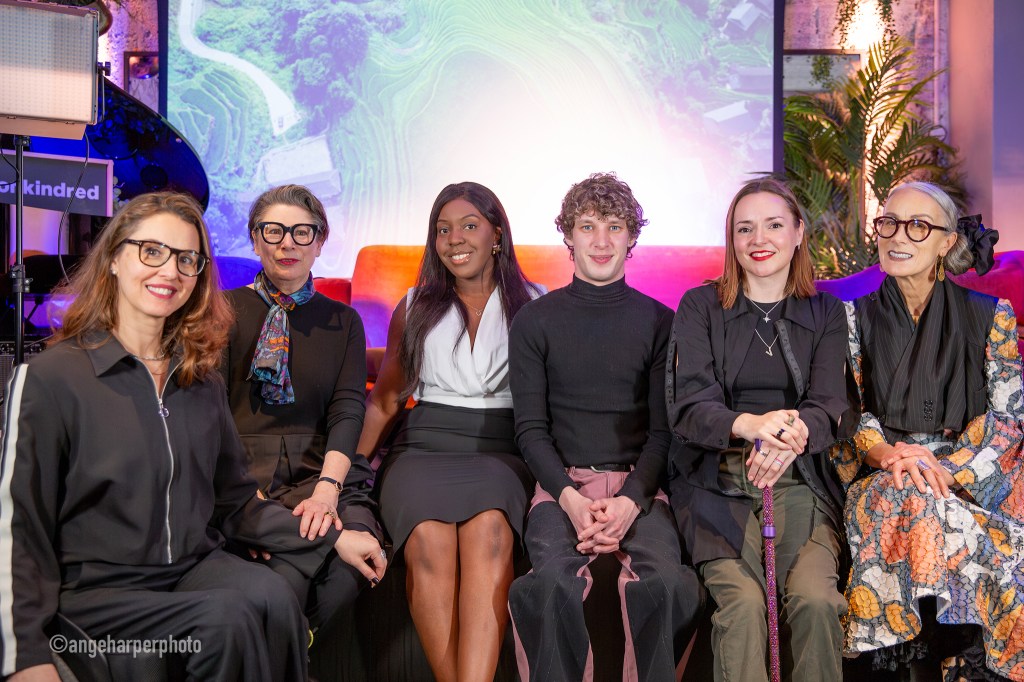
Victoria Jenkins, who recently collaborated with Primark to launch their first adaptive clothing range on the high street, noted that despite all the efforts to make fashion more inclusive and adaptive, laws, regulations and the media still make it very difficult for those changes to become mainstream.
“There’s a reason not many people know about adaptive fashion and that is because of digital ableism. For example, if you use Alt text on Instagram or other Meta platforms, if you use inclusive hashtags in your posts, it will reduce your reach. And that’s not just the case for adaptive fashion brands. I’ve worked at Kurt Geiger’s head office, and they said the exact same thing: Whenever they did a campaign around ethnicity or disability, their reach and engagement plummeted. That’s the algorithm working actively against us. And that’s only one of the problems.”
Another problem, Jenkins explained, is that in 2022, the disabled community became a protected characteristic, which means they can’t be targeted for adverts (to avoid fake medical products being sold to disabled people). As a result, if companies want to sell adaptive clothing and they promote it with a model using a wheelchair, the image gets taken down – as if they were trying to sell something medical – because there is a wheelchair in the photo. “And if you post too many of those photos, your account will be suspended.”
There was a palpable sense of surprise and shock, and a lot of head-shaking from the audience at that revelation, which was an uncomfortable truth. As Harriet Posner poignantly put it: “(Social) media promotion is actively working against inclusive and adaptive fashion – and that is horrifying.”
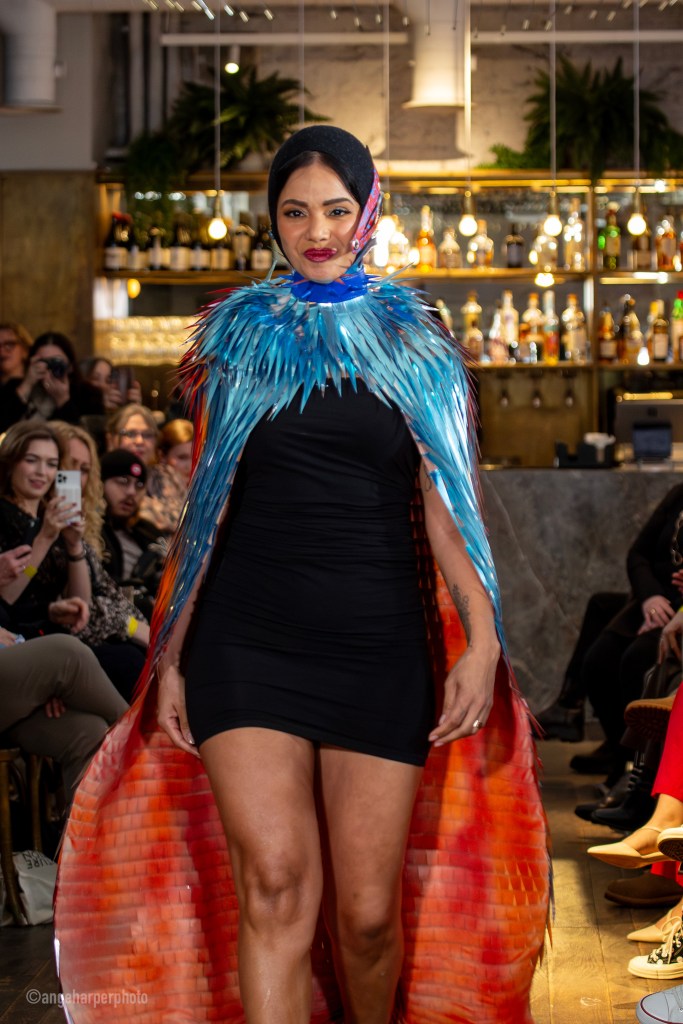
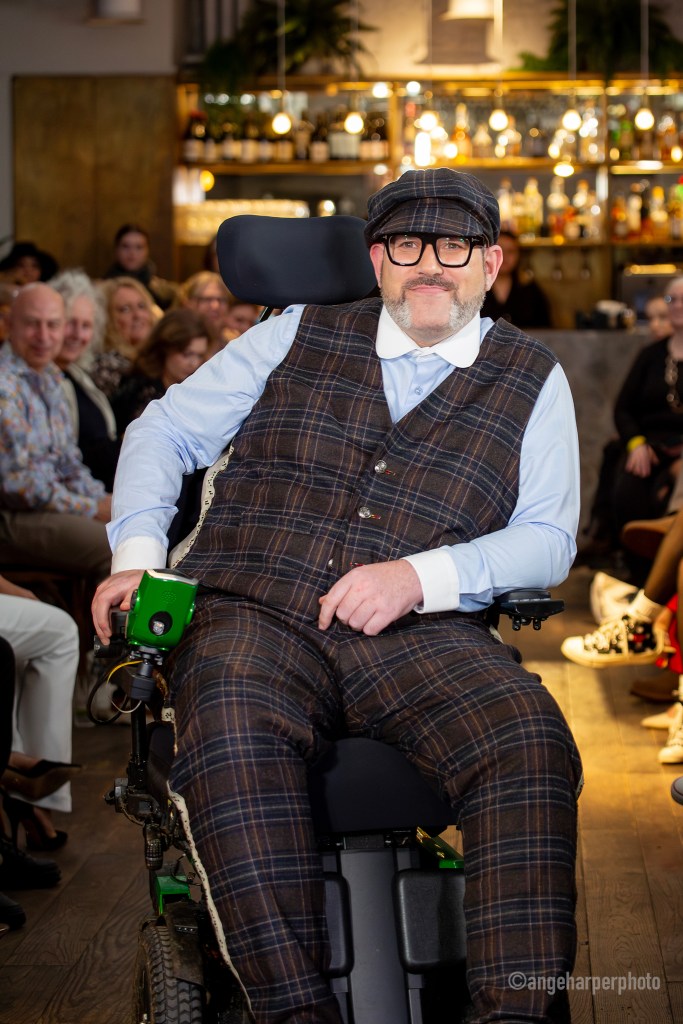
The informative panel talk that gave plenty of food for thought for everyone in attendance, was followed by the first catwalk show, which saw the models showcase adaptive clothing that had been designed and made for them by students from Central Saint Martins under Samanta’s lead. She was adamant that the students shouldn’t just design and create the clothing, they had to meet and liaise with the models. They shouldn’t just understand their sizes and bodies, but most importantly, to talk to them and understand their sartorial needs.
“Some of the students have never had contact with someone who is disabled, and they need to learn more about them so they can cater for the disabled community.” They had a variety of models to work with, Samanta tells me, people with dwarfism, with a missing limb, wheelchair users, people on crutches or with visual impairments. All clothes were designed to meet the needs and work for the bodies of people, and not the other way around, which, in an industry that seems so focused on an “ideal” body, is more than a little revolutionary.
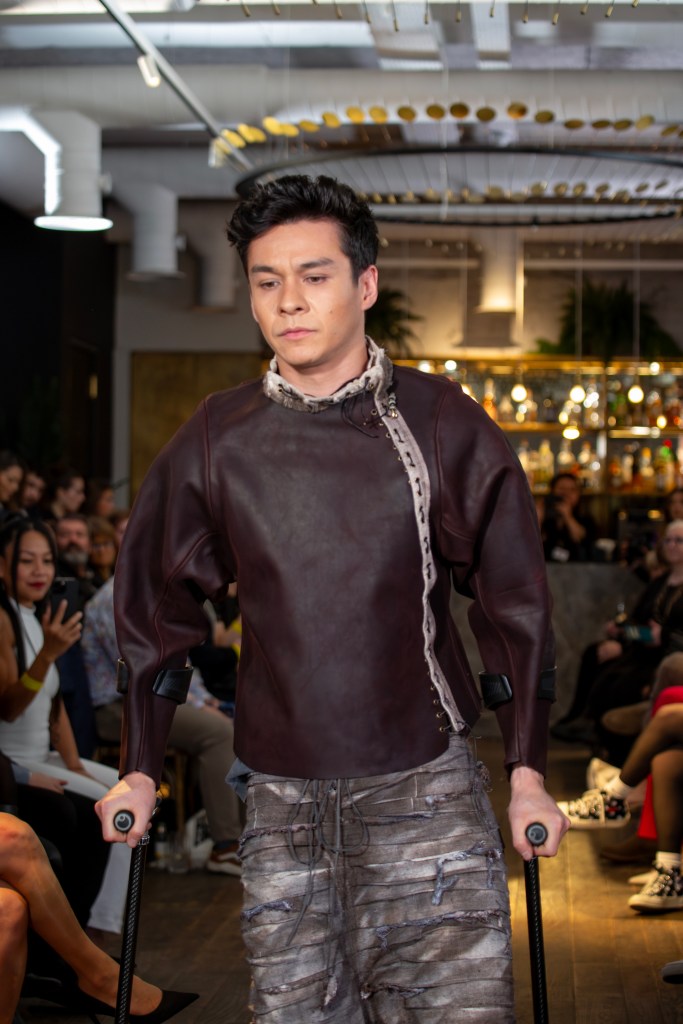
Featured on the catwalk were also Arcas Bear, Recondition, Ripple (Darryl Bedford and Gareth Volka collaboration) and Kat Paylor Bent of Seated Sewing, the latter of whom includes braille on all her clothing, made of tiny Swarovski Crystals.
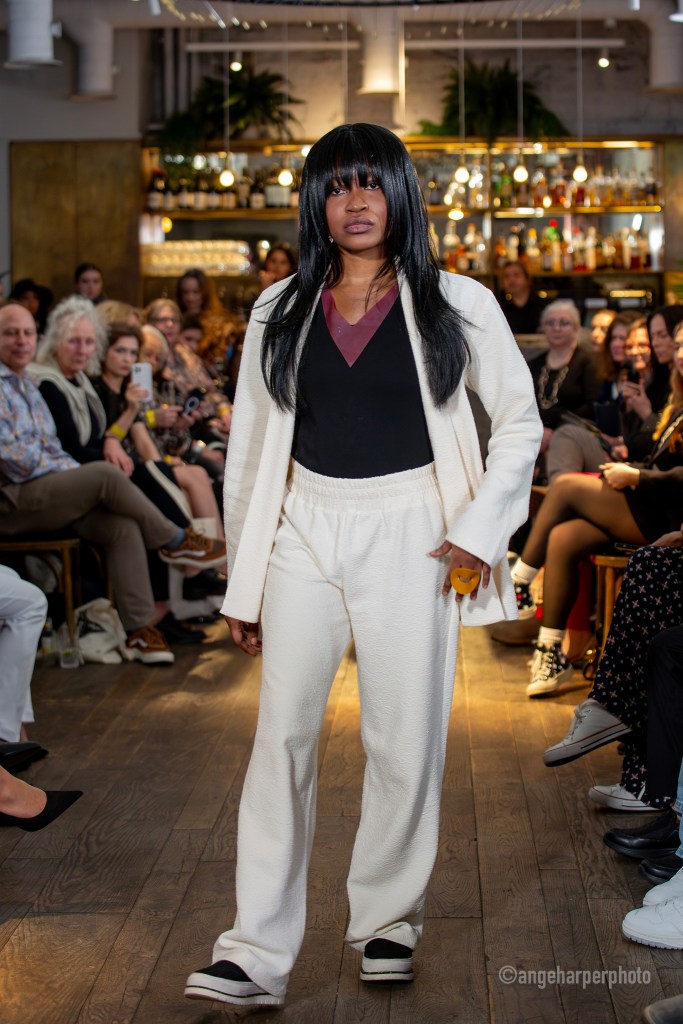
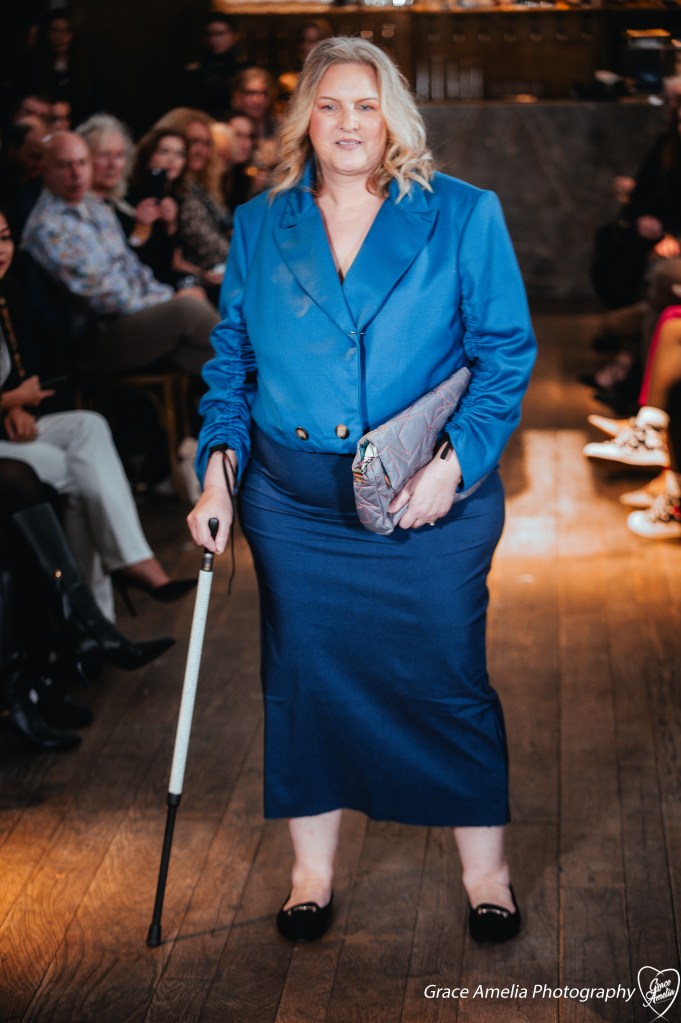
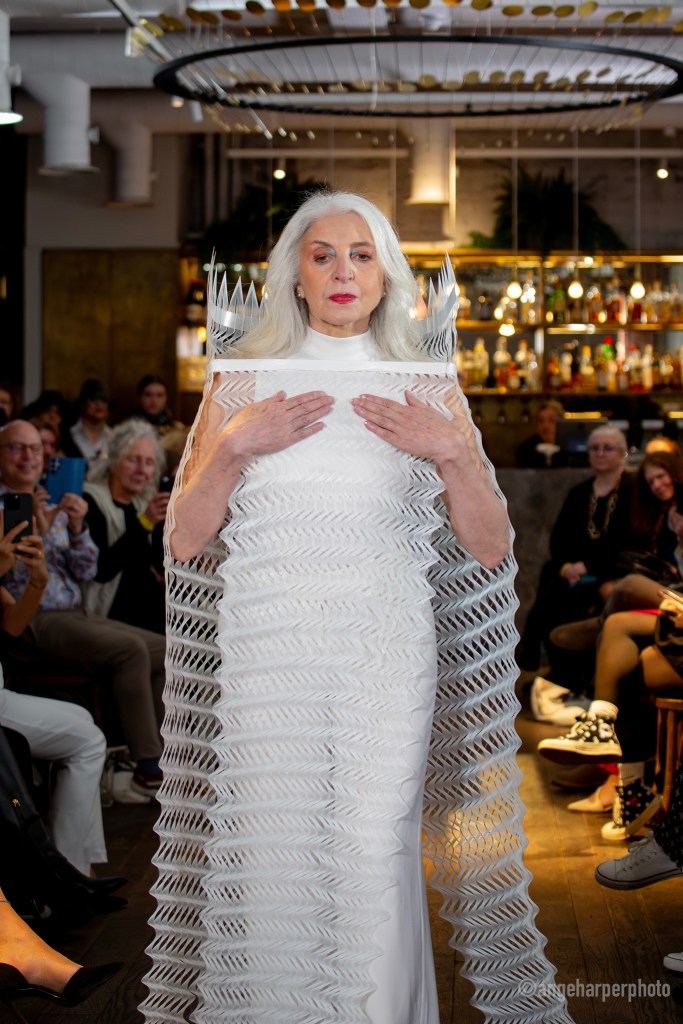
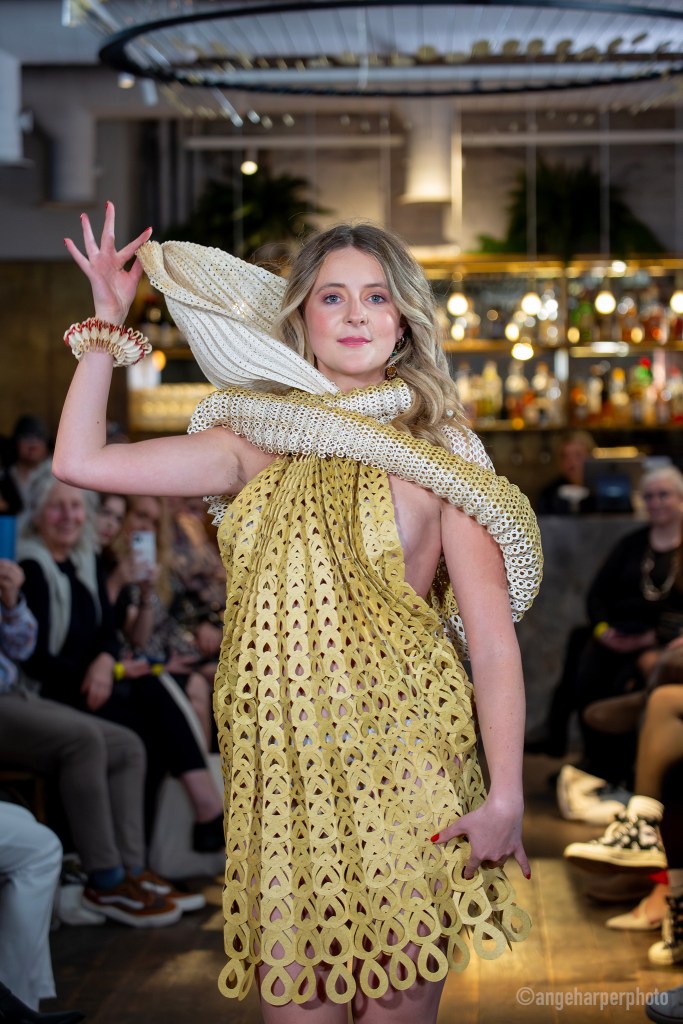
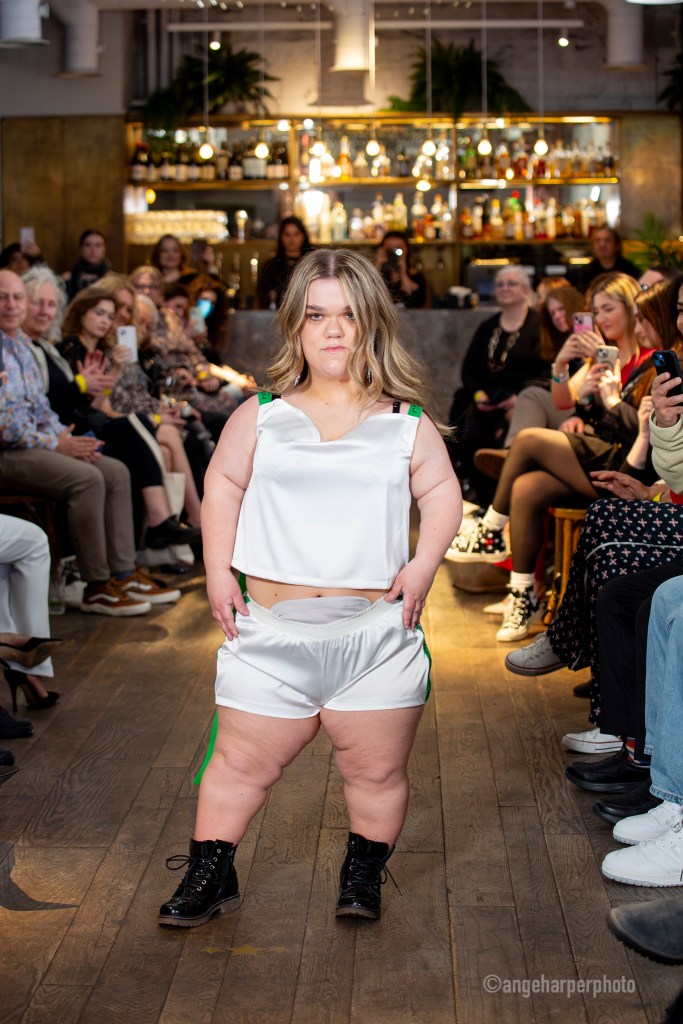
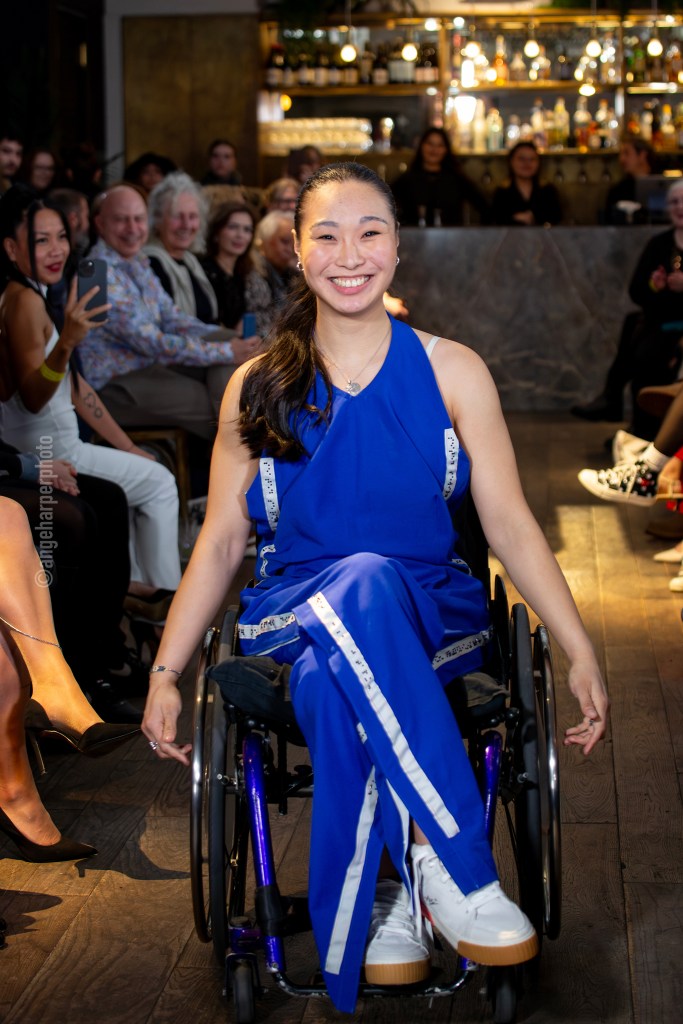
A break, which included networking, and getting refreshments, also saw, in a truly inclusive fashion, members of the audience walk the runway to signify that everyone belongs on a catwalk, regardless of looks, size, background and ability.

I briefly spoke to Samanta on the night, whose bright and proud smile never left her face. She was surrounded and congratulated by everyone at the halfway point of her show, signalling that she’d already made a ground-breaking impact.
During the second half of the show, the students of Central Saint Martins showcased further collections of adaptive fashion, alongside other designers and creators such as the Royal College of Art, Lenny Lopes & Meg Dennis.
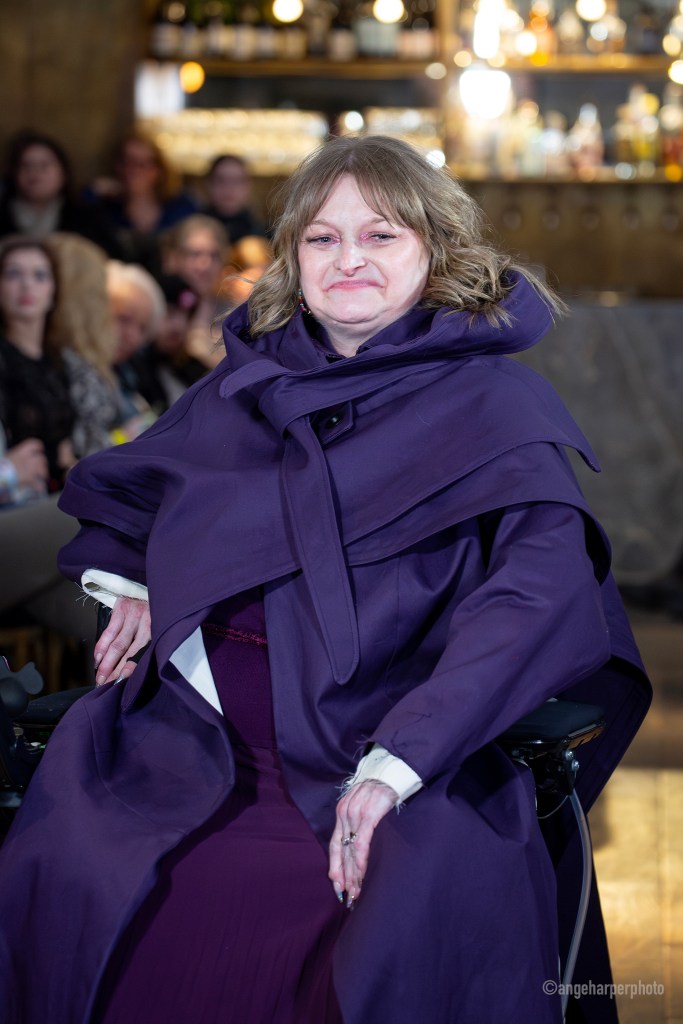
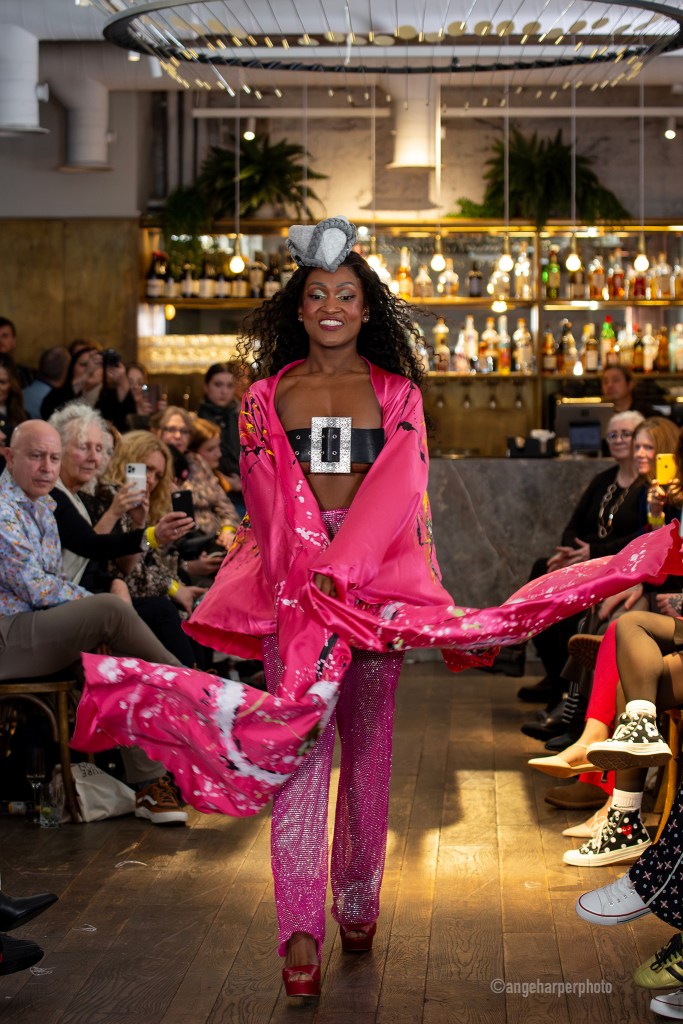
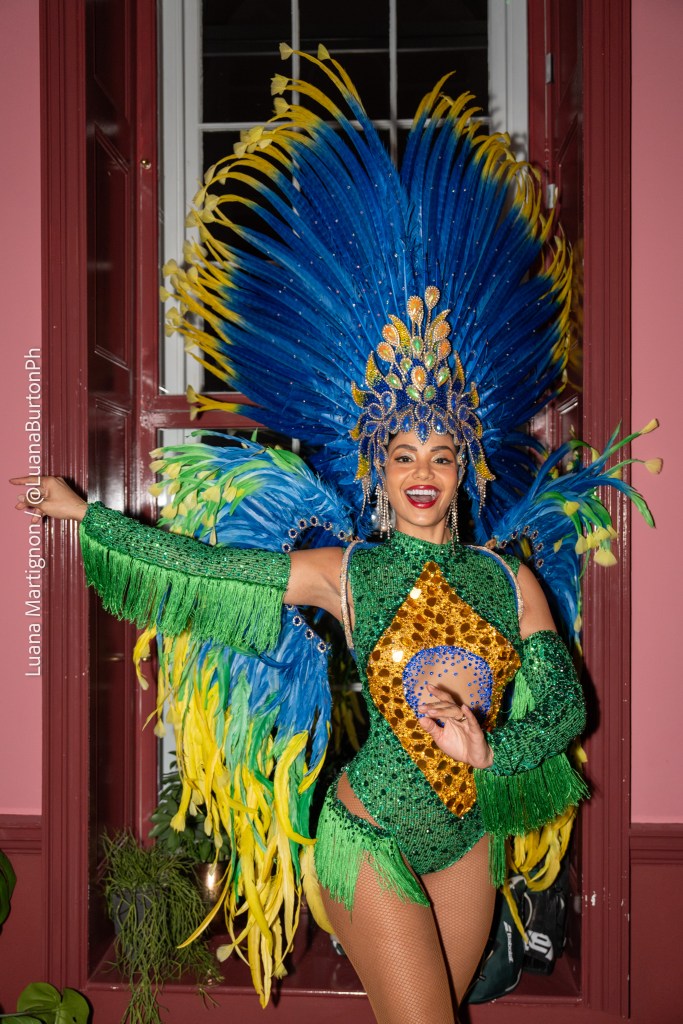
With a vibrant after-party featuring Brazilian dancers, Samanta concluded her first solo show – whilst already planning for September’s London Fashion Week. She’s got her eyes set on a bigger venue and is looking for sponsors, who are instrumental in making the shows as inclusive as possible.
“If you only get brands that have loads of money to be in the show, that means that you are taking away the opportunity for the smaller brands to be in the show”, she explained, and emphasised that it’s the small brands that need as much opportunity to shine – and they are often the ones that make a difference to people who need adaptive clothing.
So what can we all do to contribute to a more inclusive and representative fashion industry? Samanta believes that it’s not just a case of listening to people from the disabled community. It’s just as important to follow up words with actions – the kind of actions that actually help and benefit the disabled community.
There is no doubt that Samanta’s fashion show has already made waves across London Fashion Week, and she won’t stop until we can see some lasting impact in the fashion industry. In the end, clothes are for everyone, regardless of their ability, size or shape. As Samanta says: “Fashion cannot be selective. It needs to work universally.”
 neunmagazine.com