
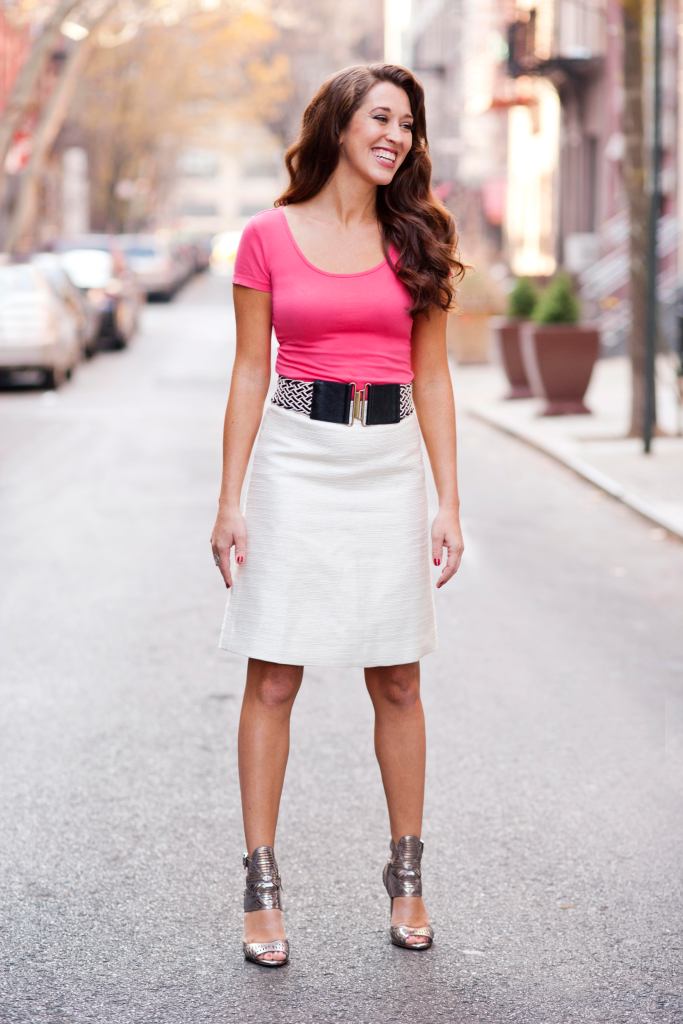
Curator and author, Sarah Forbes, illuminates motherhood and sexuality, amplifying untold stories of women’s resilience and power.
Sex is such a broad term, all-encompassing in its scope. It’s fundamentally who we are and how we identify ourselves. But it’s also a realm where we can feel, think, and be in ways that are radically different yet ultimately universal. This is something I’ve come to appreciate deeply through my conversations with Sarah Forbes, a woman whose unique and bold perspective on sex and human sexuality has captivated me for years. Anthropologist, curator, woman, mother – she is all this and yet motherhood opened up a universe to her that she could never have dreamed up in any of her previous studies or exhibitions. It’s been beautiful, raw, emotionally revolving, and now her greatest curatorial endeavour is in making the female uncharted realm heard, seen, spoken, respected, revered, and hoisted up almost as a message of hope and resilience.
When I first met Sarah several years ago, she was the curator of the Museum of Sex (MOSEX) in New York, a role she held for over a decade. Sarah’s open-minded approach to sexuality was shaped by her unique and eclectic upbringing. Her family fostered an environment of openness and curiosity, which encouraged her to explore the diverse and often surprising ways in which human beings express and experience their sexuality.
Our interview delved into Sarah’s experiences at MOSEX, from the eye-opening exhibits she curated to the fascinating people she met along the way. She shared how her anthropological background shaped her perspective on sex and sexuality, allowing her to approach even the most provocative topics with a keen eye and a non-judgmental attitude.
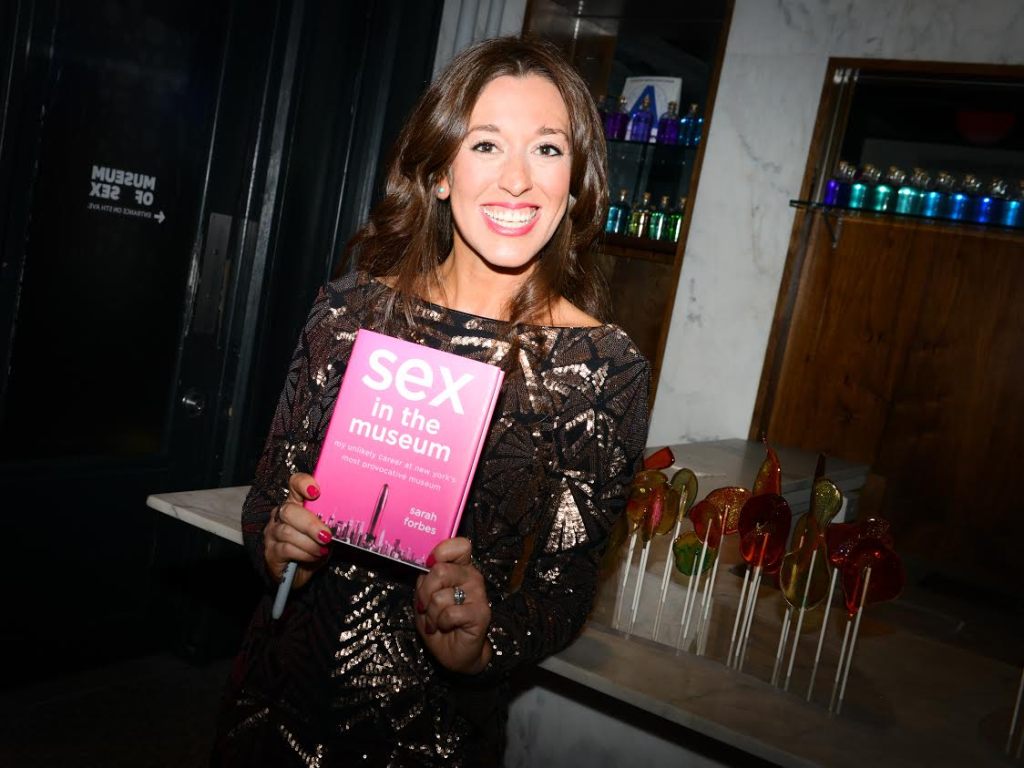
Now, as Sarah embarks on a new chapter with her forthcoming book “MAMASEX”, I had the opportunity to reconnect with her for an intimate and heartfelt conversation about motherhood and sexuality – a topic often shrouded in taboo and silence. Drawing on her personal experiences as a mother of two and her extensive knowledge of the history and culture of sex, Sarah explores how the profound changes that come with motherhood impact women’s sexual identity and experiences, revealing the complex and often unspoken truths that lie at the heart of this transformative journey.
As Sarah’s work reveals, by exploring the diverse and often unspoken aspects of sexuality, we gain a richer understanding of the human experience. Her insights invite us to embark on a journey of understanding, empathy, and growth, shedding light on a world where women’s voices have been silenced.
For Sarah, the decision to leave MOSEX after 12 years was not an easy one. As a dedicated curator, she had poured her heart and soul into creating exhibitions that pushed boundaries and sparked meaningful conversations about sex and sexuality. She felt that she had accomplished what she set out to do. The fast-paced, high-pressure rhythm of New York City, while exhilarating, had also taken its toll. “It was a truly unique time,” she reflects, “and I felt it was crucial for me to have something to wrap up that period.” Sarah recognised that it was time for her to move on to new challenges and establish a platform for herself as an individual, encapsulating the knowledge and experiences she had gained during her tenure at the museum.
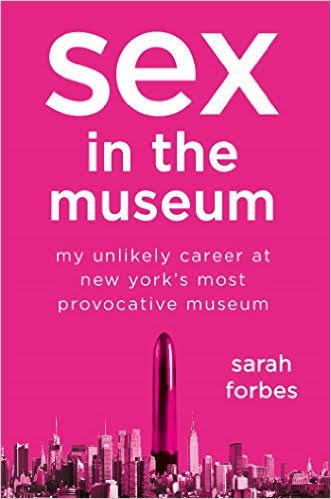
Writing “Sex in the Museum” was a cathartic process for Sarah, a way to crystallise the expertise and insights. “A book solidifies your expertise, regardless of the institution you work for,” she notes. Published in April 2016, the book marked a turning point in Sarah’s life, both professionally and personally.
Just three months after the release of the book, Sarah and her family made the momentous decision to move to London. Despite the challenges of transitioning to a new country and a different cultural landscape, Sarah embraced the opportunity to create new roots and embark on the next chapter of her personal and professional journey.
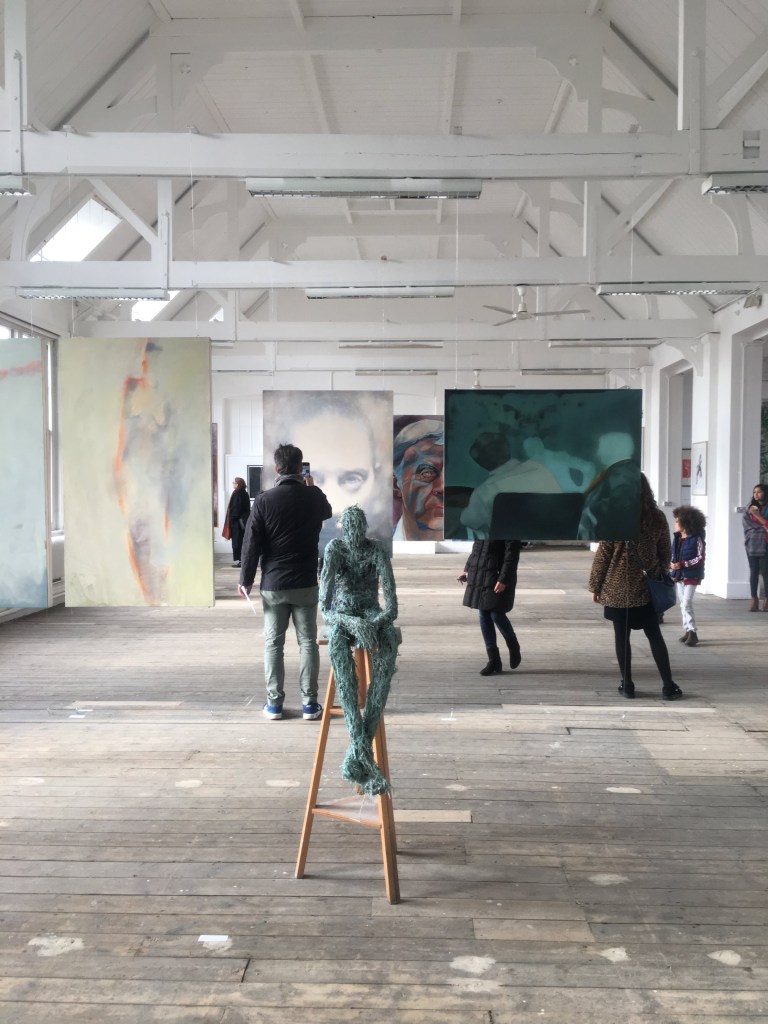
In London, Sarah found ways to leverage her expertise and connections in the field of sex and sexuality, working with various startups and collaborating with the arts collective Kindred Studios. As their curator in residence, Sarah worked with 175 artist makers, focusing on her curatorial skills and the power of storytelling. This experience deepened her appreciation for creating spaces where individuals can share their truths without fear of judgment, a realization that would later inform her approach to the “MAMASEX” project.
The idea for “MAMASEX” had been taking shape in Sarah’s mind since becoming a mother herself. “I was 29 when my first child was born, and I now have a teenager and an 11-year-old,” she shares. “At that time, I was living in New York City and working for the Museum of Sex.”
Navigating motherhood, while immersed in the world of sex and sexuality, was a unique challenge, one that Sarah met with her characteristic curiosity and openness. “Having that professional background while going through motherhood at the age I was, I saw how people felt comfortable having conversations with me,” she explains. “In some ways, I think it’s one of the most taboo subjects. I had this world of sex, and I was entering this world of motherhood, and it seemed like there was a “no go” crossover.”
As Sarah immersed herself in the research for ‘MAMASEX,’ she discovered a diverse range of perspectives on the topic. “I started to see therapists, pelvic floor specialists, and mothers themselves talking about this subject from different angles,” she shares. “Some mothers were embracing their sexuality through various forms of performance, while others were openly discussing different relationship dynamics.”
For Sarah, it was crucial to showcase this multiplicity of voices and experiences. “It was important for me to include not just one kind of voice but to show the multiplicity of voices that are a part of this space,” she explains. “Even just considering our body, it’s not just about birthing a baby. It is a psychological experience, a social experience, and we need support from all these different friends.”
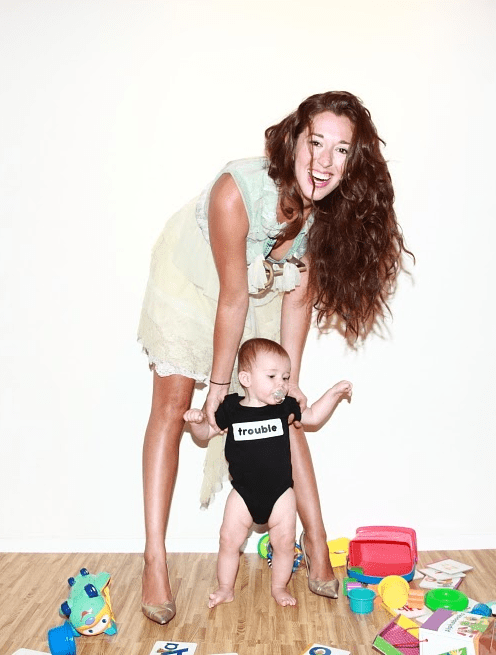
Through her research and conversations, Sarah began to uncover the layers of cultural conditioning and societal expectations that shape women’s experiences of motherhood and sexuality. “We’ve decided certain people are experts,” she reflects. “Doctors are experts, certain systems are experts, but if they’re not informed, then there isn’t the space to have these conversations.”
This realisation reinforced Sarah’s commitment to creating platforms for these essential discussions. “That’s why I’ve been really proud to be associated with institutions like the Museum of Sex, or why I chose to be on the advisory board of the Vagina Museum,” she shares. “The more we have these kinds of institutions that are pushing these conversations, the more their existence means something to our culture. It’s all about being present, showing that these are valid conversations to be having. We’re giving them a platform, bringing them from the outside into mainstream discourse.”
As “MAMASEX” took shape, Sarah found herself grappling with the invariable changes in identity and perception that motherhood brings. “I think what often happens is that individual mothers think this is a problem with them,” she reflects. “They believe there is an issue if they have low sexual desire or feel like they’re not succeeding. We have all these pressures, and it becomes very personal – ‘I am failing as an individual, as a woman, as a professional.’ It’s all about ‘me.’”
But through her research and her own experiences, Sarah discovered a powerful truth: “When you understand that there are larger systemic forces at play, it’s like a huge weight off your chest. You realise, ‘Oh, actually, this isn’t about me. It’s about me being a part of this larger trend.’ When you know the different forces at play, it can provide a lot of peace, self-understanding, and self-care. That’s part of the goal – through education and learning, we can heal a lot of ourselves.”

As Sarah reflects on her journey from MOSEX to “MAMASEX,” she recognises the profound shifts in her own perspective and understanding. “A decade in a person’s life – I’m a wildly different person than I was then,” she shares. “That’s partially due to our journey through motherhood and this growth and change is one of the sections I write about in the book.”
One of the key concepts Sarah explores in “MAMASEX” is the idea of matrescence, the transformative process of becoming a mother. “Nobody tells us that we actually go through this entire shift in our identity, social role, and physiological self, in the exact same way that adolescence happens,” she explains. “If we don’t understand that we’re going through that, it’s very hard to adapt to all the other issues we’re dealing with.”
For Sarah, navigating matrescence while balancing her professional life was a unique challenge. “I didn’t know this term when I was going through my very early stages of matrescence,” she shares. “There I was in New York, with two small children, working, writing a book, going at a thousand miles per hour. I don’t think I ever gave myself any space to adjust. I’ve had to learn how to do that with time because, in reality, it’s just not sustainable. It’s not sustainable to do everything with that intensity without burning out. That’s been a lesson I’ve had to learn over time.”
This balancing act is something that many women, particularly those in creative fields, struggle with. “Balancing being a professional and a creative is challenging because creative fields require a very different energy,” Sarah reflects. “If I hear my children’s voices, I can’t focus. In people-oriented fields, you have to be able to give so much of yourself. If I’m in writing mode, I can’t think about what time I need to pick up a kid. I need to be in my place. It’s hard to put creativity within the boxes of time. Those have been some of the learning lessons for me.”

Through ‘MAMASEX,’ Sarah hopes to provide a roadmap for women navigating the complexities of motherhood and sexuality. “The goal is to give my readers history and information that illuminates the invisible forces pressing upon them,” she explains. “With these new eyes, they can see how their experiences have been shaped and make choices that feel authentic to them.”
Ultimately, Sarah’s work is an invitation to embark on a journey of self-discovery and empowerment. “It’s not about promoting a particular sexual agenda,” she shares. “It’s about encouraging individuals to be introspective and choose the path that makes sense for them, whether that involves exploring new relationship dynamics or simply gaining a deeper understanding of themselves.”
As our conversation draws to a close, I find myself reflecting on the insightful revelations of Sarah’s work and the ways in which her insights have the power to transform our understanding of motherhood, sexuality, and the human experience. Through her unwavering commitment to exploring the interconnectedness of these realms, Sarah has created a space for open, honest, and empowering dialogue.
What strikes me most about Sarah’s approach is her deep empathy and her ability to hold space for the multiplicity of voices and experiences that shape our understanding of these topics. By bringing together diverse perspectives – from therapists and pelvic floor specialists to mothers and artists – Sarah weaves a rich and nuanced tapestry of stories that illuminate the distinctive challenges and joys of motherhood and sexuality.
Her journey – from curator to author, from anthropologist to mother – is a testament to the transformative power of curiosity, empathy, and the willingness to engage with the messy, beautiful, and often unspoken realities of the human experience. Through her work, she has given us a gift – the gift of understanding, of connection, and of the knowledge that our stories matter.
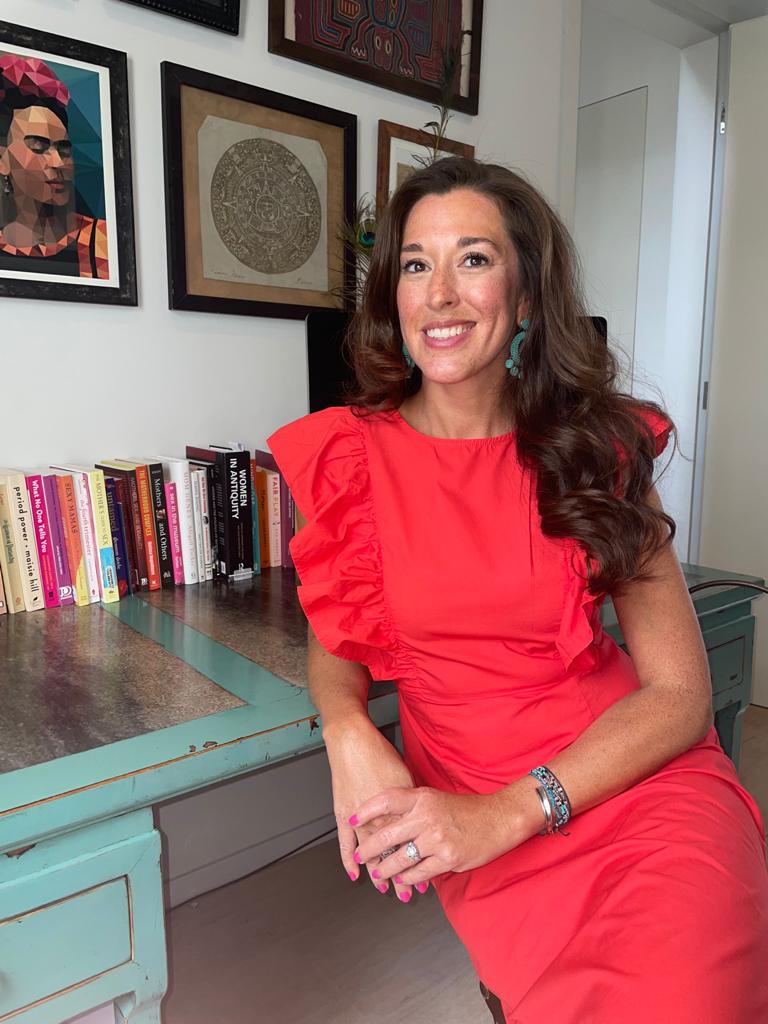
Sarah’s work serves as a catalyst for a much-needed shift in our understanding of motherhood, sexuality, and the female experience. By shining a light on the unspoken stories and the life-altering wisdom they contain, she invites us to engage in a collective journey of empathy, growth, and change. Her work encourages us to embrace the power of sharing our truths and supporting one another in our unique journeys. In doing so, we contribute to creating a world where the complexities of motherhood and sexuality are celebrated, and where every woman’s journey is seen as a powerful and transformative work of art.
 neunmagazine.com