
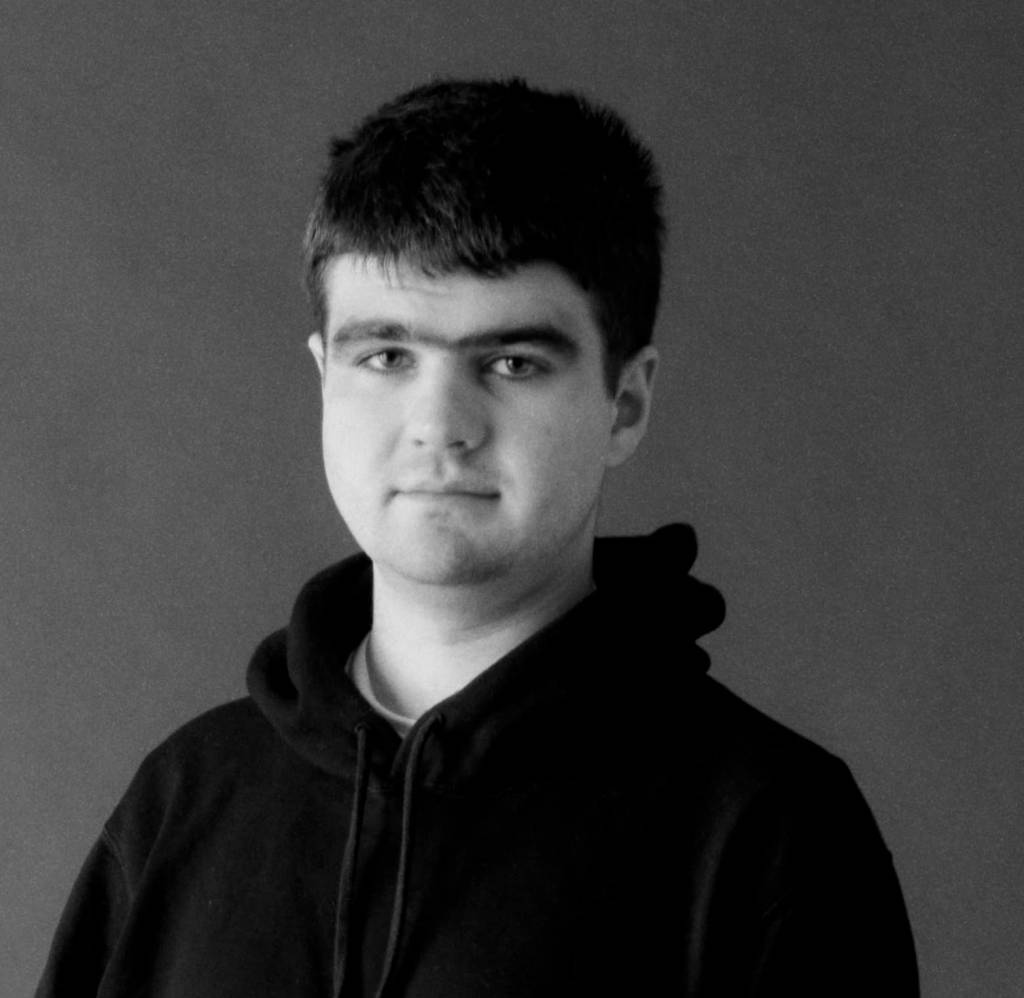
London artist Orlando Richardson channels his story into emotionally resonant work, challenging conventional ideas around autism, identity, and creativity.
When Orlando welcomes me into his home, the space resonates with art. It’s a beautiful July afternoon, and sunlight streams into the living room, casting a warm glow across the space. Among the many paintings on the walls are Andy Warhol’s iconic soup tins and painted hearts sunk into evocative colour fields. Carefully arranged on the floor, a few portraits from his Autistic Heroes collection await the perfect hanging spot. Orlando’s world is one of layered inspirations — an artistic universe waiting to be discovered.


A way of making sense of the world
It all began with childhood drawings – smiling faces of classmates, football kits, trainers, and cartoon characters like Tintin and Mr. Men, rendered with a hand still youthful yet remarkably observant. “I would sit for hours drawing with felt-tip pens and coloured pencils. My parents also used cartoon-style social stories to help me understand different situations. I got a lot out of that; it helped me learn that Autistic people often think more in pictures. After I was diagnosed with ASD (Autism Spectrum Disorder) at the age of three, drawing was my way of making sense of the world.”
A pivotal academic turning point
“After obtaining a BA in Graphic Design, I wanted to do Postgraduate study focusing on user experience (UX) design to develop my creative portfolio a bit more. After some mentoring with a UX Designer, he suggested that I focus more on mixed media and illustration, so I ended up applying for an MA in Illustration. I ultimately completed my MA in Illustration at the University of Portsmouth, where I undertook a project exploring environmentally friendly machines and renewable energy, drawing inspiration from the style of the Italian Futurists.”

“After finishing my MA, I decided to focus on producing my own artwork, focusing on fine art and illustration. One time, I went on a visit to Berlin, where I worked with a Mexican artist to do street art and stencilling on the theme of Autism Awareness that coincided with Autism Acceptance Month. One element of that theme was the ‘Autism Creature’, which appealed to me because I like the cartoon-y and humorous, colourful appearance. Since then, I have used that theme in my artwork to explore my neurodivergent identity and the fact that it makes my art seem more alive and interactive”.

The main influences: from Italian Futurism to Tintin
Orlando draws inspiration from a bold lineage of 20th and 21st-century artists: Roy Lichtenstein, Andy Warhol, Fortunato Depero, and Hergé. Their use of colour, graphic clarity, and iconic symbolism, especially the ligne claire style in Tintin, has left an imprint on his practice. The result is a vibrant, eclectic visual language that fuses pop culture with deeply personal storytelling.

His compositions evolve in thematic cycles: from explorations of renewable energy to playful masks and hearts that recall Keith Haring’s visual energy. Recurring motifs, like smiley faces, add a thread of humour throughout his work. Meanwhile, red blood platelets function as a subtle personal emblem, referencing the haemophilia he lives with.
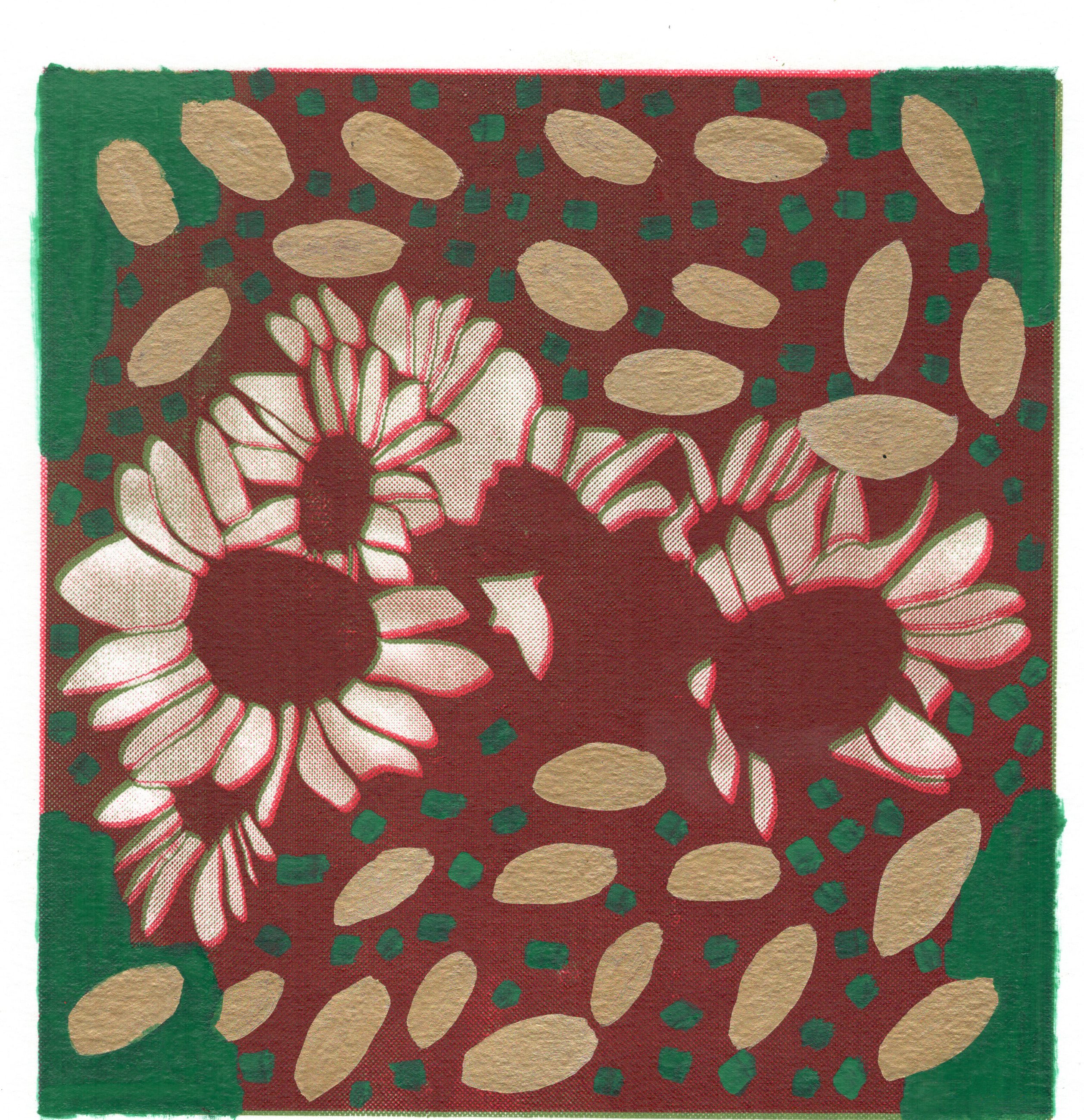
One standout is his Flowers series. Created through screen printing, the delicate silhouettes are then enhanced with hand-drawn details, done using Liquitex acrylic markers, giving the figures an unexpected sense of movement and emotional depth.
The activist component
Yet his art never stands still. Deeply attuned to the present, Orlando’s creative journey is closely linked with activism, education, and community engagement. He shares: “I’ve been invited to collaborate on an exhibition next year with This New Ground, an arts organisation that works with adults with disabilities in Hammersmith and Fulham, and Portsmouth. The project is part of a residency starting this September.”
“The message I give in my artwork is to inspire others around the theme of neurodiversity, to raise awareness, and offer insight into my experience. I am keen to do more designs of logos and images using different media types and image styles, by being given commissions from organizations, and working more on patterns and designs for clothing. Recently, I enjoyed bringing out a range of t-shirts and would like to expand on this in the future as when I was younger, I had always wanted to design clothing and accessories such as trainers and bags.”

“One of the sources for my main inspiration is London, with a wide range of people with different clothing and hairstyles, buildings, underground and train stations, and maps. I also like having my work displayed in a community space so people can see it and respond in their own time.”
I would like to expand on the range of places where I have my work displayed, such as hospitals and medical surgeries, so it can make people feel happy and realise that people with autism, like me, can be artists.
That message comes through powerfully in his self-published zine, which explores common misconceptions about autism. His work has significant reach, with Orlando’s local MP having one of his pieces on display in his office in Parliament. “


In every line, stroke, and shade, Orlando’s art becomes a space of encounter between image and identity, storytelling and self-advocacy. He doesn’t just depict his world; he invites us into it. His visual language is vibrant and inclusive, humorous yet layered, and ultimately exceptionally skilled. It’s the case of his most recent project, following the commission of a gallery in Busto Arsizio, Italy. Embracing the solemn identity of the regional area, Orlando is working on the representation of the Madonna and Child. The result is a delicately intricate representation of history, which speaks to the viewer and keeps the identity and style of the artist behind it intact.
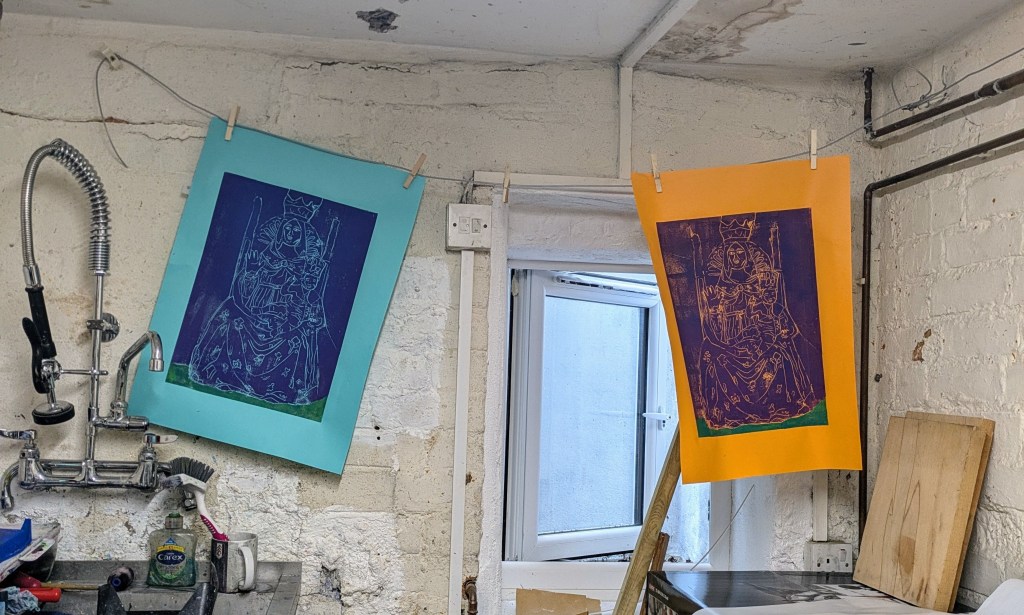
As our meeting comes to an end, I feel grateful to have been welcomed so warmly into Orlando’s world. I leave his home enriched, not only by the prints he generously gave me but by the story of an extraordinary artist who shares his vibrant and deeply human vision of the world, starting from the heart of Fulham.
 neunmagazine.com