
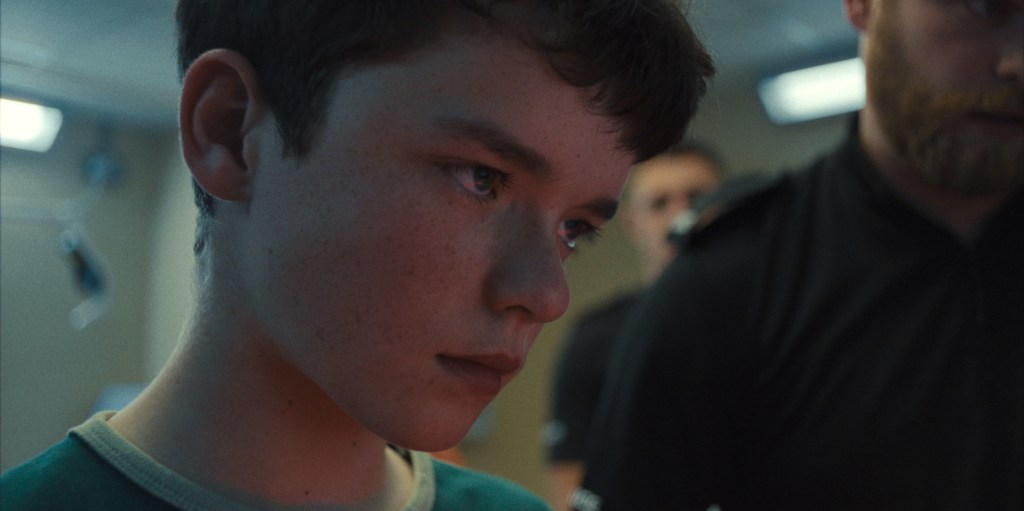
Netflix’s haunting series leaves a gaping void for the victim, exposing our blindness to female aggression fuelled by appeasing male fragility
There’s a silence in ADOLESCENCE where Katie Leonard should be – a void so precisely carved it becomes its own presence. Four hours of revolutionary television, each episode filmed in one unblinking take, and we never cross her threshold. Never meet her mother. Her father. Never hear her voice, except as ghost frequencies hidden in the soundtrack, a detail most viewers miss entirely.
This absence isn’t an oversight. It’s architecture.
In our haste to decode why 13-year-old Jamie Miller incessantly drove a knife into his classmate, we’ve swallowed a predictable story: boy meets internet poison, boy kills girl. Clean narrative lines, clear causation. But ADOLESCENCE scatters breadcrumbs toward something more unsettling – those emoji assaults marking Jamie as an “incel” at thirteen, the surgical precision of psychological warfare deployed through Instagram, the selection of a target so specific it suggests strategy, not chance.
This wasn’t rejection. This was hunting. Yet we cannot – will not – see it, because to acknowledge Katie as anything beyond pure victim would shatter our carefully preserved mythology about teenage girls and their capacity for cruelty..
But first, the house that made Jamie.
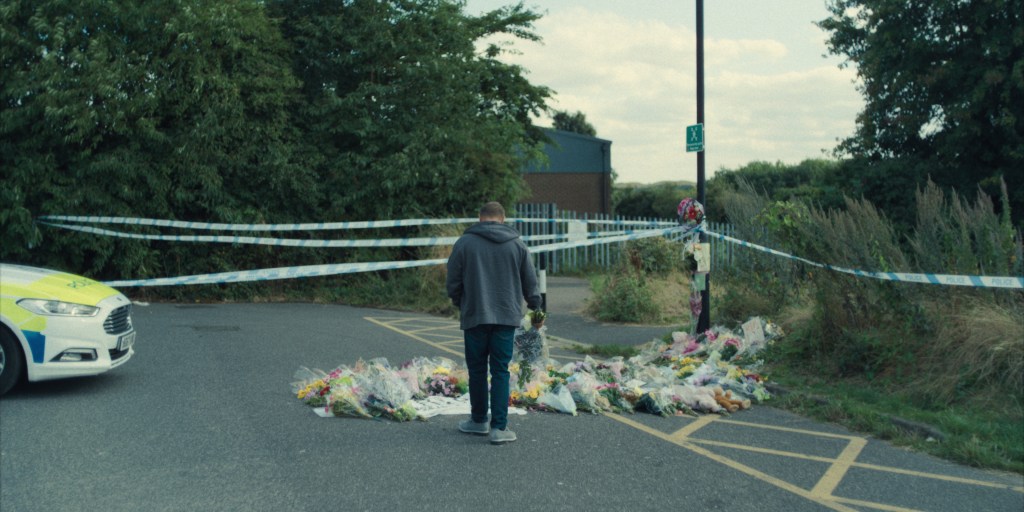
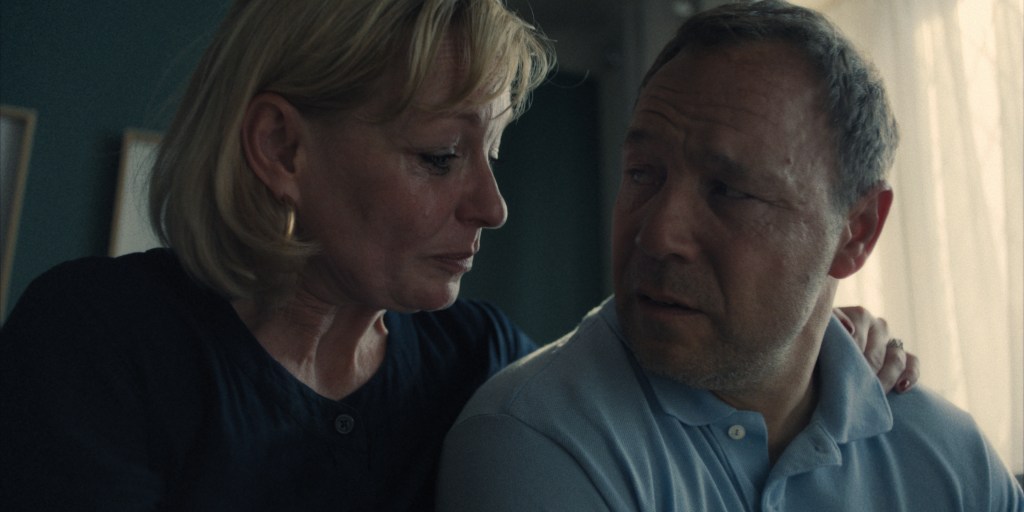
Episode 4 presents Eddie Miller’s birthday as a lens, but what we’re witnessing is the everyday machinery of this household. Observe how the family orbits his mood – his rage about vandalism becomes everyone’s emergency, his need for comfort overrides their need to process, his breakdown commands center stage while Manda, his wife manages logistics, Lisa, his daughter and Jamie’s older sister, performs cheerfulness to manage the weather of his temper. This isn’t special occasion behaviour. This is how the Miller household breathes: Father feels, family responds. Father rages, family soothes. Father breaks, family holds him together.
Jamie learned male centrality at the breakfast table, not the internet. He absorbed – through years of ordinary mornings – that women exist to navigate men’s emotions, that male pain demands immediate attention, that female strength must disguise itself as fragility to survive.
Against this domestic choreography, every woman in ADOLESCENCE performs her own disappearing act. Manda Miller, in Episode 1, demonstrates decades of training – pushed aside as too emotional, too fragile, the men must handle this. But her retreat isn’t weakness; it’s muscle memory from a household where challenging male authority brings consequences. She knows precisely when to vanish. Only in the finale, when Eddie crumbles completely, does truth emerge – she’s the family’s steel spine, revealed only when male authority collapses.
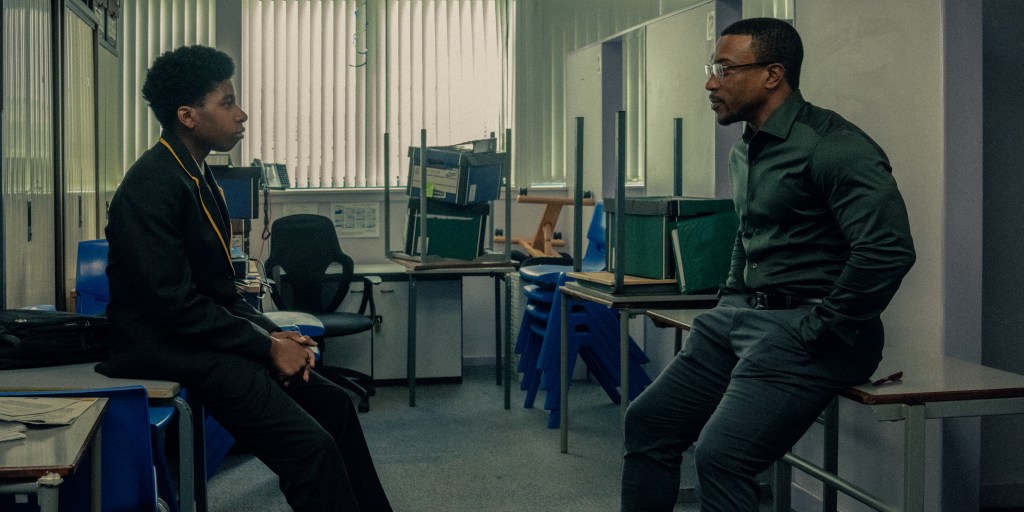
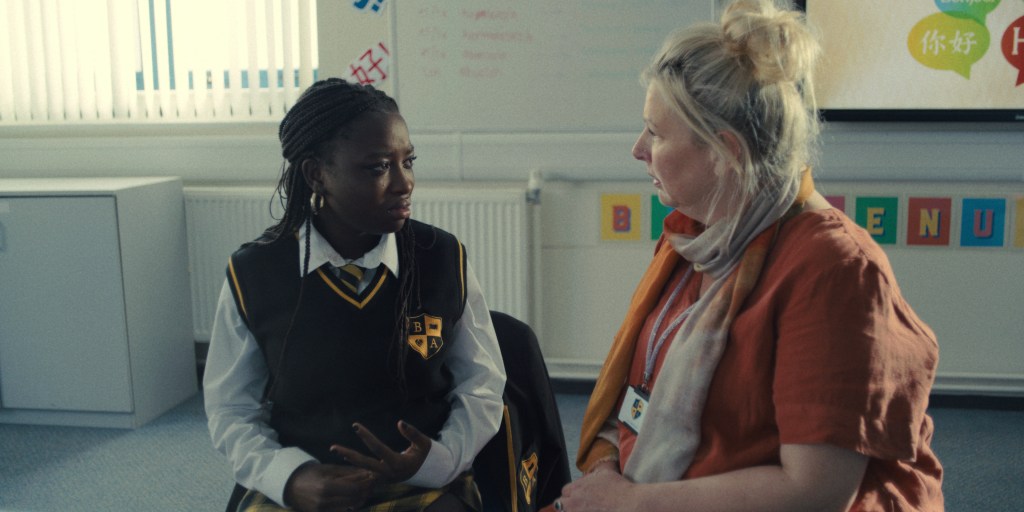
The teacher, who guides the detectives through school corridors, wears her meekness like a uniform. Apologetic, submissive, she mentions repeatedly how upset “Jamie’s friends” are – this teacher’s veil of discretion suggests knowledge she won’t share, patterns she’s learned not to see.
Yet here, during this school investigation, ADOLESCENCE reveals its most damning parallel. Detective Bascombe bonds with his son Adam over the case – the boy decoding emoji warfare, translating teenage cruelty, bridging generational chasms. Adam confides where Jamie cannot, illuminates where Jamie conceals. Their relationship strengthens through shared discovery, standing in sharp relief against Eddie and Jamie’s suffocating fusion of delusion and need.
Notice what happens to Detective Sergeant Frank during this father-son revelation. She dissolves into administrative wallpaper, her insights unheard, her perspective unsought. The investigation transforms into dialogue between fathers and sons – Bascombe learning from Adam, Eddie defending Jamie – while every female voice evaporates. Frank might have identified patterns her male partner missed, might have grasped how teenage girls wield social power, how sexuality becomes a weapon. Instead, she’s reduced to a prop in Bascombe’s journey toward understanding his boy better
Katie’s friend Jade – sole companion to a girl who appeared to cyber-bully Jamie – meets investigators with aggression and evasion. Why such hostility toward those solving her best friend’s murder? Her behaviour speaks of someone who’s learned that truth brings danger, that silence offers safer harbour than honesty in a world where challenging certain people invites damaging consequences.
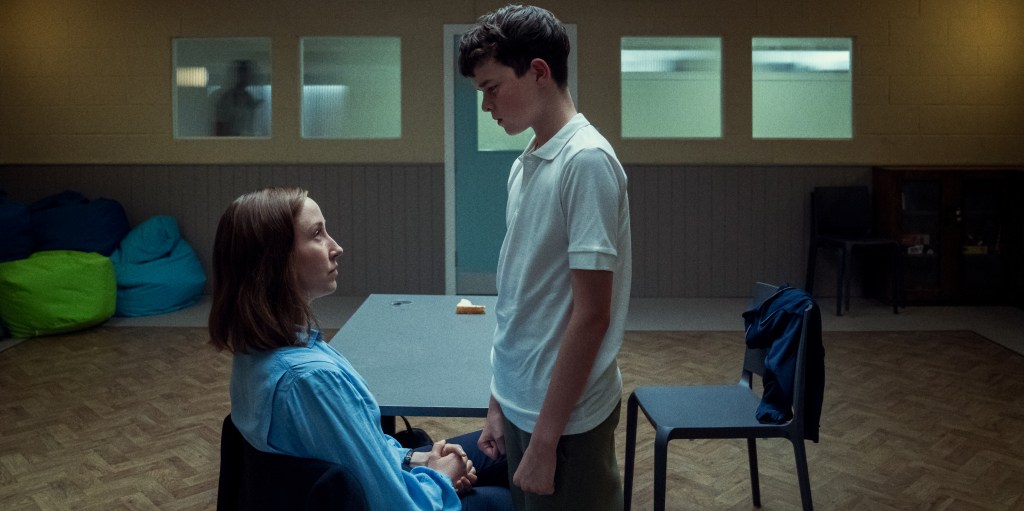
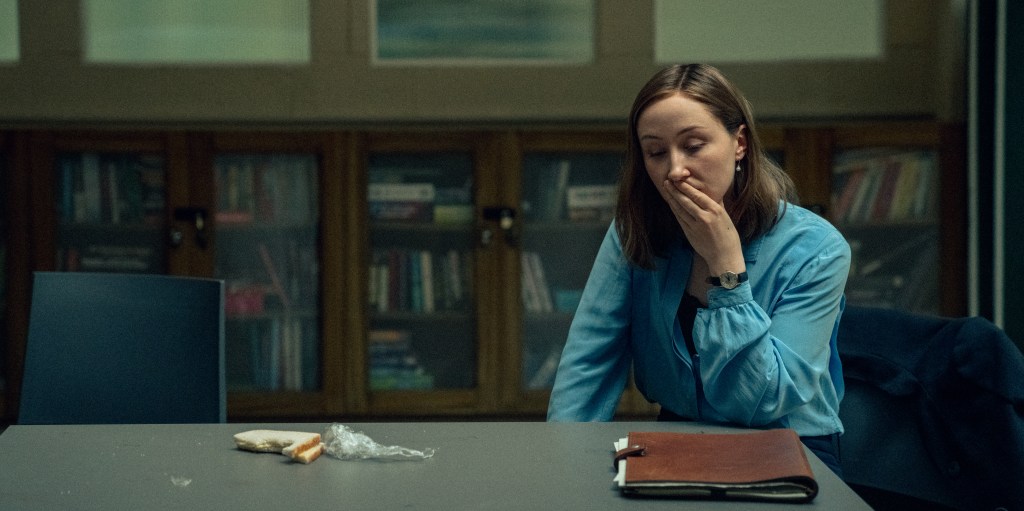
Episode 3’s dynamic chills most when viewed through this domestic lens. Jamie, shifting between boy and man, wielding psychological manipulation like inherited skill: he’s recreating family architecture. He positions the psychologist as a mother-figure: the woman who must navigate his moods, absorb his anger, maintain composure while he cycles through manipulation. The psychologist’s terror transcends professional concern – it’s perception of a pattern she knows too well, this dance where women manage male volatility while pretending to hold authority. Jamie knows these steps because he’s watched them performed his whole life.
Every woman we encounter performs variations on this vanishing – they retreat, defer, silence themselves, guard their knowledge. This isn’t a coincidence. It’s a system.
So let’s return to Katie. What do we actually know? She sent topless photos to a boy she liked—photos that were shared without her permission, a violation that made Jamie perceive her as vulnerable, as available. When he asked her out and she refused, she began leaving cutting comments on his Instagram. She had a best friend who responds to investigators with hostility—though we can’t know if there were others who simply stayed silent.
But where did she learn to wield cruelty as power? Perhaps in a world that taught her early that female aggression remains invisible, deniable, dismissed as “drama.” Perhaps watching women perform weakness while wielding shadow influence. Perhaps observing how female power must operate in margins because direct confrontation with male authority brings consequences.
What happens when a girl who’s learned to wound with words meets a boy raised in domestic patriarchy? Katie perceived Jamie’s specific vulnerability—not just his awkwardness, but his expectation that female attention should soothe male need. When she rejected him and deployed her digital warfare, she wasn’t just turning him down; she was inverting the power dynamic he’d breathed since birth. The girl who should manage his emotions was destroying them instead.
Jamie’s online grooming didn’t create his worldview – it confirmed what his household already demonstrated: women exist to serve male needs, male pain deserves immediate response, female autonomy betrays natural order. When Katie’s sophisticated cruelty met Jamie’s inherited expectations, the reaction was chemical. She thought she was tormenting just another awkward boy. She couldn’t know she was challenging someone whose entire architecture demanded female submission.
Every woman in ADOLESCENCE navigates structures that demand complicity – mothers performing fragility because challenging patriarchy brings consequences, teachers maintaining silence because speaking invites scrutiny, detectives fading into the background because male narratives dominate, psychologists who discern patterns too late for prevention, friends guarding secrets because truth proves dangerous. They’re navigators of systems that punish female visibility, reward performed helplessness, enable violence through enforced silence.
ADOLESCENCE cannot examine Katie’s motivations without questioning its own foundation. It would require admitting she too was moulded by these same structures – learning that direct power was denied her, that manipulation became her only weapon, that boys, already marked weak by masculine hierarchy, made the safest prey.
The one-shot technique mirrors this selective vision perfectly. We follow male perspectives relentlessly while female insights blur to background static. The camera refuses to cut away, but also refuses to turn around.
What ADOLESCENCE accidentally reveals is an entire ecosystem. Domestic patriarchy teaches boys that women exist to manage male needs. Online spaces confirm and amplify these household lessons. Girls learn power through psychological cruelty because direct power stays forbidden. Women perform weakness while wielding hidden influence. Everyone enables through silence, whether enforced or chosen. And when these dynamics collide, violence becomes inevitable
The series ends where it began – Jamie’s bedroom. Nothing changes. Another Jamie absorbs lessons at his father’s table before the internet confirms them. Another mother learns when to disappear. Another female detective gets erased from her own case. Another teacher chooses silence over truth. Another psychotherapist is taunted by ingrained cruelty.
The show presents this cycle as tragedy while refusing to examine its roots. Constructive prevention would require acknowledging how domestic patriarchy primes children for violence, teaching girls that psychological abuse remains abuse, dismantling household structures that center male needs, allowing women full visibility without consequence, grasping that online influence often merely confirms home lessons. Instead, we wait for the next explosion, then study the boy while ignoring the girl, examine the internet while overlooking the dinner table, analyse male rage while dismissing female aggression.
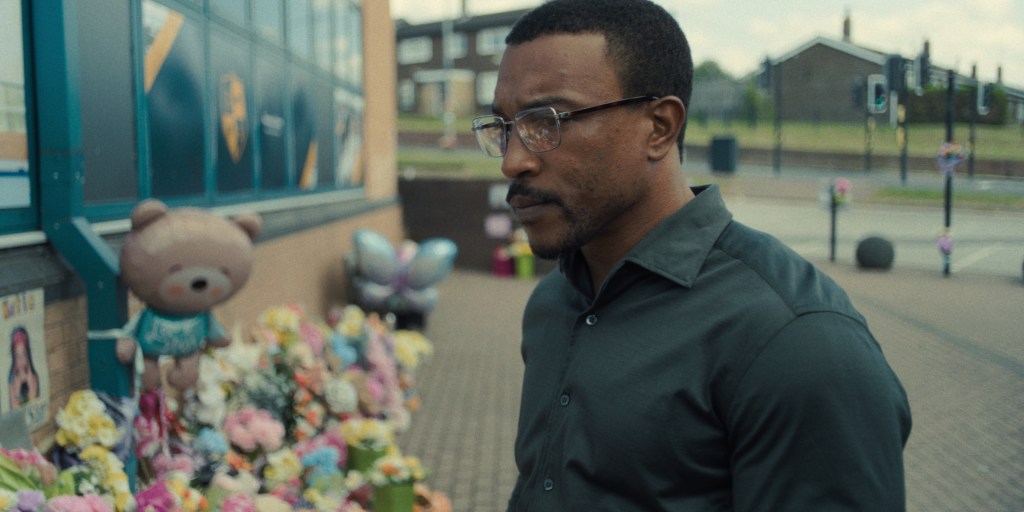
Perhaps the most radical act would be turning the camera around—examining not just male violence but female pain, not just the tragedy’s end but its invisible beginnings, not just what Jamie became but what Katie never got to be. Understanding her story isn’t about blame, it’s about seeing the complete architecture of harm we perpetuate by looking in only one direction.
Yet, we stop ourselves. It’s safer to guard our assumptions than examine our complicity.
Until then, we are all Eddie in that bedroom – clutching teddy bears, asking the desperate “why?”, when answers surround us at every family dinner, in every dismissed female voice, in every girl learning power comes through hidden cruelty because direct strength stays forbidden.
The one-shot never cuts away. Neither does the cycle. Neither do we.
Somewhere, right now, another family teaches another “Jamie” his needs matter most. Another “Katie” learns her power must hide in shadows and symbols. Another tragedy gets written in spaces between what we see and what we refuse to acknowledge.
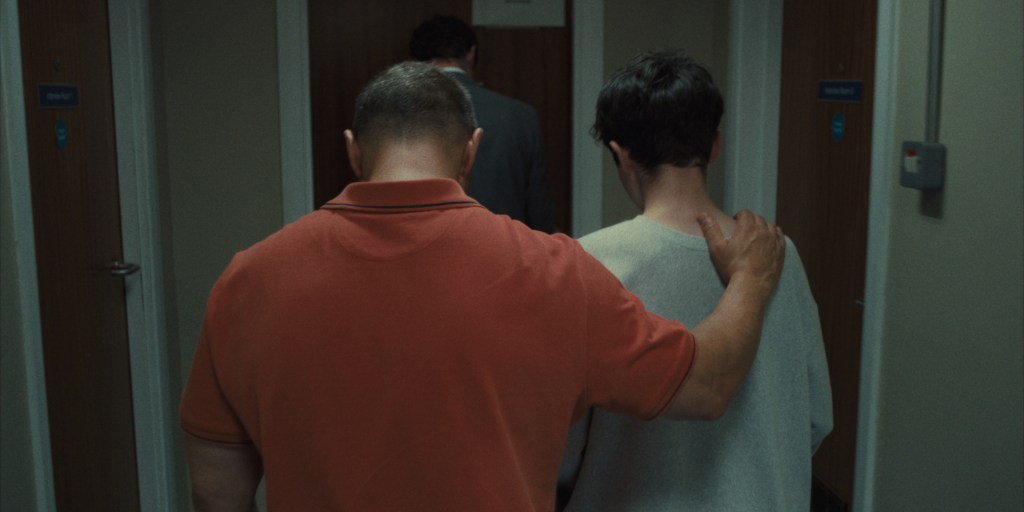
ADOLESCENCE shows us half of a harrowing story, leaving us wondering why we can’t prevent the ending. However, the real horror isn’t what it shows – it is the foundation it stands on while pretending not to notice. In making Katie absent, the series reveals our deepest blindness: we document violence meticulously while refusing to see household structures which make it inevitable.
The camera keeps rolling. Still refusing to cut away. Still pointing in only one direction.
Just like us.

 neunmagazine.com