
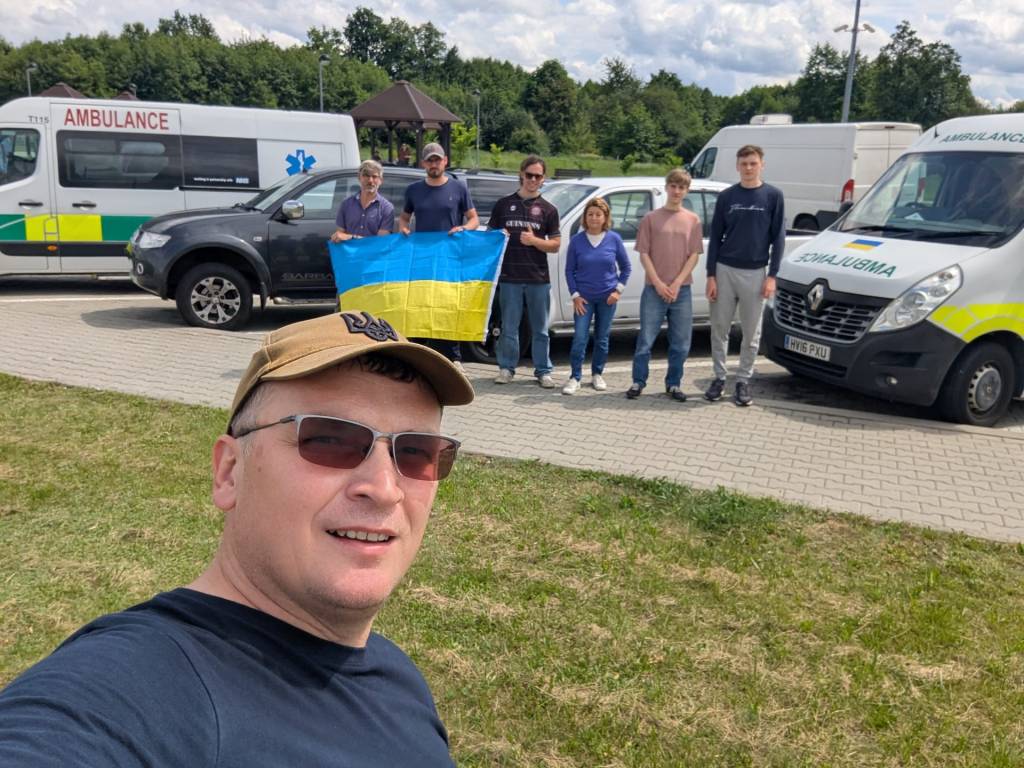
As Greta sailed to Gaza, Neun’s writer Benedict joined a convoy into Ukraine – two routes, two wars, and one shared mission: getting help to those in need.
In a nondescript bar in Poland, in the early hours of the morning, I met a man I hadn’t seen since I was ten years old. My primary school friend had grown up and, two decades later, made it to the same bar in Poland as I, as chance would have it. In the ensuing catch up, I found out he was driving a convoy of ambulances full of medical aid – and pick up trucks full of tactical supplies – across Europe and into Ukraine. As a left wing, able-bodied person, I found no reason not to volunteer to help, and we set off the next morning together, for the border. For war.
So, the same weekend Greta and the Madleen set sail for Gaza to give desperately needed aid to the besieged Palestinian people, I set off for Ukraine with a motley crew of eclectic do-gooders. The two conflicts have been linked in the West since Putin’s invasion and October 7th, respectively. Debates rage over the merits of helping one side and not the other. I have always found it odd to compare these two wildly different conflicts – one a war, the other a genocide – which have very little in common with each other beyond an enormous and avoidable death toll. A harrowing fact remains: there are desperate people in both places, and they all need aid.

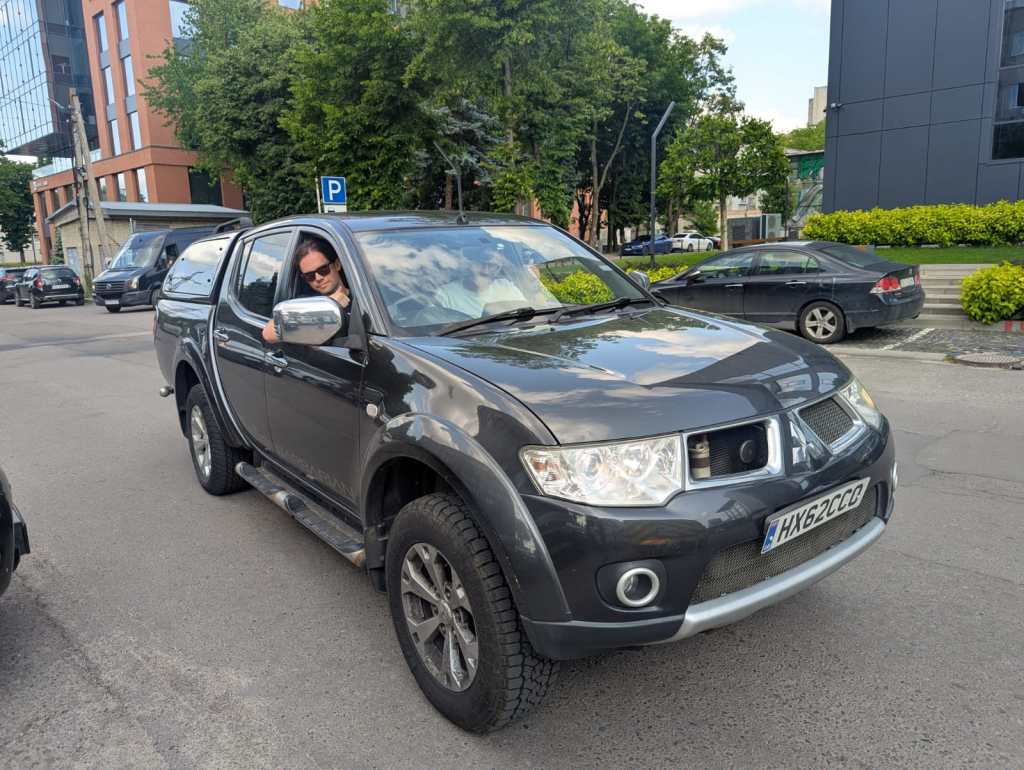
Pavlo, the leader of our group, is a Ukrainian national who moved to London as a child. He organises regular convoys from the UK, buying ambulances and filling them with wheelchairs and other medical equipment. He also buys up second-hand pick-up trucks, filled with other medical and tactical supplies, to be sent to soldiers on the front. His teenage son came with us, as did a retired French financier and his half Ukrainian teenage son. An elderly Brexiteer from Tonbridge Wells brought up the rear of this bizarre team of volunteers. The vehicles were bought in the UK (their right-hand drive made them less desirable and thus cheaper to buy second-hand), and they were then driven the length of Europe into Ukraine.
The team we worked with were based in western Ukraine; they asked me to keep details vague – even taking pictures filled them with fear of the Russians finding their location and dropping bombs on them and their base. We delivered the ambulances and the supplies – wheelchairs, bandages etc – which would be sent to the front to help injured soldiers and civilians.
The pick-up trucks would be painted and armoured and sent to the soldiers. The tactical supplies were given to the team, who would utilise them however they could, before sending them to soldiers at the front.
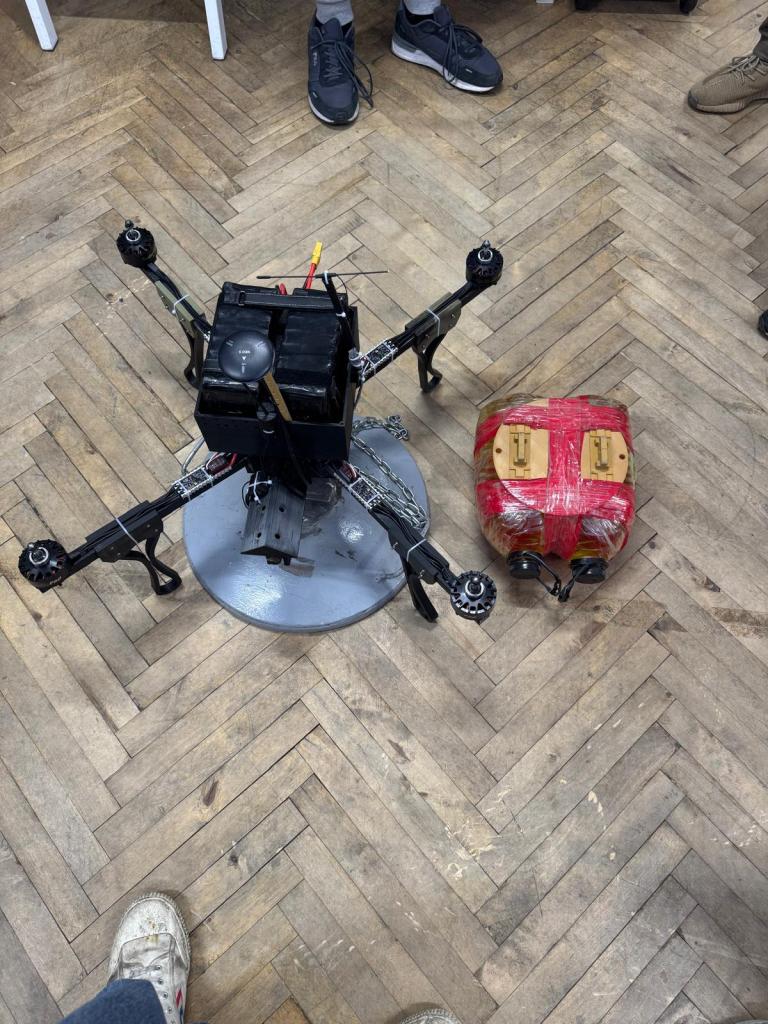
More than any other war, cyber warfare and technology are playing a vital role in this conflict. Our team were software engineers before the war, and now they make drones, capable of carrying explosives. When they started, the drones were rudimentary and could carry just over a kilogram – two cans of beer, as they demonstrated to us. The newer ones they were working with could carry weights above fifteen kilograms, easily enough explosives to destroy a tank or a bunker. Some were remote-controlled, some carried fibre-optic cable canisters, shooting out a web of up to ten kilometers of wire. I was told this was beneficial as the Russians couldn’t jam the signal to the controller, but the cable was also more susceptible to getting caught on debris while flying. They utilised the best technology they could given the situation, and were adamant their tech was superior to anything the Russians were using.
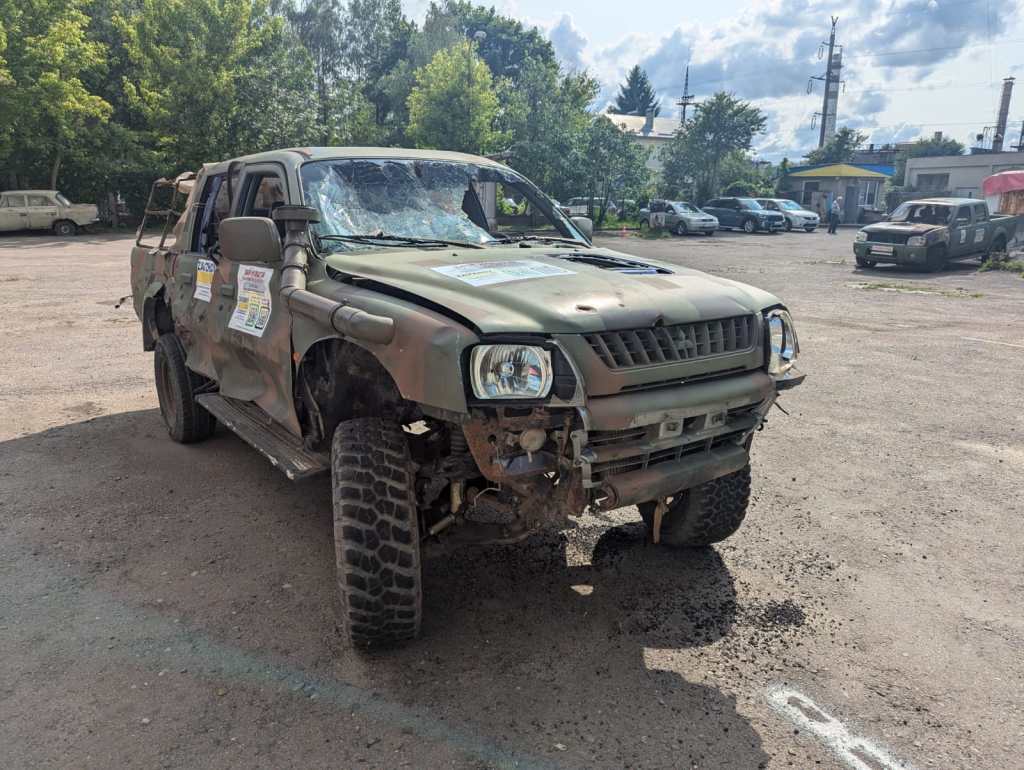
We delivered the supplies the morning after we arrived. I parked my pick-up truck next to a previous delivery (photo below) – we knew it was ours because of the right-hand drive. It had been painted camo green, and armour plating had been installed. It was riddled with bullets. The windshield was smashed, the back, sides and front peppered with bullet holes of various sizes. We saw no blood so we hoped the Russians had shot up an empty car, but, unfortunately it was more likely the Ukrainians had cleaned the car of blood when they found it salvageable.
The two teenage sons on our team had lived in this warehouse at the outbreak of the war, building detonators for the drones. Hearing about these young men building bombs was initially shocking to me, but then again, if they’d been born in Ukraine rather than London, they’d be at the front. War is war, I tried to tell myself, something completely unfathomable when you actually see it up close. When I was their age, I was doing my A-levels and planning a trip to Magaluf. They’ve spent their summers delivering aid to desperate people and making bombs to ward off invaders.
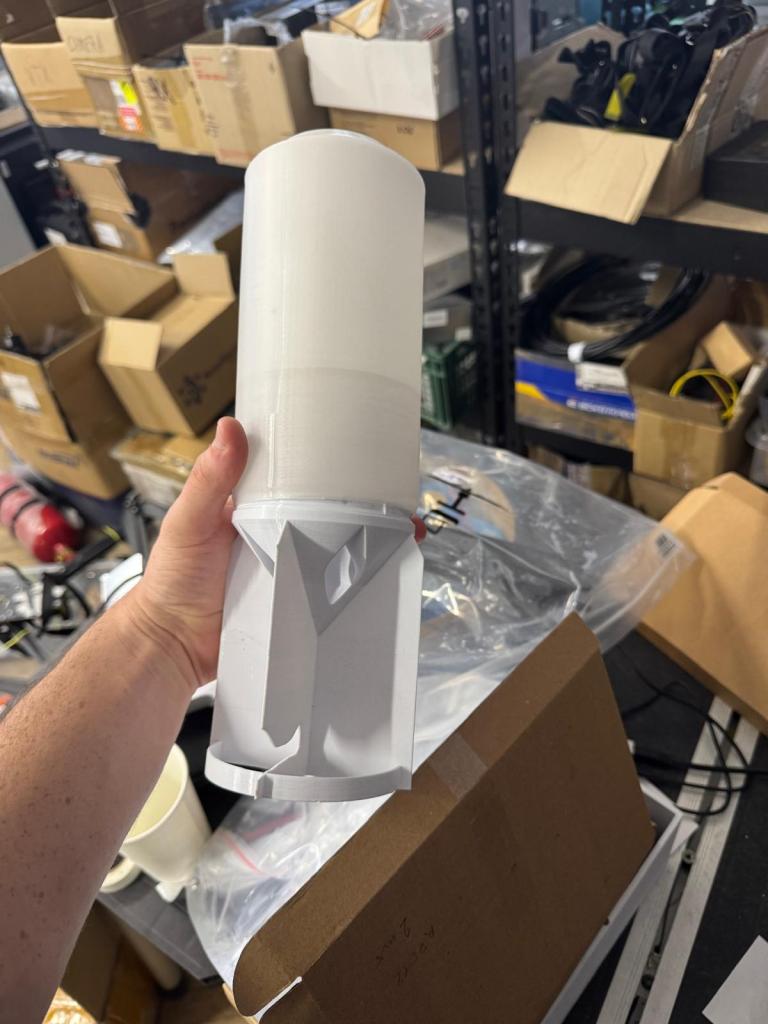
On the previous trip, my friend had delivered a set of 3D printers. The team of partisan resistance fighters we were working with showed us a 3D printed bomb they had made. No metal necessary – they could attach the detonator, fix it to the drone and send it to the front, where a military wing of the group would add the explosives and use it to attack Russian positions. Women were better at assembling the drones, they said, as they had delicate fingers. I personally felt that comment fit into the category of generic sexist generalisation, but it was nice to see all Ukrainians standing up to oppression – men, women, and children – regardless of how delicate their fingers were.
Western Ukraine has seen less conflict than Kyiv, which is further east, or Kharkiv, which sits on the border with Russia. However, as part of Putin’s brutal retaliation to Operation Spiderweb, the whole country was facing a new wave of bombings.
Shahed missiles had hit Lviv the evening before we arrived there. Rivne, the neighbouring town, was bombed the following night. I woke in my bunk to the sound of something – I never found out what. It’s possible it was the sound of the explosion, or possibly a fighter jet breaking the sound barrier above us. The Ukrainians, used to being attacked by this point, didn’t bother going to the bomb shelter, so I stayed in my bed, unable to sleep, waiting for the next bomb to fall on our building. The morning after the bombing, I read a news article that President Trump had halted the sending of 20,000 anti-Shahed missiles that were promised to Ukraine by the Biden administration.
With Putin’s attacks continuing and our supplies delivered, we made plans to leave the following morning. Up at dawn, we took an ancient-looking GAZ Volga, an Eastern block car I’d never heard of, to the border, where we crossed on foot into Poland. I know we did a good deed, but the only feeling you have when leaving a war zone, knowing that people your age are going the opposite way – towards the fighting rather than away from it – is cowardice. The feeling you aren’t doing enough, and if you tried, you’d be unable to. Fortune had me be born Irish, not Ukrainian – luck and nothing else. Through the border, skipping past hundreds of queuing Ukrainians who couldn’t use the EU line, and out. A bus, a train, and a flight to Paris and safety, until the next time.
Greta and I set off at the same time, her to Palestine and me to Ukraine, both in Bohemian F.C. jerseys. To those who don’t know, Boh’s are a Dublin-based fan-owned football (soccer) team that champion human rights and have been a strong voice in support of Palestine. They often spearhead social change in Ireland and their jerseys have become a symbol of protest. Their shirts have become more and more popular globally and are often seen being worn by celebrities at protests, including Greta Thunberg. I support the actual football team and am proud to see a club having actual values that it sticks to. The night she was captured, I had crossed the border and was trying to sleep while Russian bombs fell. We both flew back to Paris on Tuesday.
The Ukraine war has been supported by many British and European governments, much more so than support for Palestine. This is largely, in my opinion, because of how much they relate it to World War II, the last time they were the good guys in a war. Putin is Hitler, Ukraine is Poland, they are the Allies, saving the day. Links to the Spanish Civil War are also obvious – every artist or writer or unemployed man who’s watched The Great Escape too many times or read For Whom the Bell Tolls, is quick to get off the sofa and volunteer to help, myself included. Or, if actually going to Ukraine is a stretch too far, posting long, semi-coherent Facebook posts damning Putin’s invasion.
Palestine, on the other hand, brings back vague memories of the Balfour declaration, of colonialism, of the systematic breaking up of the Arab world by the British and French. Divide and conquer, the days of the Empire. Things that aren’t taught in school in the UK and people pretend they don’t know about. It’s murkier, it’s dirtier. Israel’s weapons come from the USA, from Britain and Germany. When arguing that Israel was free of blame finally became impossible, tens of thousands of dead later – many of them children – a quiet ignoring of the genocide became the dominant party line. Even now, the European governments have done little or nothing to stop the genocide that is happening on the banks of the Mediterranean. Only twelve countries in the Western World have even recognised Palestine as a country, let alone sanctioned Israel or supported Palestine outright. The United Kingdom is not one of those twelve.
However, none of this is the fault of the Ukrainians. And getting aid to Gaza, as Ms. Thunberg demonstrated, is currently almost impossible. Getting aid to Ukraine was achievable, and so I did it. Like with every conflict, news fatigue sets in and people sit down to Love Island and forget the war in Ukraine is still going on. Innocent people are dying and are in need of help. I live in Paris and work as a writer and generally have a great, easy life. An opportunity arose to help and I found no reason, besides fear, to say no.

 neunmagazine.com