
Promising a high-octane rush and a thrilling storyline, Formula 1’s attempt at fiction falls flat both in representation and accuracy.
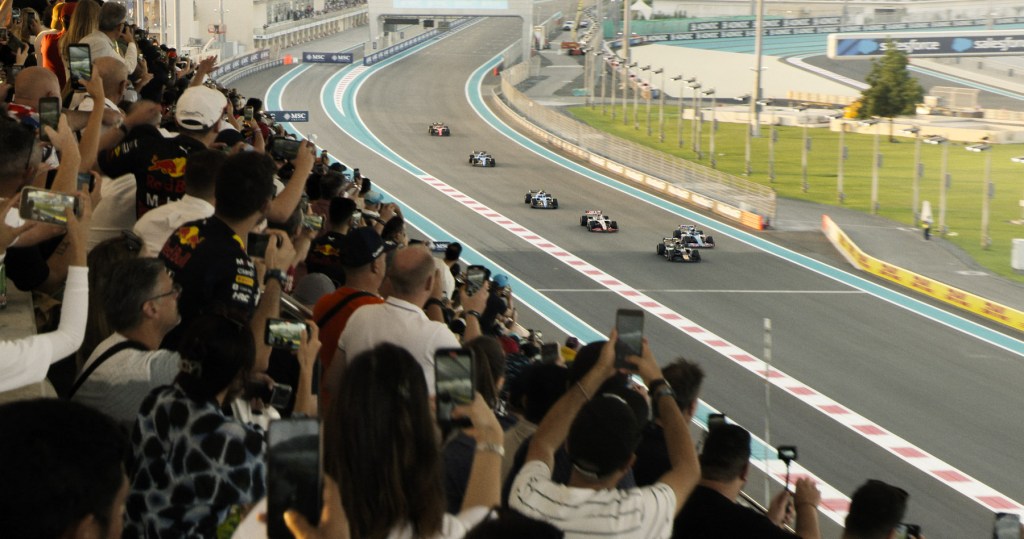
If you’ve been even remotely paying attention to the motorsports world in the past year, you’ve probably heard of ‘F1: The Movie’ and the fictional Apex GP team who made a series of appearances at a whole host of Formula One races last season.
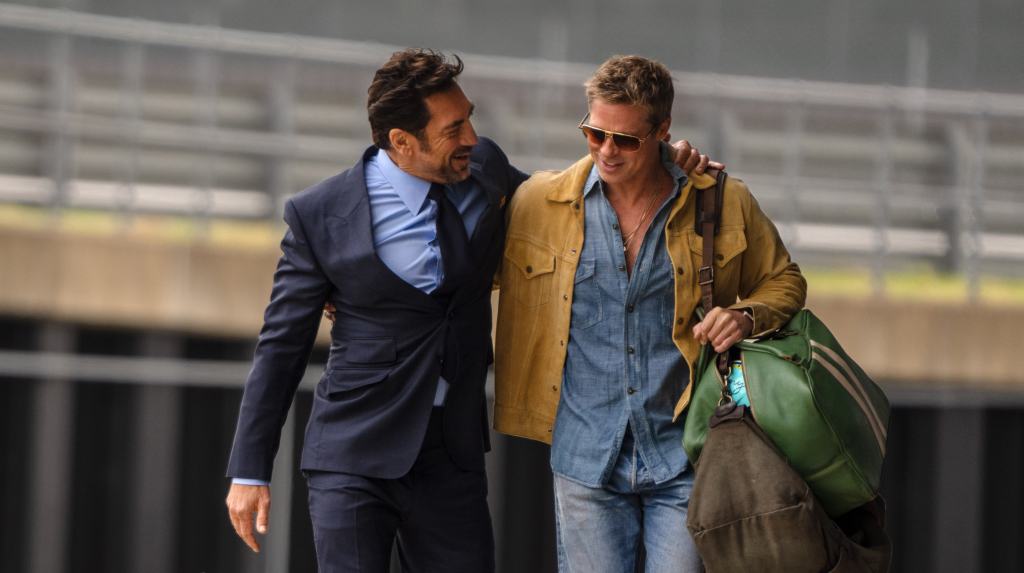
The film follows Sonny Hayes (Brad Pitt), a once-world championship material driver who left the sport after a career-ending accident. Nearly two decades later, he returns to racing. Hayes is a straight-shooting racer, plagued by memories of his past and an ever-present gambling addiction, but his penance for chance lands him a seat at the troubled Apex GP team.
With Brad Pitt, an alleged abuser, at the film’s helm, fans had a mixed-reception to the trailer when it was released ahead of the British Grand Prix last summer. Criticism came from casting Pitt as the hero in a multi-million dollar blockbuster, to the film’s inaccurate representation of the sport because of minute details like using Macbooks instead of Windows.
Formula One hasn’t shied away from the entertainment world before. ‘Drive to Survive’, an unexpectedly successful Netflix series, drew in a new generation of fans in the untapped American market. Some were hesitant that the film may overdramatise the sport, in the way the Netflix series has been accused of before, whilst others viewed it as fiction.
However, when it comes to the characters on screen, the sport seems to be a man’s world. Formula One historically hasn’t been renowned for its diversity, despite efforts toward greater inclusion by figures like seven-time World Champion, Sir Lewis Hamilton, who played a hand in producing the film, and Susie Wolff, ex-Williams Reserve Driver and Managing Director of the women’s racing series, the F1 Academy.
With many excellent women working in the paddock, including Laura Mueller, the sport’s first female race engineer (who only stepped into her role this season, after filming), why were there so few women in the film?
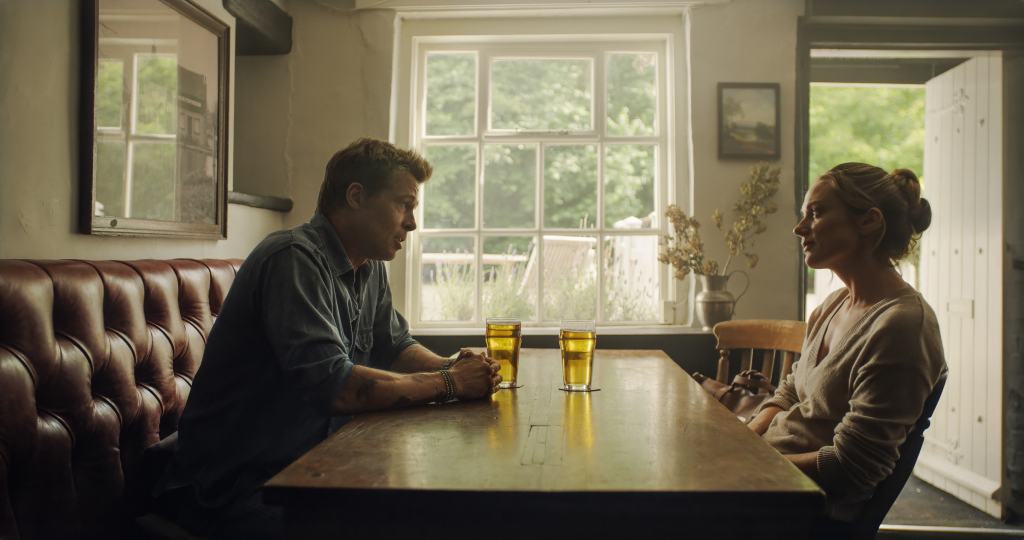
BAFTA-award winning actress Kerry Condon is one of the few women who made it onto the big screen. She plays Kate McKenna, Apex GP’s Technical Director and the woman in charge of designing a race-winning car. The team is downtrodden before Hayes joins, with a failing car and just a rookie leading the team. However, as soon as Sonny strong-arms Kate into going for a drink with him (one she ultimately storms out on), he suggests she designs the car differently… Why didn’t this intelligent woman think of that before?!
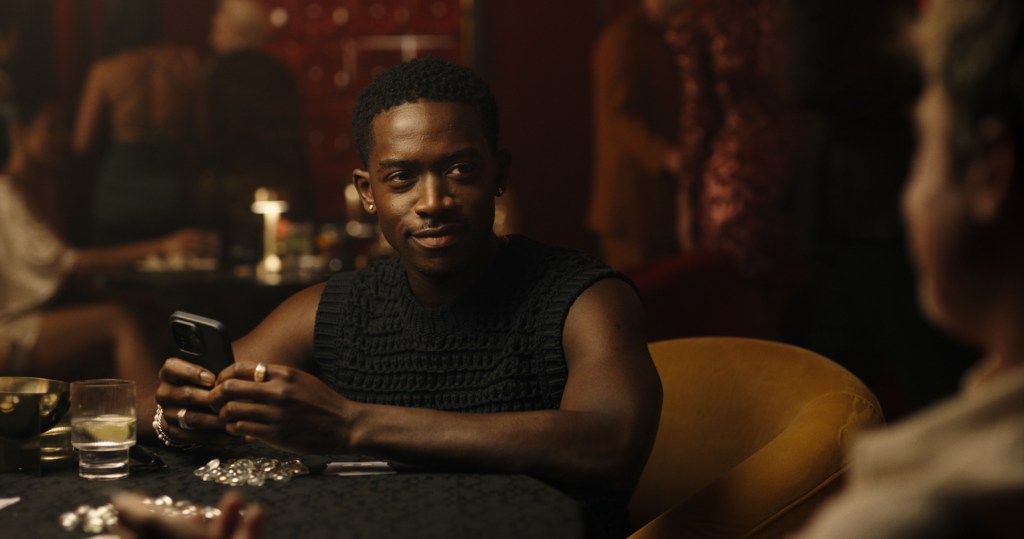
Unsurprisingly, Hayes’ idea works. It’s infuriating to watch as, to the viewer, Hayes is just so arrogantly unlikeable, particularly when lining up against his teammate, Joshua Pearce (Damson Idris).
Idris is a real star in this film. He’s the underdog that you just can’t help but root for, despite his moments of arrogance which sell him as a real racing driver. However, when things come to blows and the pair get into a physical altercation in the back of the garage, when Pearce argues he’s under pressure with the media’s scrutiny, there’s just one thing missing from the conversation.
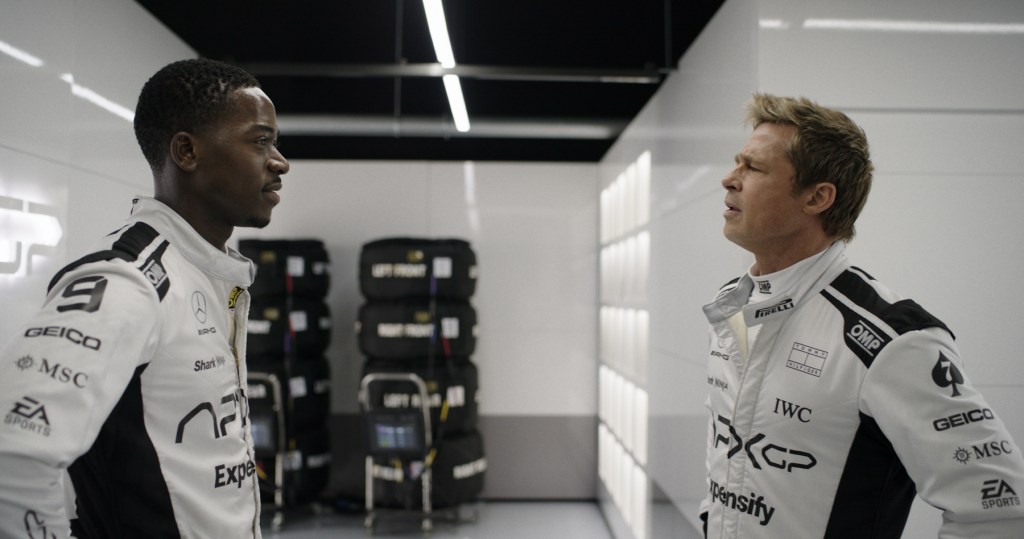
Pearce is Black. In the real racing world, Lewis Hamilton has often faced undue scrutiny for his choices as the sole Black driver on the grid. This history goes back to his karting days, and I recall the stories of pre-season testing in Spain 2008, where Hamilton faced racial abuse by fans who made monkey noises as he did laps of the circuit. Zhou Guanyu, a Chinese driver also opened up about the racially-motivated criticism he faced after being announced as an Alfa Romeo driver in 2022.
In the film, Pearce smiles for the cameras in a moment of blind panic. He knows that stepping out of line could lose him a seat for the next season, and Sonny doesn’t seem to understand the weight that Pearce carries. In the cinema, I held my breath, waiting for him to turn round and confess the scrutiny he faced because of the colour of his skin, and yet, it never came. It was a ‘safe’ decision by the director, not to comment on racism, but it was also, in my opinion, the wrong one.
The film itself has had a strong reception at the Box Office, and nearly all of the screenings in its first week at my cinema were nearly sold out. The crowd itself was an even mix of women and men, and there were most notably a lot of McLaren fans decked out in papaya.
I spoke to a colleague recently about Formula One, and his first response was “why do all women like Formula One?” I found myself scrambling to justify my interest in the sport. I grew up watching it on TV every weekend. As a child, coming back from Sunday swimming lessons, we couldn’t have the radio on in case it spoiled the race result for my Dad. But even then, if a man said he liked watching football, would my male colleague have asked: “Why do all men like football?” I doubt it.
That’s part of the reason why McKenna’s diminishment into just a female love interest in the film is so troubling. She’s smart, witty and we want her to succeed, but when she falls into bed with Hayes, it’s difficult to not feel like her characterisation has been short-changed.
The film’s directors had previously cast a second woman to support the film’s leading, male, cast, yet she would have also been boxed into another love interest role. Simone Ashley, who has previously starred in Bridgerton, was written out of the film as the directors were streamlining the story in the editing suite. She even came to the film’s premiere, yet she ultimately had as much screen-time as Lewis Hamilton’s dog, Roscoe.

Despite delivering high-octane on-track scenes and an interesting underdog narrative, ‘F1: The Movie’ misses an important opportunity to weave through the stories that make up the world of motorsport. Ignoring the very real problems faced by those in the racing world, it’s hard to overlook its painfully absent commentary on gender and race in a paddock that doesn’t even represent what we see on television every weekend. Although this film is a work of fiction, when drawing inspiration from a real sport, representation matters.

 neunmagazine.com