
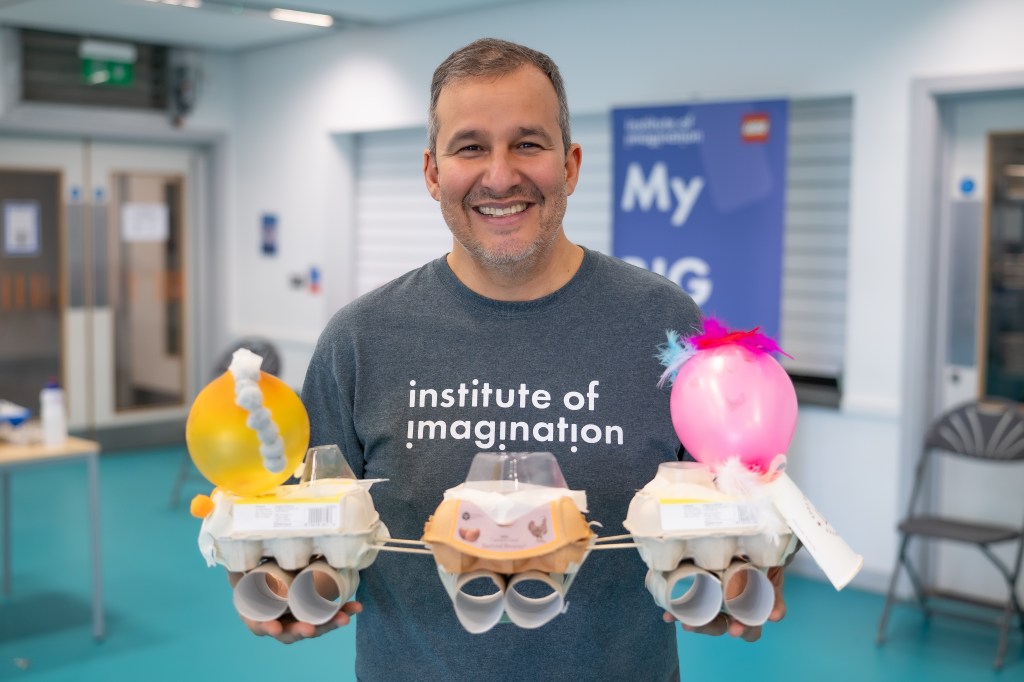
From childhood displacement to transformative hope – how one man’s unwavering faith in his inner child became a revolution of imagination and healing.
When Martin Allen Morales appears on my screen, there’s something immediately disarming about him – the shy, almost reserved approach, relaxed in his sweatshirt and sheer green glasses. I don’t feel intimidated, just curious. When I ask about his purpose, he falls silent, thinking, and the pause feels completely comfortable, nothing strained about it.
“The most simplistic way is to say that I care about people that come from vulnerable positions, and I want to help them transform their lives, their communities,” he says finally. Then, almost as an afterthought, he adds something that makes me sit up: “And the simplistic answer internally is also to find freedom and peace within.” Yet, it’s his next words that hold the key to understanding this extraordinary man: “I’m constantly searching for greater peace and connection,” and I realise I’m hearing something far deeper than just answers to my questions.
I had arrived with my carefully crafted list of questions, the kind of structured interview strategy that usually guides these conversations; however, Martin’s honesty, his effortless and trusting disclosure, makes me sense something remarkable is happening. Within minutes, I find myself discarding the plan entirely, letting my emotional instinct take over instead. That’s the beauty of conversations – they take you wherever the heart needs to go at that very moment in time. Exhilarating, and somehow exactly right.
The CEO of the Institute of Imagination, the former Disney executive who launched Miley Cyrus and the Jonas Brothers, the Peruvian refugee who built London’s most celebrated restaurant empire from nothing – beneath all these impressive titles, I’m discovering something far more profound: a soul in constant search of wonder, driven by an almost mystical need to find, and create, connection in a world that once showed him only cruelty.
“It can be as easy as me patting my dog and I feel like, yeah, that’s connection,” he continues, his voice carrying a weight I’m only starting to grasp. “But sometimes I look at a beautiful flower and it frustrates me when I am not connecting with it.” There’s something achingly honest about this admission, and I find myself leaning in, sensing we’re approaching something important.

As he begins to share what came next, I watch his face change slightly. The search, he tells me, began when he was eleven years old, stepping off a plane in Leicester with his family after fleeing the violence of Peru’s Shining Path guerrillas. What greeted him wasn’t safety, but a different kind of brutality. “I was othered and insulted and told to go back to Africa,” he recalls, and I notice how his voice remains steady even as he describes what no child should endure. “Thrown the N-word and the P-word… told that I was an animal, not a person.” The physical abuse followed, creating what he calls “a trauma that could have led to me fighting back in a violent way.”
Instead of that violence, something else happened. The pain transformed into what Martin describes as “maybe a rage that led to my ambition and my want to achieve and have a life that has meaning and purpose.”
Listening to him describe the next two decades, I can see how this search for meaning would define his journey through what appeared to be a meteoric rise in the music industry but was, I’m acutely aware, something far more complex: a once wounded soul seeking belonging through the shared language of sound.
“Music is a beautiful universal language that connects with me and connects with many people,” he explains, and there’s something almost sacred in how he describes those early years at EMI, discovering artists like KT Tunstall and Oi Va Voi. “I was massively curious and creative about music, but also about people. When you mix those two together, there’s a communication bit between the two.” As he speaks, I notice how his eyes light up when he talks about connection – it’s clearly not just professional passion, but something transcendental.

Even as he signed platinum-selling artists and climbed corporate ladders, I sense the deeper search continued. At Apple, he tells me, he found himself in a room “about as big as this” with just five people, launching iTunes Europe from scratch. “There was no IT support, can you believe it?” he laughs, and I’m struck by the modesty in his voice. “It was a startup.” The boy who had been told he was “an animal, not a person” was now building platforms that would connect millions to the music they loved. The irony isn’t lost on me, though, I suspect, it might be on him.
When he describes Disney – the ultimate validation, youngest board member by ten years, working with Bob Iger, launching global superstars – there’s something in his voice that suggests even this pinnacle wasn’t quite enough. “There’s little me,” he marvels, “and I don’t feel like I was really there sometimes. But I was.” I hear both pride and a kind of gentle bewilderment, as if success hadn’t filled whatever void he was trying to address.
It was at Disney, he tells me, where something profound crystallised, though he didn’t know it at the time. Among the corporate politics and “quite toxic cultures going on in some places,” he found himself drawn to the stories that had always been Disney’s true magic. “You’ve got these amazing stories that you can work from, and reproduce them in different ways for people to really enjoy,” he explains, and I notice how he emphasises the word “enjoy”, as if bringing joy to others matters more than the business mechanics.
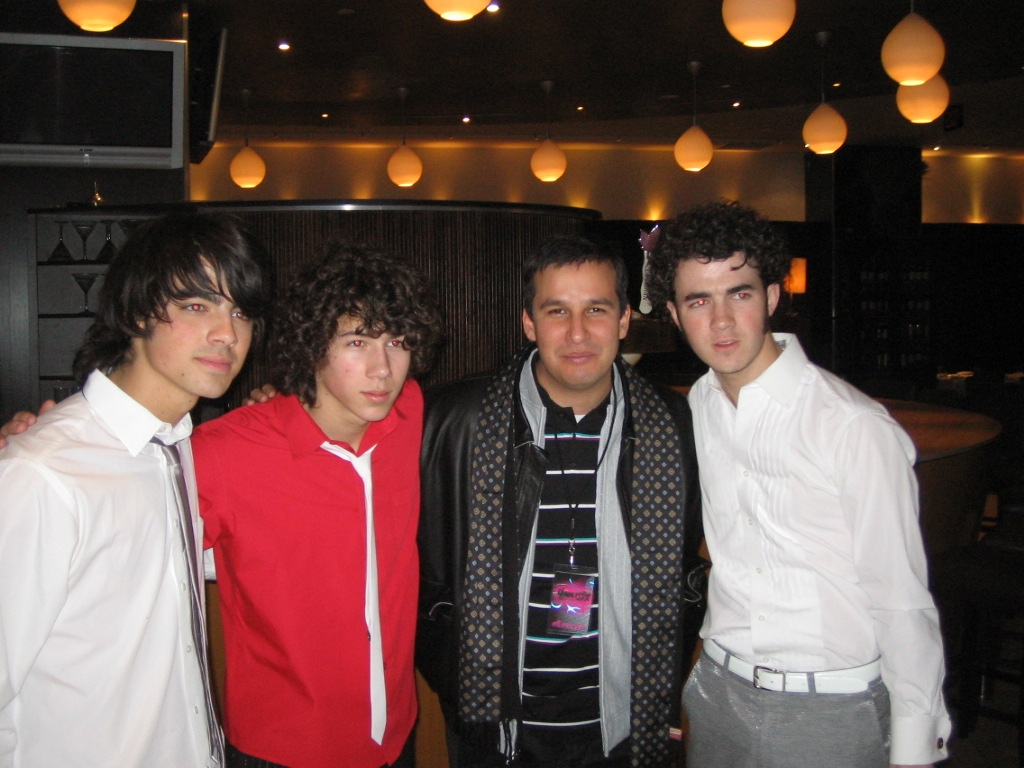
Then came the moment that, as he recounts it, I sense might have been more significant than he knew: the Muppets team created their version of Queen’s “Bohemian Rhapsody.” “I knew it was more than just a viral clip,” Martin recalls with genuine excitement, “so I went on a bit of a mission – okay, a full-on Muppet quest – to get the rights cleared.” Here he was, supporting the work of Jim Henson’s beloved puppet characters – eternal optimists whose signature song, ‘The Rainbow Connection’, poses that eternal question: “Why are there so many songs about rainbows, and what’s on the other side?”
Martin continues, and I watch how this unconscious recognition of his life’s true calling began to crack open the carefully constructed edifice of conventional success. “The first bit was really trying to find myself amongst the pain and suffering, this striving, this ambition to prove to the world that I could do amazing things,” he reflects, and I hear something shifting in his voice. “But it was also led by what society told me I should be, what the systems of education told me what we should be doing – a format that said, if you excel in this, this is how you can prove your worth.”
I watch his face as he describes what he’d been unconsciously seeking – it wasn’t in the boardrooms or the platinum records or the corporate titles. It was in something far more authentic. The tipping point, he tells me, came when Disney delivered its brutal corporate reality: “Bob Iger called into our European Board meeting one day. There were only eight of us in Europe, and he said, look, you’ve got to chop the workforce in half… They ended up chopping all of us.”
There’s something poignant about how he describes standing there with his severance package, facing a choice that would define everything. He could chase another corporate position, following the same formal parameters which promised security and status. Or he could listen to a deeper calling. “I wasn’t a wealthy man and still am not,” he says with such palpable humility, completely genuine, “but I just thought, this is my chance to do something really special.”

What followed, as he describes it, feels like the most authentic expression of who Martin truly is: bringing Peru to London through food, but not in the way the world expected. “I knew that our country, Peru, has a wealth the world needed to know about,” he explains, but I can hear there was something more meaningful at work. “I also knew that some joker was going to do something and misinterpret our culture and our traditions and do it in a way that’s hyper-commercial – I call it bastardising.”
As he talks about the stereotypes he was determined to challenge, this was about far more than restaurants. “If you’re Latin, you’re categorised as emotional and colourful and you’re hypersexual, and you’re always at a party and you drink rum,” he says, and I can hear the weight of every assumption he’s ever faced. “And if you’re a Peruvian, you walk around with llamas, you live in Machu Picchu and you take cocaine. I wanted to change that lazy narrative.”
Watching him describe this mission to bring authentic Peruvian cuisine to London through his own restaurant, Ceviche, became more than a business – it was cultural alchemy. The boy who had been called “Paddington” as a slur was now creating a new narrative for Peru, one built on respect rather than ridicule. “How can we change that narrative?” he had asked himself. “How can we do it with panache, with creativity, with colour, with beauty, with fun, with positivity?”
But even as Ceviche flourished, something deeper was stirring. He describes the restaurants packed, the reviews glowing, the mission accomplished, yet something tells me the searching continued. “I was blessed now to have found an amazing wife and to have two healthy children, to have made incredible friendships,” he reflects, and I hear genuine gratitude. But there’s also something else; a restlessness that success alone couldn’t quiet.
I watch his face as he talks about this period, and the boy who had experienced poverty and displacement, who had watched indigenous children navigate brutality and hunger on Lima’s streets, was coming to realise his gift for building bridges had a larger purpose. What about the children who reminded him of himself? What about those who, like that eleven-year-old from Peru, needed someone to believe in their potential before the world convinced them otherwise?
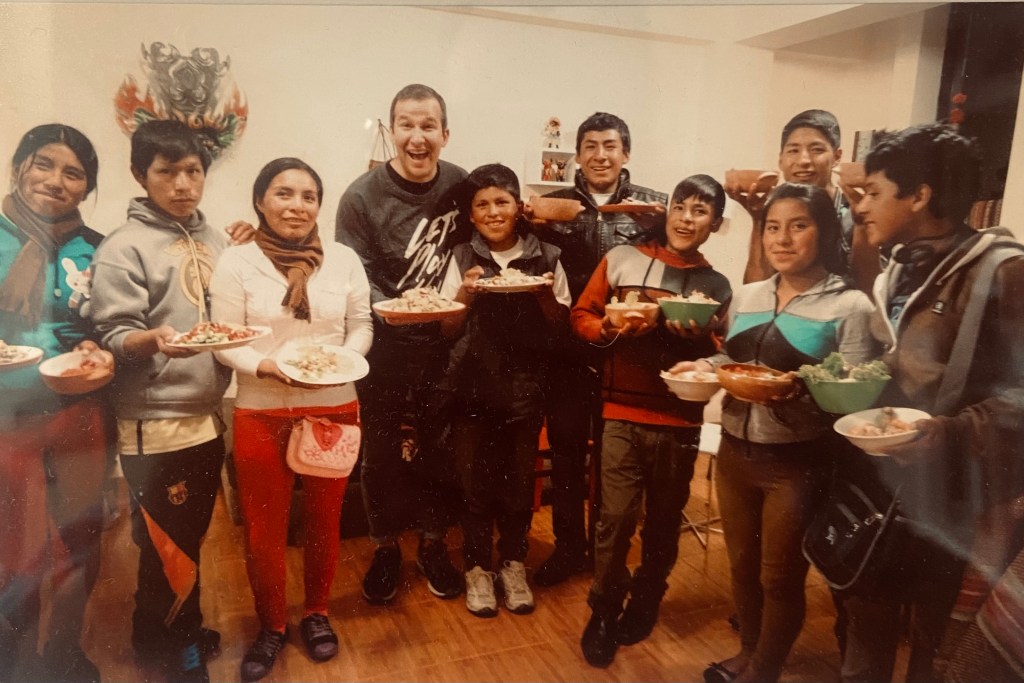
When he describes his current work, I perceive we’re approaching the heart of everything. The Institute of Imagination, he tells me, wasn’t just another career move, it was the culmination of everything he had been unconsciously building towards. His commitment to social change extends beyond his CEO role – he also serves on the board of Big Issue Invest, the social finance arm supporting charities and social enterprises. “I care about people that come from vulnerable positions, and I want to help them transform their lives, their communities,” he says, and suddenly the entire arc of his journey makes perfect sense.
At the Institute of Imagination, I learn, Martin works with children from underserved communities, using creativity as a force for transformation, and yet, it’s when he talks about “play” that I witness something extraordinary. Gone is the quiet reserve I first encountered, replaced by an almost childlike elation as he picks up a card from his desk and flicks it into the air, catching it with the most beautiful open smile imaginable.
“Play for me is joy, is freedom. It’s using my hands, it’s using my head, it’s using my body… it lives in a space that is closer to the heart for many people, that is closer to our souls, is closer to nature, and it’s closer to positivity than anything else I know.”

Martin embodies this philosophy completely. He speaks of his five rhythms dancing, of discovering clowning in recent years, of constantly seeking “things that give me greater life joys.” For him, play isn’t something reserved for children – it’s a way of staying connected to wonder, to possibility, to the very essence of what makes us human.
Every child who discovers they can build, create, imagine their way beyond their circumstances is another thread in that invisible tapestry Martin has been weaving his entire life. Now at fifty-two, he isn’t seeking retribution against a world that once hurt him. He’s seeking redemption through service, mending the next generation’s wounds before they calcify into limitation.
Despite this profound purpose, the search continues. Martin speaks with the same vulnerability that opened our conversation: the daily quest for connection that defines his existence. He doesn’t lean on one philosophy, but on a spiritually essential ecosystem of support that sustains him. “My friend Nick in Jamaica gave me some beautiful words of advice last night,” he shares. “My friends, at the CEO group I founded, give me advice all the time. My friend and coach Gierdre, my wife Lucy… My children, my cousins in Peru, my family here, my team members at the Institute of Imagination… there are many people that I call on.”
When I ask about home – that most fundamental human need – Martin’s answer reveals the complexity of his journey, and I find myself deeply moved by his honesty. “I sometimes feel at home here in Britain, and sometimes I don’t,” he admits. “When I see divisionism, when I feel the suffering of inequality and hate towards people that are different, I don’t feel at home here. But I’m not naive enough to know that actually in Peru, there are greater discriminations and greater challenges.”
His definition of home has become something more fluid, more ethereal: “I feel at home when it’s warm. When the sun is shining, when I’m near the water, when I’m with loved ones in the UK or in Peru.” Home, for Martin, isn’t geography, it’s connection itself.
There’s a thread that has woven through every chapter of his extraordinary journey, and when I ask him to name it, his answer touches me: “I think curiosity is a word that I often use as something that has been present in my yearning, in my innovation moments, in my survival.” He pauses, seeking a deeper truth. “And I guess that comes from a search to understand the world, understanding myself and finding connection, wanting to reach it consistently, so that search continues.”
As our conversation draws to a close, I find myself thinking about that Muppet quest at Disney – that moment when Martin went on a mission to help the Muppets share their message about dreams and wonder. While he secured the licensing for their version of “Bohemian Rhapsody,” ‘The Rainbow Connection’ keeps echoing in my mind – that gentle anthem about dreamers who dare to look beyond the visible horizon. The parallel feels too perfect to ignore. Martin’s entire journey has been about that question – about searching, about wonder, about what lies just out of reach. This man who has spent his entire life searching for connection was advocating for creatures whose very essence asks the same question that has driven his existence.
Sitting across from Martin, I’m overwhelmed by a sensation I struggle to name. I marvel at a man who has taken every wound, every displacement, every moment of childhood brutality, and transformed it into something luminous. The courage this requires – not just to survive, but to dedicate your life to ensuring other children never feel that particular kind of isolation – is almost unfathomable.
Martin Allen Morales has spent fifty-odd years searching for that connection, and in the most beautiful way possible, he has found it. Not in corporate success or restaurant empires or even in the accolades that have followed him throughout his extraordinary career. He has found it in the space between the wounded and the whole, in the bridge between what is and what could be, in the sacred act of helping children discover that they, too, can dream beyond their circumstances.

This rainbow connection, I’ve encountered in Martin’s story, isn’t just about a song – it’s a philosophy of hope made manifest. It speaks to those who refuse to accept that pain must remain pain, who believe that wonder is not naive but revolutionary. It’s the courage to keep looking up when the world tells you to look down, trusting that in the space between a question and a song, between doubt and faith, wonder is born.
 neunmagazine.com