

The Surprisingly Simple Secret to Online Joy
Most people with 140,000 online followers brace for negativity. Georgie Jones gets something entirely different: a virtual garden party where kindness thrives.
The poet and performer has managed something genuinely extraordinary: in her entire online career, she’s accumulated only seven hateful comments. Seven. While comment sections across the internet overflow with cruelty, Georgie has cultivated “an unspoken agreement that we’re here for joy and gentleness and general hyping each other up.”
How does someone build genuine kindness online? We sat down with Georgie to discuss chronic oversharing, disco balls, the tooth fairy, and why “the nice time is the point.”
Having only “four hateful comments ever” with 140K+ followers is extraordinary. When did you first realise you’d built something different online?
I think the original tally of four hateful comments might be a teeny bit out of date now. We’re probably up to about seven, which still feels like bananas compared to the scale of it. The truth is, the bigger the numbers get, the more I find myself bracing for the sharp edges and casual cruelty that so often exists in the comment sections of the internet. And yet, somehow, this little corner seems to have developed its own etiquette. It’s like an unspoken agreement that we’re here for joy, gentleness, and general hyping each other up.
It can be hard to comprehend the numbers sometimes, when they’re just little pixels in the corner of a screen, so I try to imagine that many people standing outside my flat. If I opened the door to 140,000 people, I’d expect a fair few to be heckling ‘What time d’you call this’ or ‘That’s not where the bins go.’ Instead, what actually happens is I open the door to a bunch of gorgeous strangers tending the garden, with hot coffee and freshly cut hydrangeas, yelling ‘Morning! Love the pyjamas!’
I don’t think I had a specific lightning-bolt moment of realising it was different. I don’t know if it even is different? Is it different? I’m sure there are lots of people online who experience this steady drip of kindness. I’m never not grateful to be one of them. To stretch the metaphor to its absolute limits, I feel very lucky to live in the cul-de-sac of the internet, where people bring over Victoria sponge instead of posting passive-aggressive notes about the hedge through my letterbox.
You mentioned you’re “not quite sure how you’ve found yourself in this kind little corner of the internet” – but what choices, conscious or instinctive, do you think led you here?
I’ve always been a bit of a chronic over-sharer, and I’ve never been too proud to make a fool of myself if it might put someone else at ease. My friends will testify that what I share online is a fairly diluted version of myself (the live shows are a slightly different story), though I would like to scooch a bit closer to that level of unfiltered honesty.
I’ve found that if the message you send out is kindness, then kindness is usually what you get back. Not always perfectly and immediately, but enough to keep the faith.
I hope that my work might act like a bit of a mirror (even if it’s a slightly grubby one, or a little warped funhouse thing you might find on the bottom of the clearance shelf in TK Maxx) in that I hope someone might recognise themselves in it and feel less alone.
It’s instinctive for me to want to share the bits people might try to polish away. Not because I want to be different, but because those moments make us human. And honestly? They’re the best bits anyway. Everyone’s got the glamorous, “Instagrammable” moments, but the stories about wetting yourself on the tube or burning your mouth on molten mozzarella are where we actually connect.
When those rare negative comments do appear, how do you handle them? What’s your philosophy?
I honestly don’t mind them. Art is subjective, and people are well within their rights not to like my stuff. I think it’s quite important, actually, to read the less flattering comments; otherwise, it all becomes a bit of a bubble, doesn’t it? It’d be like working in a Travelodge and only reading the five-star reviews. Sometimes you need to know that Derek, in Stoke, who thinks your towels are ‘a bit stiff’, keeps you humble.
Working as an actor made me pretty resilient when it comes to rejection. You spend years being told you’re too short, too wide, too blonde, and not blonde enough, and in response, you nod politely and go home. You learn that so much of it isn’t personal, it’s preference, timing, chance. So when someone I’ve never met tells me they don’t like what I’m doing, I’m just like “Yeah, fair enough, maybe you’d prefer a sonnet?!”
In all seriousness, people’s responses, both the generous and the critical, remind me that what I’m making is alive in the world, being met with real reactions, and I’d rather that than silence.
Your feed is “make-up tutorials, gorgeous interiors, and people eating” rather than poetry accounts. How does this influence the energy you bring to your own content?
Oh my gahd, I remember saying that! Though it’s not entirely true. There are (of course) plenty of scatter cushions and people slurping ramen in slow motion, but there are poets in abundance as well. Hoo-absolute-ray!
I should have said that I try to be conscious of what I’m engaging with online. We’re so tethered to our devices, they’re basically our long-term partners. We sleep next to them, greet them in the morning before our actual loved ones, and have a little panic if they’re more than four feet away.
If I’m going to be spoon-fed content, I want it to feel nourishing rather than corrosive. If I fill my feed (and my life) with rage and noise, that’s what lives in my body when I sit down to write. But, if I fill it with beauty, humour, and the small, daily rituals of strangers — the sweep of eyeliner, the crackle of milk on cereal — then that’s the energy I’ll bring to my work. Poetry doesn’t live only in the poems; it’s braided through the everyday, too.
When you’re creating, are you consciously fostering kindness, or does it emerge naturally from who you are?
Yes, it just emerges naturally. Like a fart in a bathtub, bubbling up whether you like it or not.
You celebrate small, ordinary moments in your poetry. Is this intentional resistance to social media’s “extraordinary content” pressure?
Yeah, a little bit.
I think, if we’re honest, ninety per cent of what we see online probably only makes up ten per cent of people’s lives. The engagement parties, holiday snaps, and just-bought-a-house announcements are all real, but they’re only one corner of the picture.
The big milestones already come with fireworks and confetti, and Auntie Carol is doing the Macarena in a sequinned trilby. I’m excited by paying proper attention to what’s in front of me, and I really, genuinely believe that the smaller stuff, the stuff that’s so easily within reach, deserves celebration too. Have you ever taken yourself for a walk after a week when you couldn’t get out of bed? It’s amazing. Have you ever lain on the grass and squinted into a nectarine coloured sky? Delicious.
I think life is so outrageously beautiful in those tiny ways. It feels dishonest not to celebrate them, because really, when you add it all up, they’re what life is made of.
When you see your comment sections, what do you hope people take away beyond just enjoying the poems?
I’d like people to think Wow! What a masterpiece. Someone give this woman a BAFTA. An Olivier! A Dame-hood!
Failing that, I hope they feel part of a little gang.
The little gang is what I’m proudest of. The poems are nice, but the best bit is the community that’s grown around them. And it’s the community that comes to the live shows, and it makes my little heart want to explode. People come alone and leave with a brand new WhatsApp Group.
Suppose people scroll away from the video feeling lighter, thinking ‘Oh, brill! It’s not just me who’s a chaotic little disaster with a soft centre right now,’ then my job here is done.
When you write, are you consciously trying to make people feel less alone, or is that a beautiful byproduct of your natural voice?
That’s the whole thing, isn’t it?
Life is exhausting and complicated and often very isolating. I think most of us are just trying to stumble through without making too many catastrophic mistakes. We’re all tripping over the same uneven pavements, so if I can write something that helps someone feel a little less alone in all of that, that’s everything. It’s not really a byproduct; it’s the reason I keep showing up to do it.
You’ve said you’re “just having a really nice time at the moment” without “ulterior motives.” But surely there’s some deeper purpose driving your work – what is it?
Can the deeper purpose be joy? The immense joy that comes from being lucky enough to do something I love so much. I love it SO much. I can’t believe that the thing I want most (to write and speak and share) is what I get to call ‘My Job’.
Yes, the workload is often colossal, and demands that I lay other (important) parts of my life down to make space/time for it. But it all feels worth it when I’m writing or standing beneath a stage light with a poem in my mouth.
Part of the joy is the freedom. My experience of acting felt like standing outside a house party, and being able to hear the music and see the feather boas (it’s the 1920s, apparently) only for a little man in a top hat to poke his head out and say ‘sorry, you’re not on the list’— endless auditions, endless permission requests and most of the time, no entry.
But this is my party; I’ve hung the disco ball and made the canapés, and if I want to play Vengaboys on repeat for 3 hours, I bloody well will. And! Miracle of miracles, people actually show up! They’re not just huddled in the corner demolishing the cheese and pineapple hedgehog; they’re dancing, singing along, and bringing their friends.
So I’m trying not to overthink it. The nice time is the point, and I feel very grateful that, at least for now, people want to come to the party.
Do you feel a responsibility toward the kindness you’ve cultivated, or would that make it feel too calculated?
I do feel a bit of responsibility to keep my little corner of the internet a positive space. You never know what kind of day someone’s had before they scroll into your page, and you don’t know where they’re off to after. At the live shows, there’s more space for complexity; the poems can take sharper turns because afterwards, we can all hang out and have a laugh, and I can make sure nobody’s about to cry in the cloakroom queue.
Kindness is important. It feels essential to me. I remember I once shared a poem about moving slowly and being gentle with yourself. Someone commented on ‘beta mentality,’ and I just thought, this is exactly the kind of thing hustle culture has hardwired into us; this idea that rest or softness equates to weakness. We have to resist it.
I only share what I truly believe. I wouldn’t put a poem into the world if it didn’t feel honest. So it’s not really about being relentlessly positive for the sake of it; it’s about speaking with sincerity and hoping that sincerity lands as kindness.
You mention that putting content online “challenges” identity because “you develop a brand.” How do you balance being genuinely yourself while being aware you’re building something?
It’s a bit of a tightrope, isn’t it? When you start putting content online, especially when the numbers creep up, there’s this sense that you stop being a person and become a brand. I suppose there’s some truth, particularly when selling something tangible, like books, gigs, or whatever it might be. But the content only works if it’s coming from somewhere true.
It’s like we were talking about earlier, wanting to find a way to share a less diluted version of myself. I want to be a little bit weirder and reflect my personality more honestly online. I stumble there because I’m sharing stuff that’s been written and edited; it’s not a stream of consciousness. Even the idea of setting up your phone to film something candid feels like a contradiction. It’s like those days in the life videos, where the first shot is someone asleep in bed. Who’s filming that, then? The tooth fairy?
The trick, I guess, is not to confuse performance with dishonesty. You can be deliberate in how you share without betraying yourself. I’ll probably just keep showing up as I am and, fingers crossed, the rest will follow.
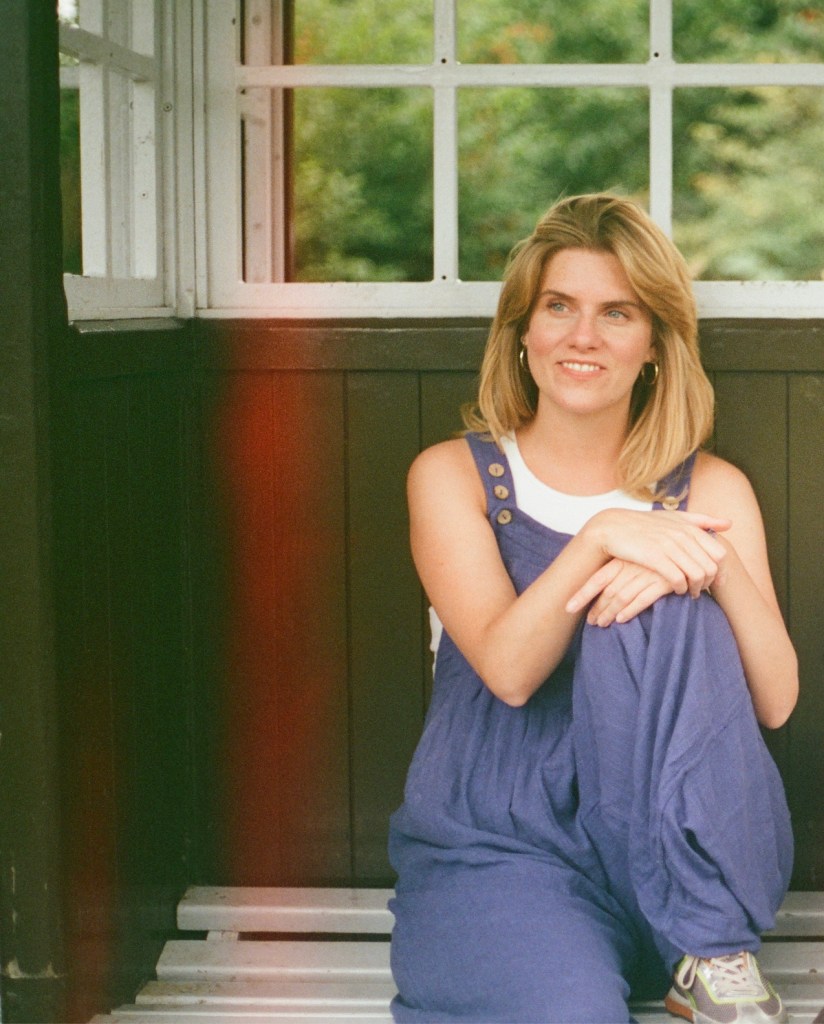
Georgie Jones has built something quietly radical online: a space where the “nice time” really is the point. Not the viral moment, not the perfect aesthetic, not the relentless hustle – just the honest, joyful act of showing up as yourself and inviting others to do the same.
She’s proven that sincerity works better than performance, that celebrating ordinary moments creates deeper connections than chasing milestones, and that kindness isn’t a strategy – it’s being human. In a digital world designed to keep us scrolling through anger and envy, she’s hung a disco ball and reminded us of something we’d forgotten.
People are showing up. They’re dancing. They’re connecting.
It’s simple, really. What we all truly wish for is a little bit of tenderness.
 neunmagazine.com