
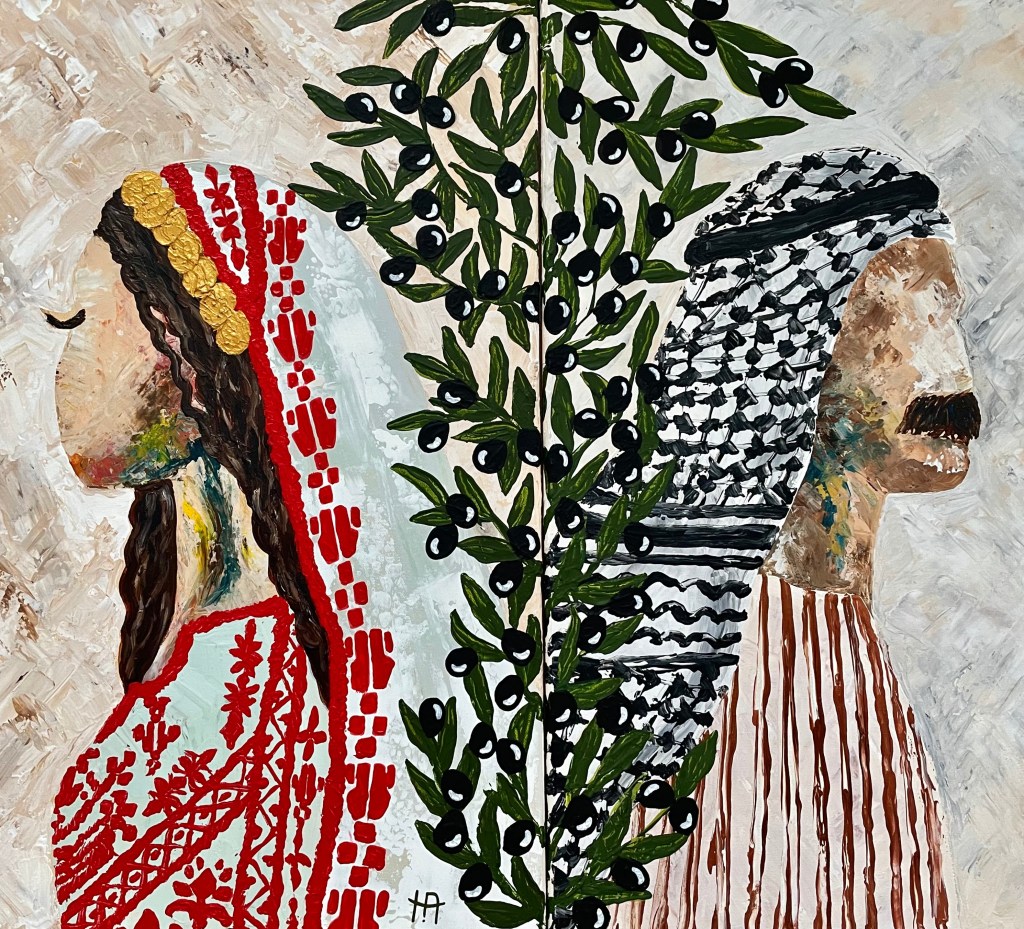
When words fail to express feelings, artists are here to defend, resist and remember what matters most. Meet Beesan Arafat and Halima Aziz – two inspiring women transforming memories into resistance.
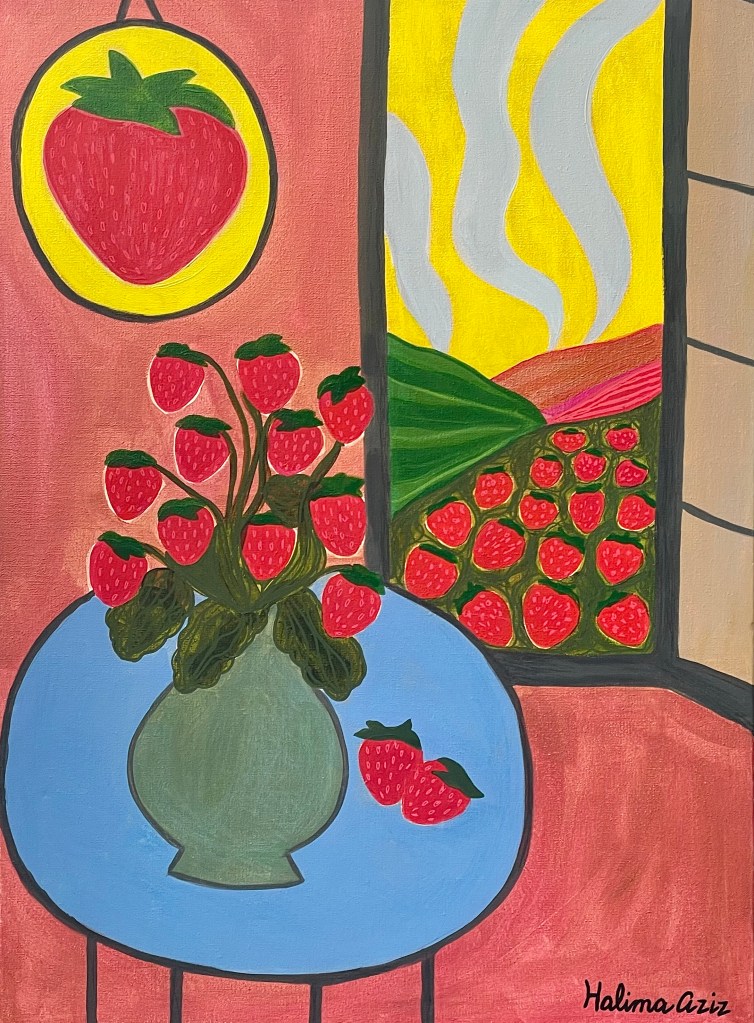
Picking strawberries in the fields, walking along the endless coastline, and listening to the hum of life in Palestine — these childhood memories are quiet anchors, the kind that shape an artist’s sense of place and purpose. For Halima, they are what she calls “simple everyday experiences,” moments that inspired her to paint and, later, to experiment with digital illustration — a way to preserve what felt too vivid to forget.

“I want my art to open a space for reflection and connection.”
Now based in Germany, Palestinian artist and designer Halima Aziz explores memory and identity through her paintings and digital illustrations. She chooses to create art through traditional painting and later digital illustration to gain the freedom to experiment, refine, and share her stories with a wider audience.
These pieces are brightly coloured and rich in Palestinian symbolism, and balanced with a sense of serenity. Colours of home, shapes built from memory, and images that resonate and remember.
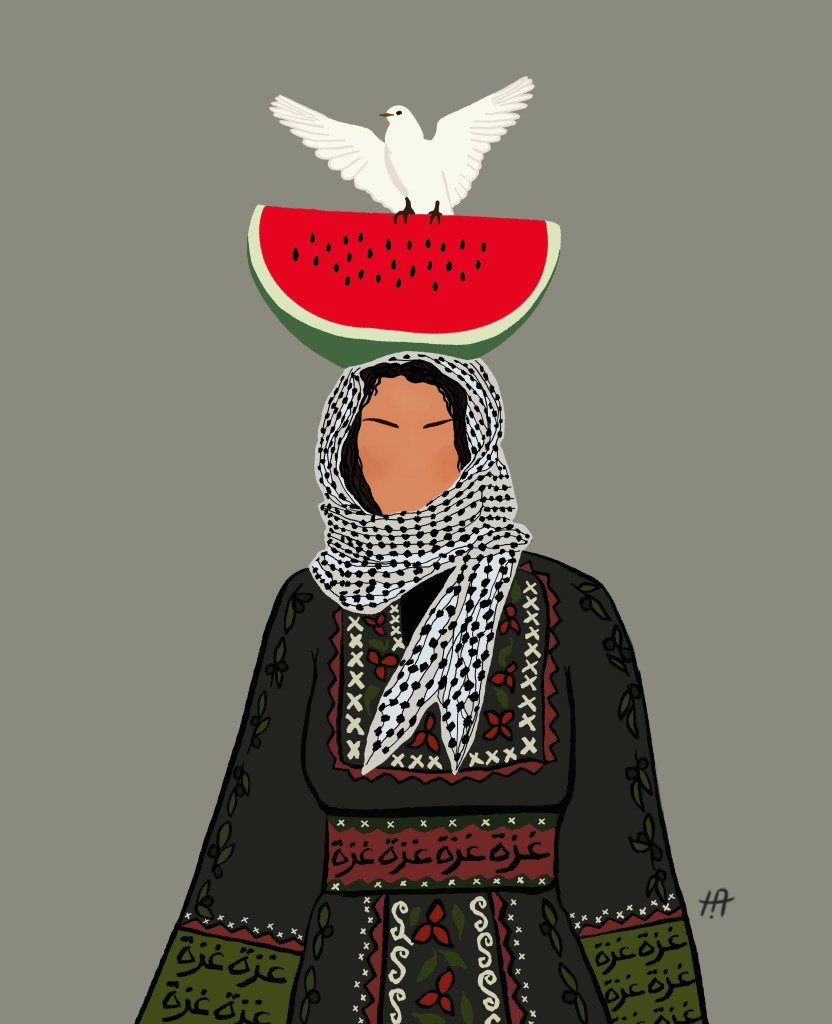
As she explains: “Choosing to focus on Palestinian culture came from a quiet but powerful urgency: Our stories, our struggles, and our beauty are too often unseen or misunderstood.” Each symbol, each colour, each embellishment has its own significance. While strawberries remind her of the sweetness and simplicity of her childhood, the intricate embroidery tatreez is a memory she admires on her grandmother’s traditional thobe. “It carries the stories and resilience of generations before me”, she adds.
Through her paintings and illustrations, Halima shares her hope that her art “feels like home” for Palestinians – a visual embrace affirming pride, belonging and shared memory. For those unfamiliar with the culture, she hopes it awakens curiosity, empathy and understanding: “I want viewers to feel Palestine—to sense its warmth, strength, and beauty, even if they have never set foot there”
Her work is a call for recognition, freedom, and justice. “A tribute to the enduring spirit of a people who continue to create, dream, and hope despite everything”, she concludes.

“I honour my family, my history, and the women whose quiet strength has shaped generations.”
While Halima captures the tenderness of everyday life, Bessan Arafat’s work speaks directly to resistance. The Palestinian/Jordanian painter and activist, based in England, explains that focusing on Palestinian culture and identity was more than a choice – it was a calling. “It’s how I honour my family, my history, and the women whose quiet strength has shaped generations.”
In her paintings, Beesan uses powerful Palestinian imagery such as the watermelon, the key or tatreez stitches. “The watermelon became a stand-in for the Palestinian flag when it was banned. It’s playful, defiant, and deeply connected to our land and identity. These symbols allow me to speak across borders and languages, reminding viewers that even the simplest object can hold a powerful story”, she explains.
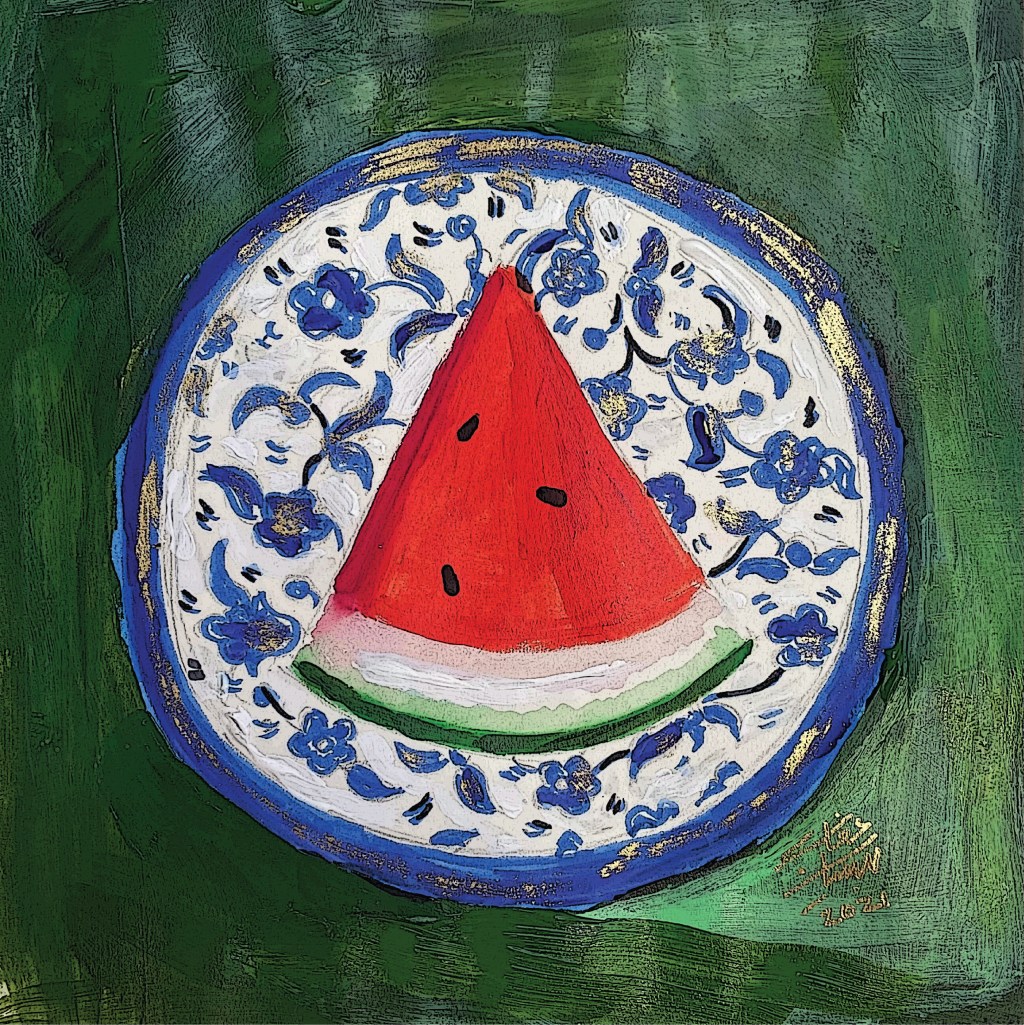
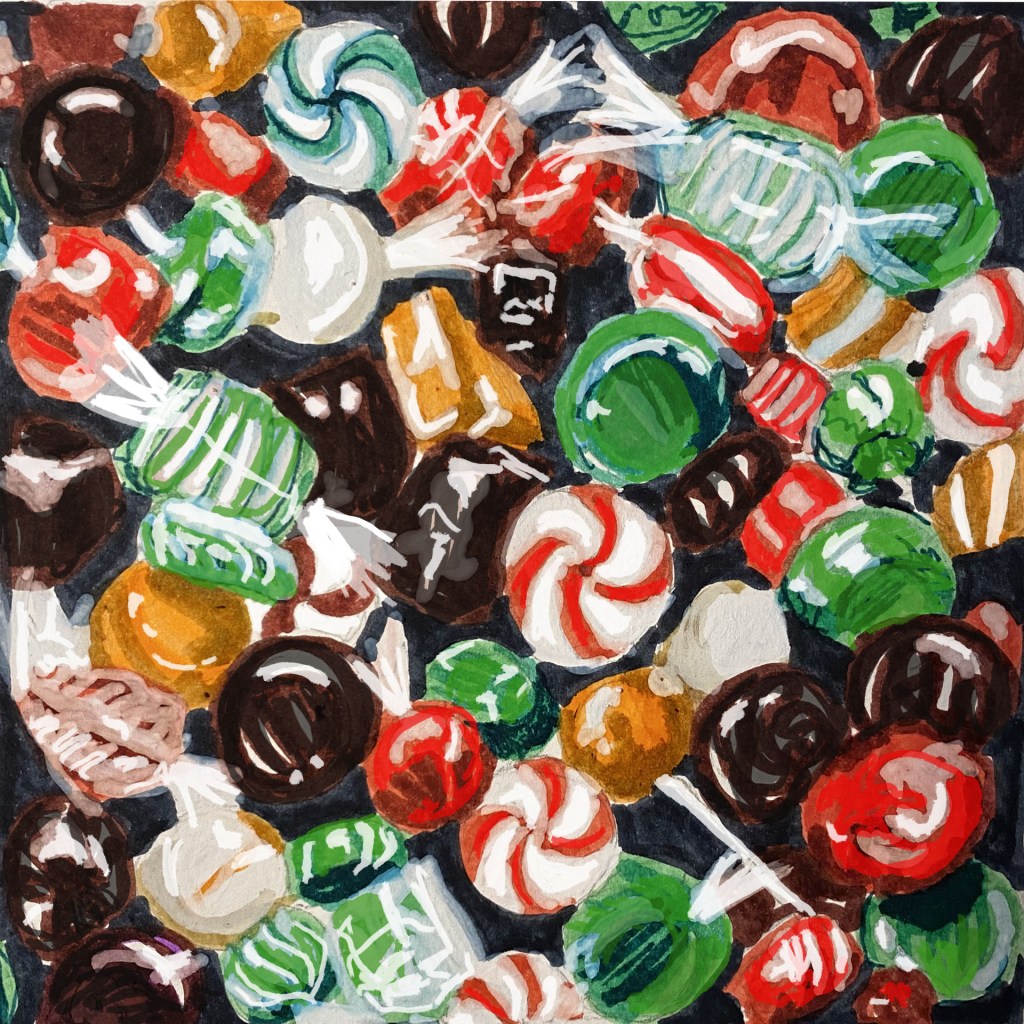

In parallel with her work as a painter, Beesan Arafat is also an activist for Palestinian rights. For her, art and activism go hand in hand – describing her paintings as a more subtle form of protest. “I find it difficult to fully express my emotions through words alone; instead, I turn to painting, textiles, and fabric as my mediums of communication. I’m able to convey complex feelings and experiences that might otherwise remain unspoken.”
During our conversation, Beesan tells me her art aims to educate and preserve using honest and meaningful narratives. She hopes her audience feels moved – ”not just emotionally stirred but inspired to reflect deeply and engage with these stories in a way that fosters understanding and solidarity.”

This quest of creation and representation through art is not without consequences. Beesan shares how her art has sparked many heartfelt reactions, like: “I didn’t know that—thank you for teaching us something new in such a beautiful way,” or “Your work made me cry.” These are the moments that stay with her. She says that they remind her “that art can open doors to understanding, especially when it carries stories that have been silenced or distorted.”
The artist admits to facing public backlash from those who reject or resist her narratives. “Some comments are dismissive, others are aggressive. I’ve learned to ignore most of them, but there have been instances where I’ve received threatening messages, especially in response to paintings that challenge dominant media portrayals or expose uncomfortable truths.”
Yet it is precisely these uncomfortable truths we must face and challenge. Perceptions and narratives are everywhere; it’s about how we share them or break through them. Beesan paints the way to do just that – highlighting that Palestinian existence is not singular or easily categorised, but layered, lived, and rooted in both struggle and joy.
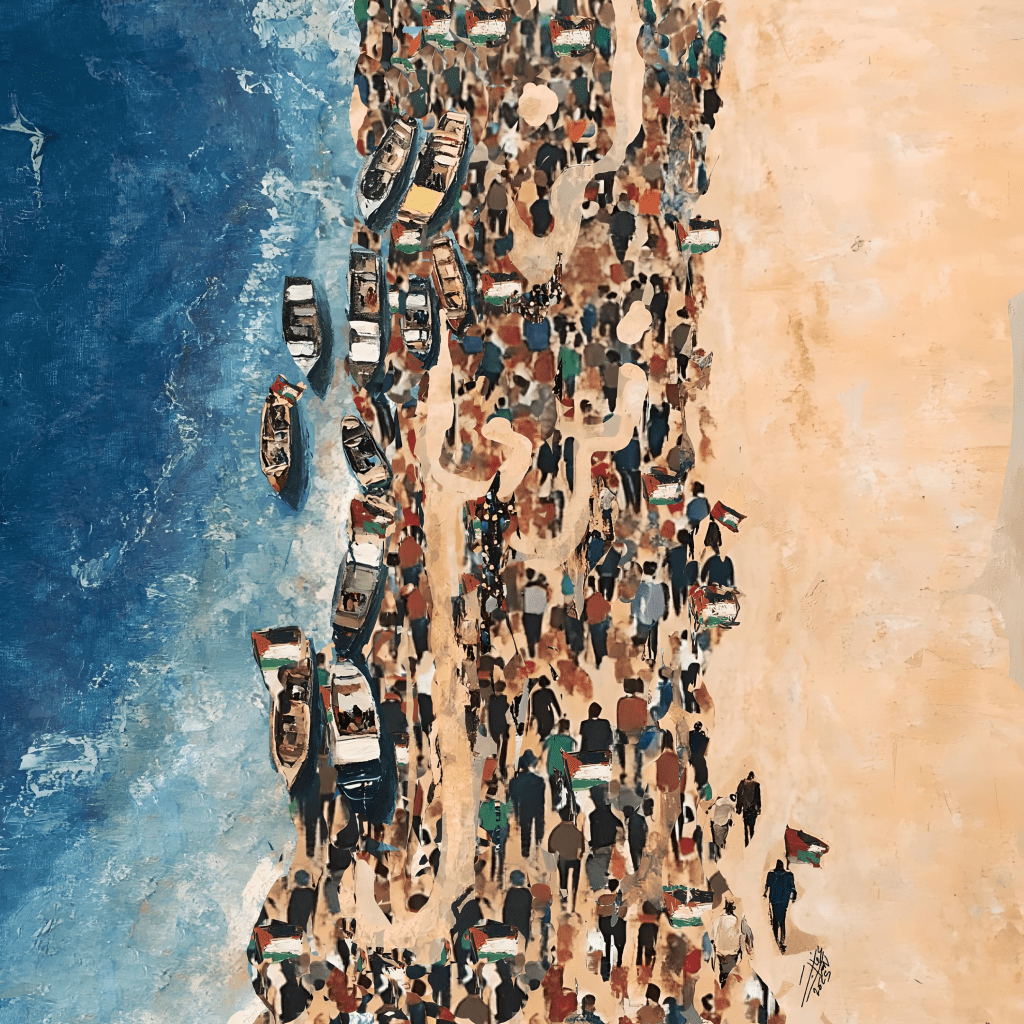
Joy and resistance. These are the two words that come to mind when meeting these two artists. Through paint or digital media, each of these women revives Palestinian memories.
Whether they’re in Germany or England, these inspiring women are an ode to pride. Through their hands and eyes, Palestine breathes in paint and light. Their art allows the audience to connect, resist and celebrate despite the critics.
As Beesan Arafat concludes: “If my work unsettles those who prefer silence, then perhaps it’s doing exactly what it’s meant to do.”

 neunmagazine.com