

“Our artisans are Palestinian women living under the daily struggles of occupation. But behind every Tatreez is a story of strength, hope and resilience.”
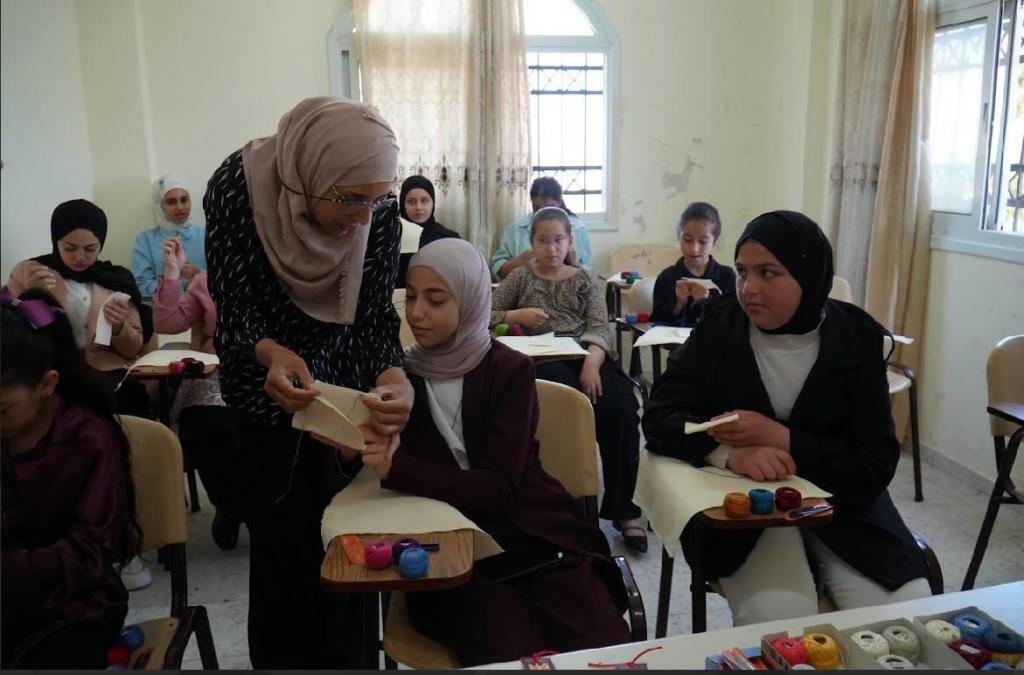
With their land under siege and their lives under constant threat, a small community of women artisans defies occupation in Gaza one stitch at a time. Supported by the non-profit organisation Child’s Cup Full and their ethical fashion brand Darzah, over 30 Palestinian artisans handcraft products with Tatreez, the traditional embroidery style and art form passed down through centuries of women. Their mission: Empowering Women and preserving heritage by creating fair-wage jobs for Palestinian women artisans—reviving traditional crafts, supporting families, and building a future rooted in dignity and resilience.
Dr Janette Habashi, an educational psychologist, is the principal founder of the organisation, with two of her co-founders from the UK. Whilst writing her dissertation, Dr Habashi was working in the Jenin Refugee Camp in the northern West Bank and got to know the community there: “After I finished my PhD, I continued to check in with them and I wanted to do something for them, especially the children.” She tells me that her non-profit organisation Child’s Cup Full was inspired by her professional background in education. It started with the Fair Trade educational toy brand Zeki Learning, which employed Palestinian women to produce handcrafted toys for children. When more and more women approached her for jobs so they could support their families, Dr Habashi considered the skills available that could be used without much training and guidance.
Quickly, it became clear that Tatreez, the traditional Palestinian cross-stitch, was the specialist skill they were looking for. Not only is it a delicate and intricate craft, but it also requires real artistry. It’s also a fundamental part of Palestinian cultural identity and history, woven with resistance, defiance and pure sheer beauty. “Everyone does embroidery”, she explains.
“They learn it in school, they learn it from their mothers, from their grandmothers. You go to any neighbourhood, and you see people doing this work. Palestinian embroidery is everywhere: on the pillows of a couch, on home accessories, on dresses and headscarves – it’s all over.” The beautiful motifs don’t just tell historical and cultural stories. They’re keepers of life stories, identity and pride.
Dr Habashi knew then that they had found the skill, and so Darzah, their ethical fashion brand, was born. Today, they have six full-time artisans and over 30 women working part-time. Their artists span over six villages and two refugee camps in two cities.
Nevertheless, despite the incredible community and support this has created, there are constant challenges, and the war in Gaza has amplified them. Dr Habashi explains to me that many of the women are unable to come to community places to meet with their fellow artisans or to pick up materials for their embroidery. They face danger every time they leave their home. “Sometimes a woman has to take three or four different kinds of transport [to get where she needs to be]. And now, at the checkpoints, they [the occupational forces] don’t just check their ID. They also check their phones. So if it’s not safe for them, we tell them to go back home.”
As a result, Child’s Cup Full leading artisan drops off cloth and yarn to the women, who then complete the work when they can. This and the fact that the artisans of Darzah simply don’t have eight hours in the day next to their other responsibilities and the constraints of the war, make it difficult to turn the embroidery craft into a full-time job. “But we’re trying to support them as much as possible. Mobility is the biggest challenge, because in the end, their safety is paramount.”
The organisation regularly checks in with the embroiderers, even if they aren’t dropping off materials or collecting finished work. Not everyone there has a job, and 90 per cent of the men in the area have been without a job for the last two years. On top of that, none of the schools are running because the Israeli occupational forces have been withholding funds.
Yet, no matter how dire the circumstances, Child’s Cup Full remains a constant for the embroideresses. “Our commitment is to support them with a salary and anything they need. We check on them and make sure that everyone is safe. If their situation is bad, we tell them: ‘Don’t worry. Go and be safe with your family.’”
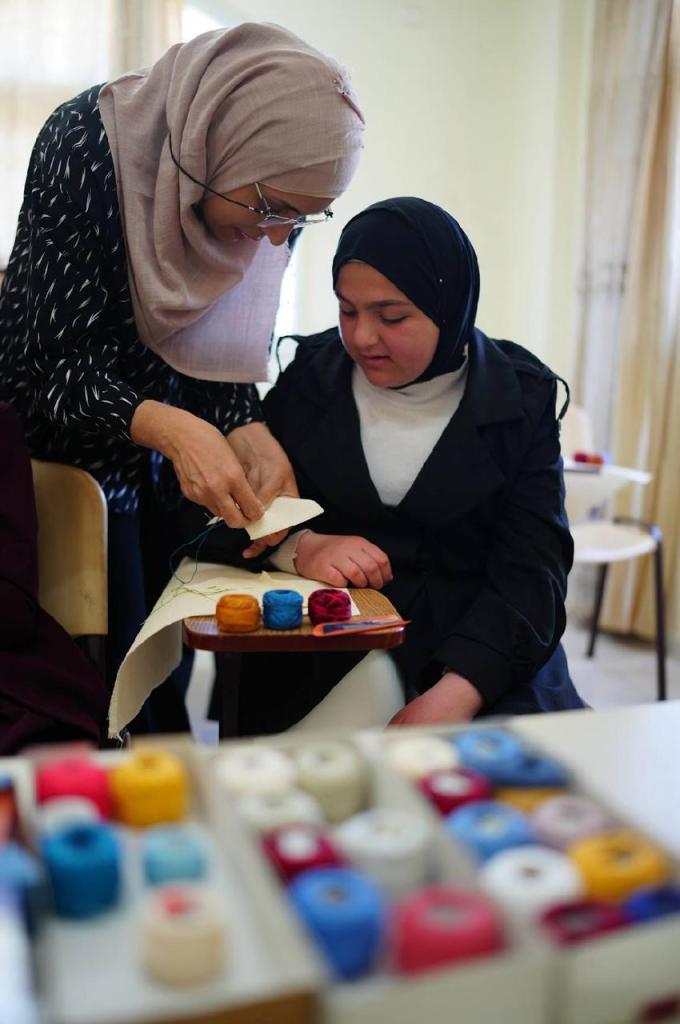
Despite all the constraints and obstacles Dr Habashi, her volunteers and the incredible artists in two refugee camps, six villages and two cities in the northern part of the West Bank work tirelessly and resourcefully to fulfil as many orders as they can. The customers approaching Darzah are understanding of the situation and aware of the limitations and potential delays an order for embroidered products can face.
Customers are made aware of the consignments’ lead times and know up front what materials and colours are available and in stock with the Palestinian women. Dr Habashi gets all the measurements and information from her customers before she approaches her artists. “We have three to four people we can communicate with directly, and we have WhatsApp groups to exchange information.” This communication between the customer and artisan is kept up during the process through photos. The women are getting feedback from the customer, which, as Dr Habashi says, delights the women when they know that the customers like their work.
If safety allows, the women meet in an old Arabic house for what they call a conference. It’s the centre of the organisation, where the six full-time artists work daily if safety permits. It’s there where they discuss colours and make decisions on what can and can’t be done for an order. “They don’t have a boss”, Dr Habashi explains. “I refuse to have a boss because they’re responsible. Everybody owns their process. And then they will tell me that inshallah (if Allah wills it), they will have it done in a set amount of time.” Dr Habashi smiles. “Every second word is inshallah, because nothing is guaranteed here. So, I have to pass on the word, inshallah, to the customer. They need to know they will do their best. [Against all the odds] they’ve built an amazing system!”
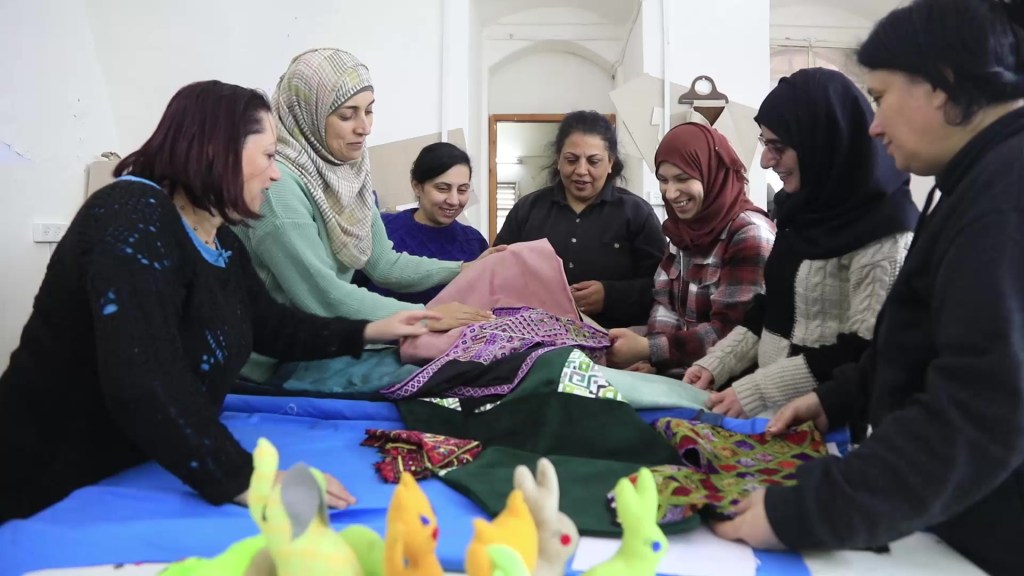
Although there are limits to the availability of embroidery materials and the wishes of the customers, the Palestinian artists have some influence on the work they produce. They had to learn to incorporate the customer’s wishes, but will always put their own spin on motifs and designs. It’s precisely their specialist knowledge that allows them to explain the time and processes involved in the embroidery to the customer. Their expertise can’t be argued with: “We had a trainer from Turquoise Mountain from the UK come to visit and train them. But in fact, they [the Palestinian embroiderers] taught her a new skill! And they’re very proud of that.”
Through all of this, it’s the power of community that keeps the Palestinian women in and around Jenin City going. “They support one another and their families and are one big collective. Inflation is high, so rather than borrowing from a bank, they borrow from each other”, Dr Habashi tells me. “And it’s a joy working with them. When I talk with them, they are so funny. Especially one of the artisans, the moment you say hello to her, she will have a joke for you. They are incredible. And they are so protective of each other.”


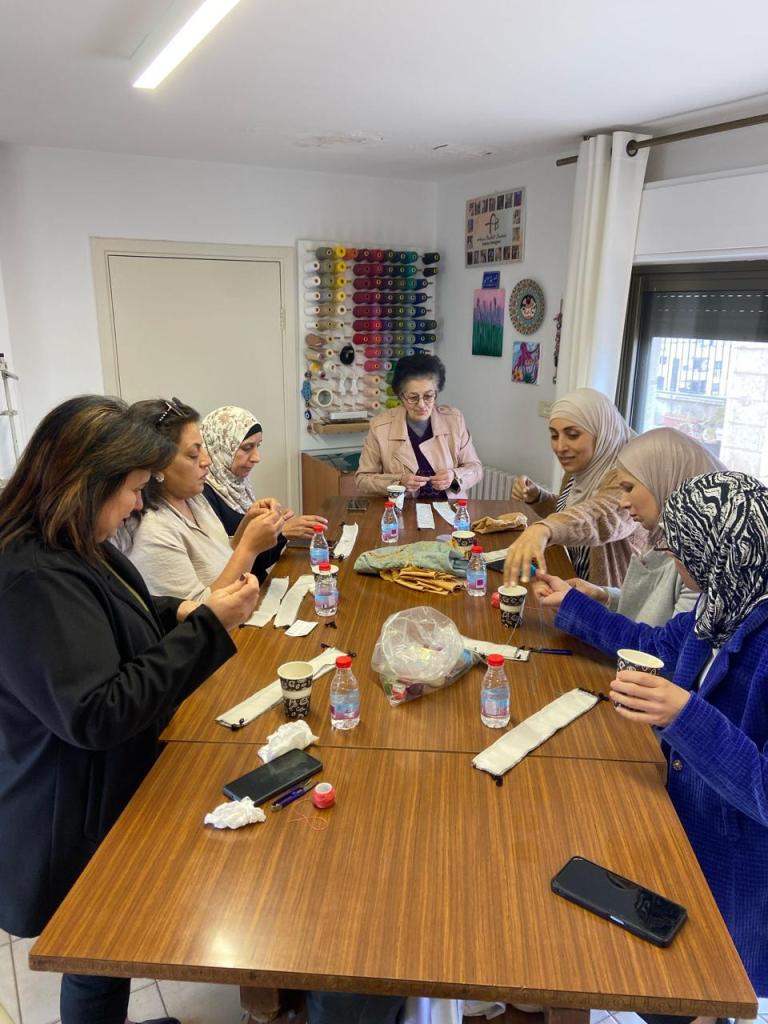
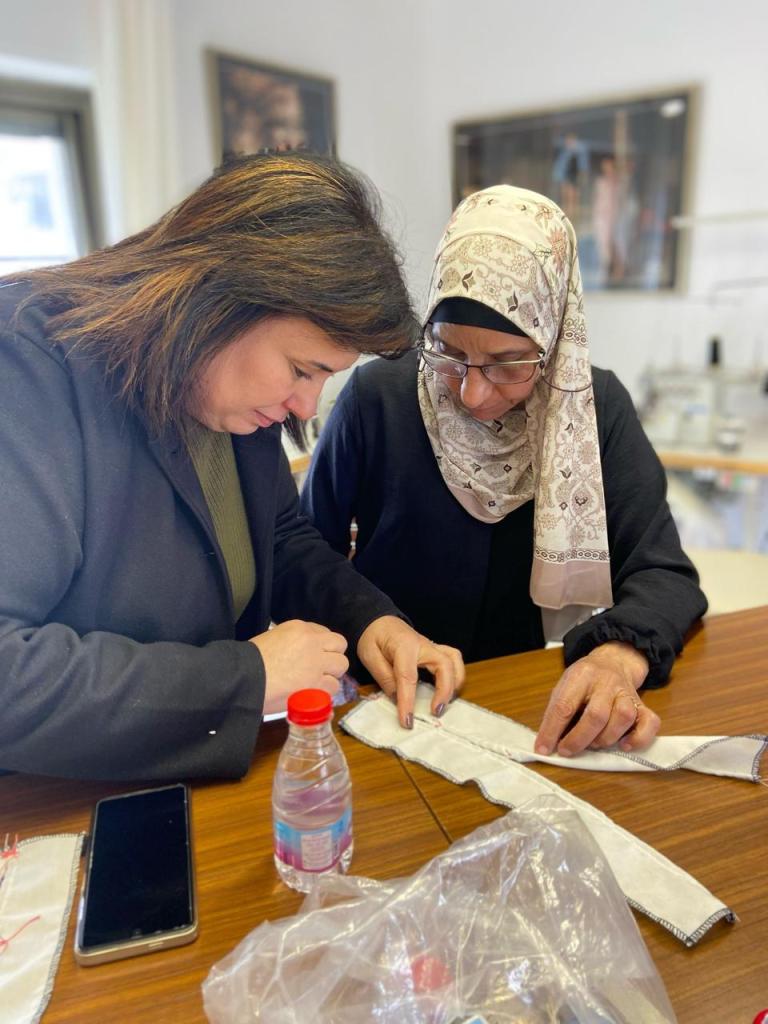

So what does their craft mean to the Palestinian women, I ask Dr Habashi. In return, she opens her emails and translates one of the messages from the embroideresses of the West Bank. “When I was in middle school, I became passionate about [embroidery]. It’s part of our heritage, and because of my love for it, I learnt more about it. I got to know the details of the embroidery, the different motifs. And every one of them has a different effect on me. Over time, my skills got better and became part of my identity. I do it out of love and pride for my heritage.’”
Despite our physical distance, I can feel the heavy emotion as Dr Habashi continues to speak. “There is a big fight to take our identity away. They want to erase our history, our stories. But you can’t erase it. They’ve been trying for 75 years, but we’re still here.”
“The art means a lot to them. It’s part of Palestinian identity. You cannot take it away. These motifs are 3000 years old. You cannot erase that.”
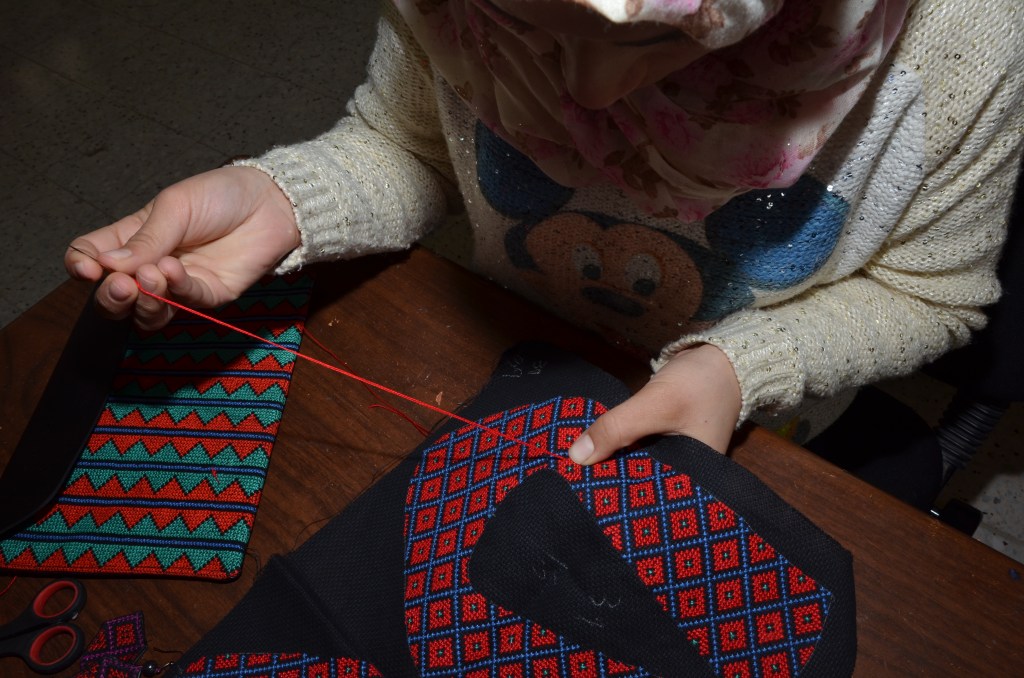
Dr Habashi tells me that she feels helpless a lot of the time. It’s the embroideresses and their community and families that keep her going. Every last cent or penny her non-profit earns through the sale of the embroidery goes back into the project, allowing them to train and hire more people. Despite facing a constant threat of violence, death and the erasure of their identities, like so often during the darkest times, it’s the women and their artistry that have the resilience and strength to carry on and defy the odds, even when the world around them seems to falter.
Their embroidery is not just art. It’s a source of strength and means to perpetuate their identity and heritage. It’s a silent and peaceful yet powerful work that refuses to bow down to the horrors of the genocide.
 neunmagazine.com