
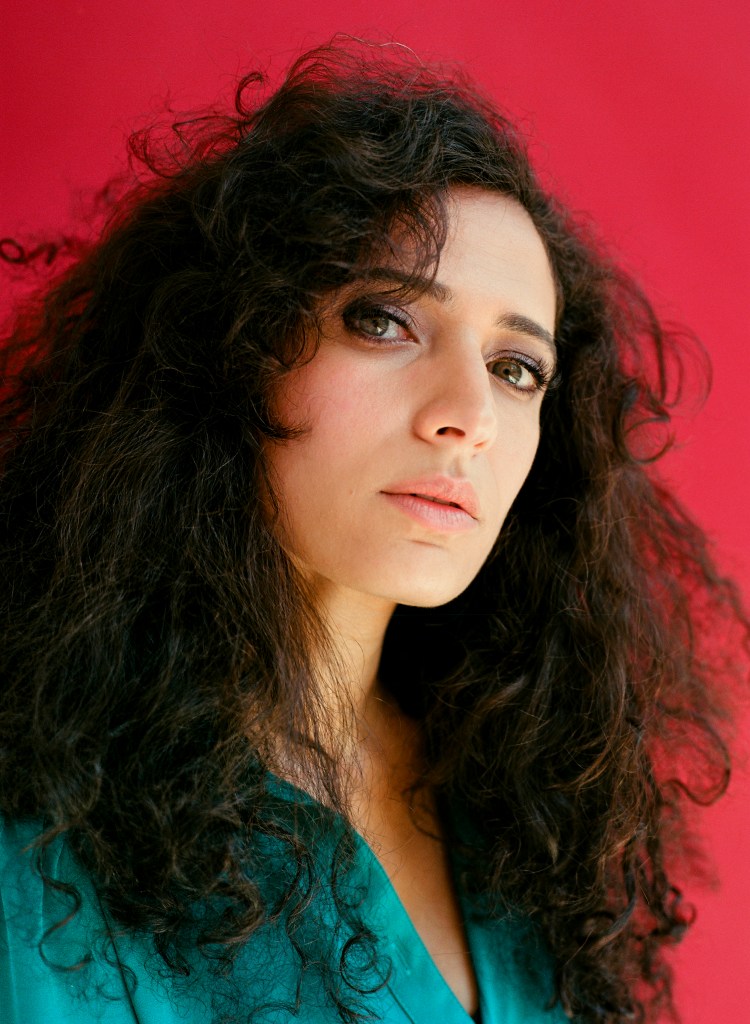
Hala Alyan’s emotional memoir is shaped by miscarriage, exile, resilience, and the enduring power of storytelling to hold grief and hope together.
Hala Alyan is a remarkable woman.The Palestinian-American clinical psychologist and professor has authored numerous essays, award-winning poetry collections and works of fiction, most notably her novel Salt Houses. She also uses her platform tirelessly and fearlessly to highlight the suffering of Gaza.
In this intimate and open conversation with neun Magazine, Hala reflects on the emotional terrain behind her widely discussed 2023 New York Times essay and her transformative new memoir, I’ll Tell You When I’m Home. Speaking on grief, lineage, resilience, and the ongoing struggle for Palestinian dignity, she offers a candid look at how writing has shaped her healing and sharpened her sense of truth. What emerges is a portrait of an artist coming to terms with personal and collective pain while holding on to hope, ritual, and the power of storytelling.
Back in October 2023, you wrote a poignant piece for the New York Times, “Why must Palestinians audition for your empathy?” How did you feel writing it? What was the reaction then, and has there been a shift in opinion since then?
When I wrote that essay in 2023, I was writing from a place of exhaustion — not only my own, but a collective fatigue I sensed from the Palestinians in my life. The grief felt endless and foreboding. I couldn’t sleep, couldn’t eat, and couldn’t stop thinking the same thought: ‘Why do I have to keep turning this grief into something palatable?’
I didn’t read the reviews or comments, but the folks who reached out via my website were mostly positive. Quite a few of them told me that they were beginning to interrogate what they’d been taught about Palestine. And then some were trying to “rehabilitate” my view or explain that I was incorrect.
Since then, I definitely think there has been a shift in public opinion, but unfortunately, that hasn’t been enough to end the suffering on the ground. Those in power continue to dehumanise Palestinians and write them out of their own agency. The question of whose pain is allowed legitimacy remains painfully relevant.
In this essay, you also wrote that “There is something humiliating in trying to earn solidarity”. How are you taking care of yourself and those who look up to you? And how do you find solace in your shared experience of the unspeakable pain inflicted on you?
Like many Palestinians living in the diaspora, I’m extremely aware of my privilege. I’m shielded by my passport, my language, my positionality, and my income. Still, writing is one of the ways I metabolise grief. Outside of that, I’m a big follower of rituals. I find them to be tethers to myself and the world around me. The reading and music series I facilitate in Brooklyn is a gorgeous source of gathering for me. As is the act of reading other artists’ work, taking in their music, their visual art, their film. I’m often humbled by the access I’m granted to other people’s vision.
What inspired you to write your latest work, I’ll Tell You When I’m Home, your first non-fiction book?
I didn’t set out to write a memoir. I sold a collection of essays, but they simply weren’t working together. Later, I understood it was because I was trying to write around the experiences of my life, not into them. During those years, I was moving through a period marked by miscarriages, a rocky marriage, and a deep questioning of what it would take to become a mother—and what kind of mother I might be. I felt compelled to create a record, not to memorialise pain, but to honour lineage and to start a sort of emotional nesting for a future child.
How did you feel throughout the writing process, when you were weaving your emotions of hope for motherhood, pain of multiple losses, grief for the victims of genocide, anger, the need for justice, peace and freedom of the Palestinian people into your story?
Some days I wrote with hope — imagining future children, contemplating emotional inheritances. Other days were saturated with grief: for the pregnancies I lost, for the exile of my elders. The draft was written before the genocide, though really, the genocide has been ongoing for decades. And of course, there was anger too: at the systems that make Palestinian life so precarious, at the willful silence of institutions, at my own body. But intertwined with all of that was an (inherited) refusal to surrender to despair. As writing often does, it demanded that I hold all these emotions at once. It was disorienting at times, but also clarifying.

You’ve admitted that you’ve never worked on anything that has transformed you this much. What have the main learnings been for yourself?
More than anything, the work of this book taught me about vulnerability and what can be made with it if one is patient enough. It reaffirmed my commitment to telling the truth, not for the sake of being self-congratulatory, but as a liberatory practice. I also realised how deeply matrilineal storytelling shapes me, through invoking my mother, my aunt, my grandmothers. Perhaps the most profound lesson was really a reminder: that grief expands us.
I’ll Tell You When I’m Home has been hailed as ‘A gorgeous, lyrical memoir [which] examines with a poet’s precision the ways in which storytelling is rooted in matriarchy’ (NYT), amongst many other rave reviews. What did you originally want people to take away from your memoir?
The truth is, when I’m writing, I have to do a fair amount of work to forget an audience exists. It’s the only way I can show up authentically to the process; otherwise, I start writing towards things: approval, validation, old narrative tricks, and so on. For this book in particular, I was too preoccupied with the excavation part of the work (and worrying what people in the book might think of it) to consider the actual finished book in others’ hands. Once that became a reality, it was (mercifully) too late for me to do anything about it!
Did you expect it to resonate with so many people? Was there anything that surprised you?
I never expect it, and am always unspeakably humbled and in awe of resonance. I was surprised by how much truth-telling begets truth-telling. I’ve not only been able to tell my story, but I’ve also been given the privilege of hearing so many stories of infertility and marital strife and dislocation—on tour, via emails, on social media. It’s the opposite of loneliness.
As a versatile writer of poetry, fiction and now also non-fiction, do you have any idea what you’ll be working on next?
Yes! I’m working on a novel, tentatively titled Instructions for the Disappeared. It’s about a woman whose sister goes missing, and plays with themes of exile, art-making, and redemption.

There is an indescribable depth to Hala Alyan’s devotion to the truth, her heritage, and the stories that refuse silence. Her work reminds us that reclaiming the narrative is an act of survival as much as art; her words hold power and strength and carry tracer from within the broader Palestinian narrative. In hearing her reflect so openly on loss and lineage, we’re left with a renewed sense of what it means to stay human in the face of erasure. As she continues to write, imagine, and insist on a future shaped by dignity and remembrance, her voice becomes not just a testament to survival—but a call to witness.

 neunmagazine.com