
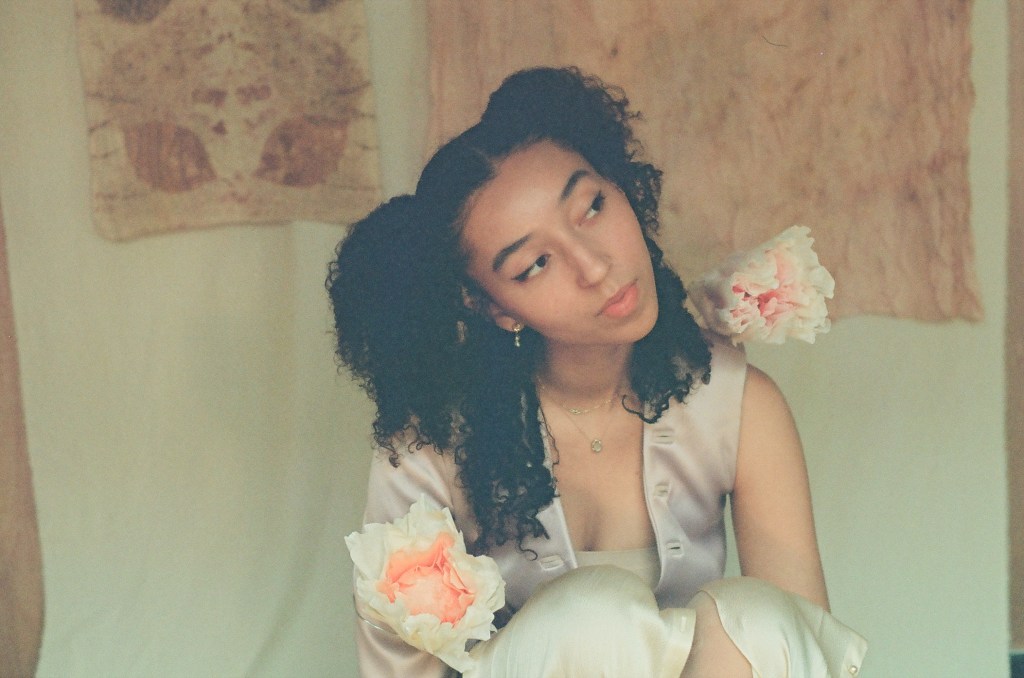
With Music that Meanders Through serendipity and Softness, and guided by Fairies, Frequencies, and Feeling
Jaixia has a soft, beautiful voice, almost whisper-like, as she takes me through her journey as an artist. Born into a creative family, she wrote her first song at the age of 12 and has been releasing music on major streaming platforms since 2023.
From writing while perched on the edge of her bathtub, enjoying the “good acoustics” of the bathroom, to singing lullabies from a tiny corner of her garden and creating textile art, she is an interdisciplinary artist who weaves spiritual reflection into every part of her life. She speaks to us about her creative immersive experiences and how all she wants to do is create “a soft place to land” for anyone who stumbles upon her music and art.

Jaixia speaks about her childhood with softness rather than nostalgia. Creativity was encouraged, held gently, never forced. “I feel really grateful that I had that support from a young age,” she says. But expression was still something she had to grow into. As a child, she was “very, very shy,” finding it difficult “to literally be heard.”
Music became the place where that shyness could loosen its grip. She remembers watching The X Factor at six years old, seeing Leona Lewis win. “She looks like me: she’s mixed race and has curly hair, and she’s shy,” Jaixia recalls. “I remember thinking, maybe I could do that.” That moment planted a quiet seed. Alongside singing, she was constantly creating with her hands: writing stories and poetry, drawing, making shoes out of paper, and painting enormous canvases. “I was just always making things,” she says, almost amused by the inevitability of it.
While music formed the spine of her practice, it never existed alone. Poetry, community, and tactile forms of art have always intertwined. Jaixia speaks warmly about textiles; a medium she describes as “sacred and resistant.”
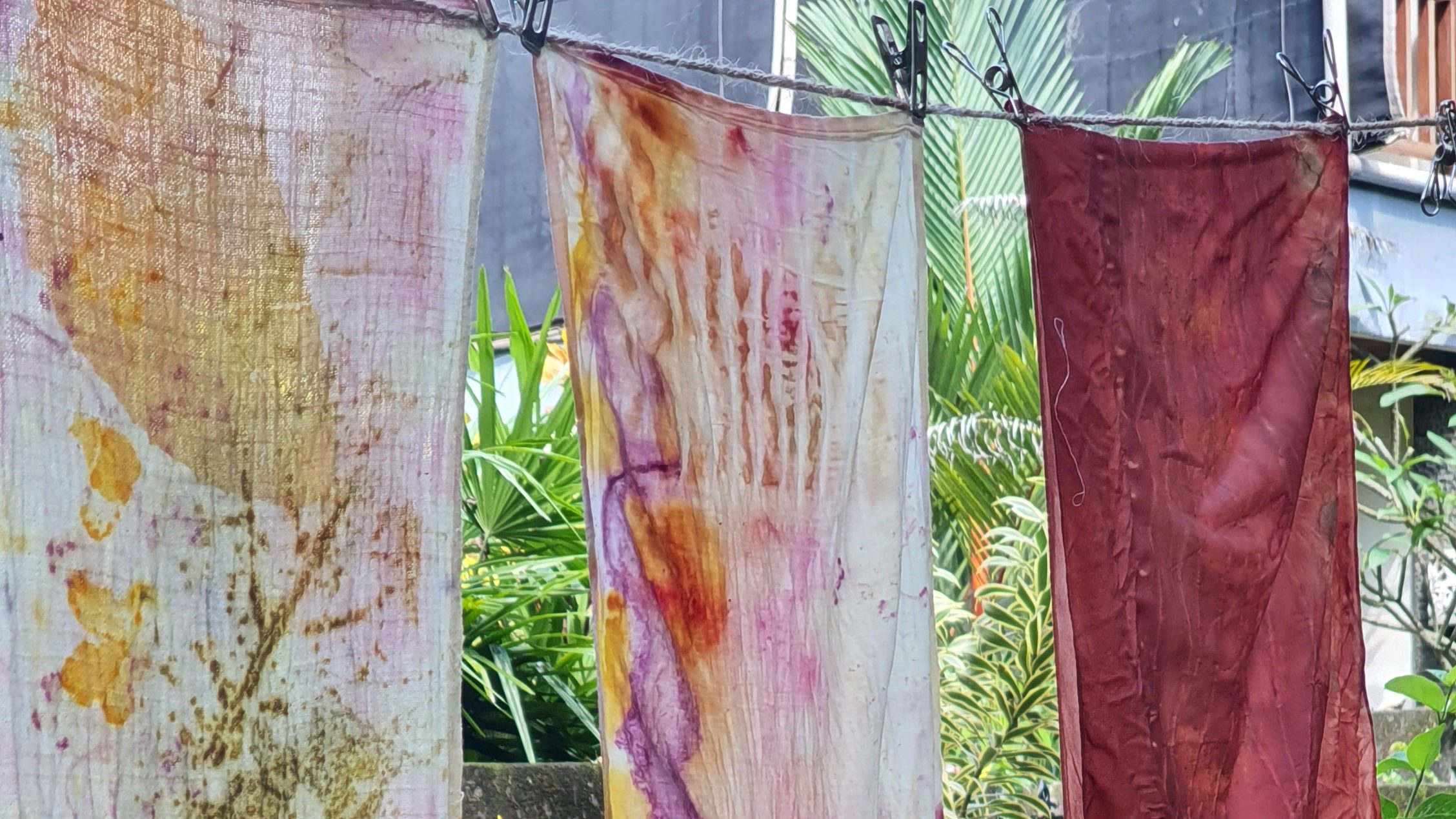
“I’ve always been very tactile,” she explains. “I love making things you can feel and touch.” For her, textiles carry memory. They sit alongside oral storytelling and song as some of the earliest ways histories were passed down — particularly women’s histories. Much of her work traces ancestry, beginning with her grandmother, whose handwriting appears screen-printed onto naturally dyed fabrics. “It’s a beautiful archive of her and her character,” Jaixia says.
In recent years, that pull toward the physical world has deepened through eco-printing, natural dyeing, foraging, and gardening. Plants are collaborators. “When I use plants for eco-printing, it’s like they reveal their aura,” she says. “They share their story through the prints.” The same instinct led her toward sound healing and, eventually, to the crystal harp.
“I’ve always been very spiritual, very intuitive,” she says. Curious about expanding her musicality, Jaixia initially considered the classical harp and singing bowls. Then she discovered the crystal harp: a rare instrument tuned to 432 hertz, often described as the frequency of the Earth. “It felt meant for me,” she says. Made mostly of clear quartz, the harp produces a high, floating sound, grounded and ethereal all at once.
Naturally, she took it into her garden. Despite living in London, Jaixia has a small, plant-filled space at home. There, she began recording herself singing lullabies to her plants. Sometimes melodies emerged, sometimes simple affirmations. “People would comment, ‘Where are you? You must be in a magical fairy forest,” she says, smiling. “But it’s literally a tiny garden.”
Those videos unlocked something new: a layer of expression free from genre or expectation. “With the crystal harp, it felt organic and magical,” she reflects. “I didn’t feel like I had to prove myself.” Viewers responded deeply, often describing the music as messages meant specifically for them.
Requests to experience it in person followed. “People would say, ‘I wish I could be sitting in the garden with you,’” Jaixia recalls. So she created a space for that. Her sound healing and poetry events became gatherings for like-minded people; intentionally slow, gentle, and reflective. “When I was younger, I felt so lost and singular,” she says. “Now it’s amazing to create a real-life space where people can gather — a soft place to land.”
That phrase, a soft place to land, comes up often. It seems to underpin everything she does.
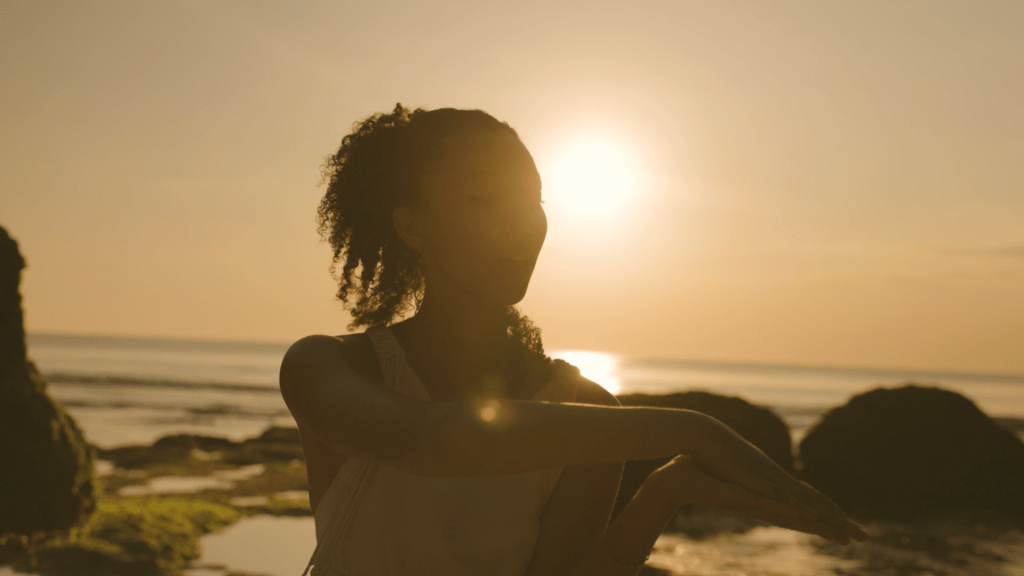
The dreamlike quality of her work extends into her visuals, too. Her recent music video for All My Love to You came together through what she describes as pure serendipity. She had the vision first: dancing on a beach, even though she’d never danced publicly before. “The vision wouldn’t leave me,” she says. With help from a dancer friend, she learned a routine, and then, on a solo trip to Bali, trusted the rest would follow.
It did. At a jewellery-making workshop near the end of her trip, she met a videographer by chance. “I said, ‘It’s funny you say you’re a videographer, because I was looking for someone to film my music video in Bali, but it’s too late now,’” she laughs. He had his camera with him. They filmed the next day at sunset. “I probably forgot half the routine,” she admits. “But I winged it; lots of running and spinning.” The result is fluid, luminous, and deeply aligned with the song’s world.
Soon, that world will expand further through a short artist documentary currently in its final edit. Filmed across her studio, garden, and performance spaces, it traces how her different art forms intersect: sound, textile, ritual, and place. “It touches on my journey so far,” she says simply.
Listening to her speak, it’s clear that gratitude — toward community, toward nature, toward creativity itself — is central to her practice. Jaixia Blue isn’t rushing toward anything. She’s listening. Making. Holding space. And in doing so, she continues to create exactly what she set out to offer: a soft place to land.

 neunmagazine.com