
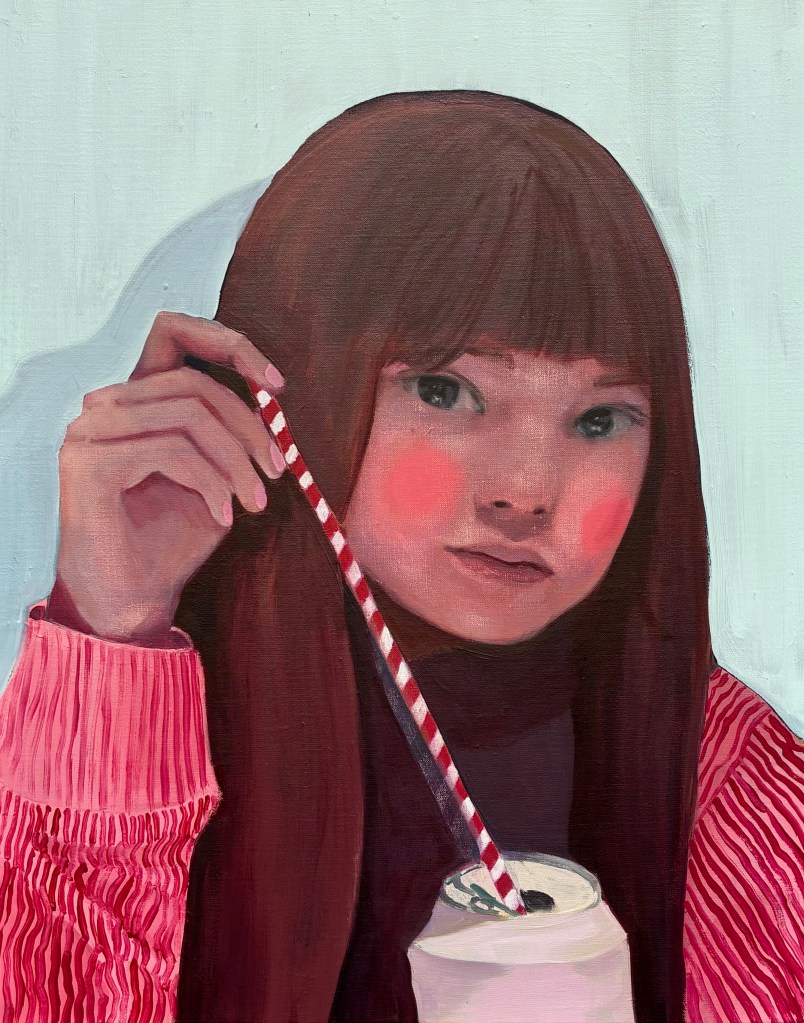
The Cardiff artist Portrays The Messy Days of motherhood and refuses to paint the instagram version of childhood.
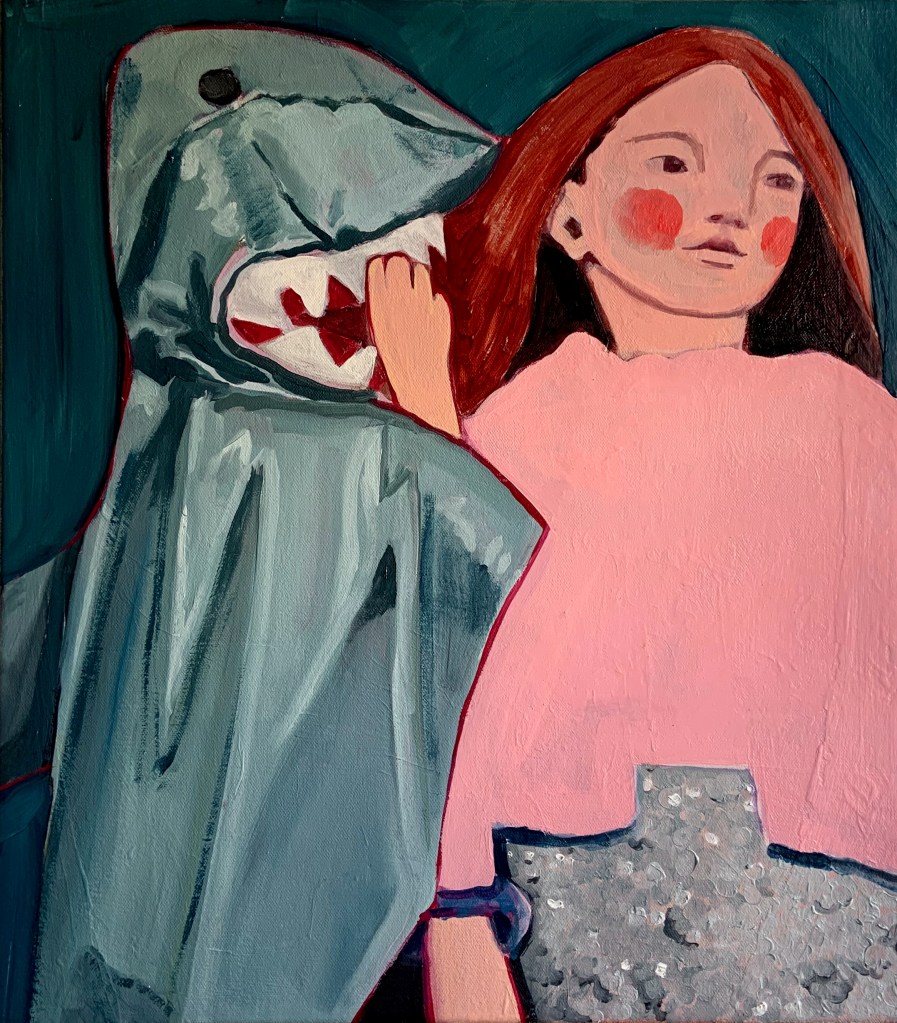
In a world that demands mothers perform a curated dance of happiness, Zena Blackwell chooses to paint the shadows. The Cardiff-based artist explores the deep-rooted, often ominous reality of childhood, reshaping the domestic sphere as a landscape of quiet psychological complexity.
Motherhood, as Zena Blackwell describes it, isn’t always a soft-focus dream. It is a “tinted vision”, a world coloured by the haze of 18 months without sleep and the jarring realization that 5:00 AM is the new start of the day. While social media acts as a stage for the best bits – the clean clothes, the smiles, the perfect getaways – Zena’s canvases offer something far more important: honesty.
“I feel like I was never told how difficult being a parent can be,” she admits. Her work doesn’t shy away from the friction. What began as a series of sketches of toys strewn across a living room has evolved into a thorough investigation of domestic atmosphere. It is a practice born not from a conscious choice to be “ominous,” but from a truth that simply seeped out. “Even if I was just painting a portrait of one of my kids, it would sometimes carry a darker undertone,” she reflects. “I think I used to also say my work was about ‘the dark days of motherhood.’”
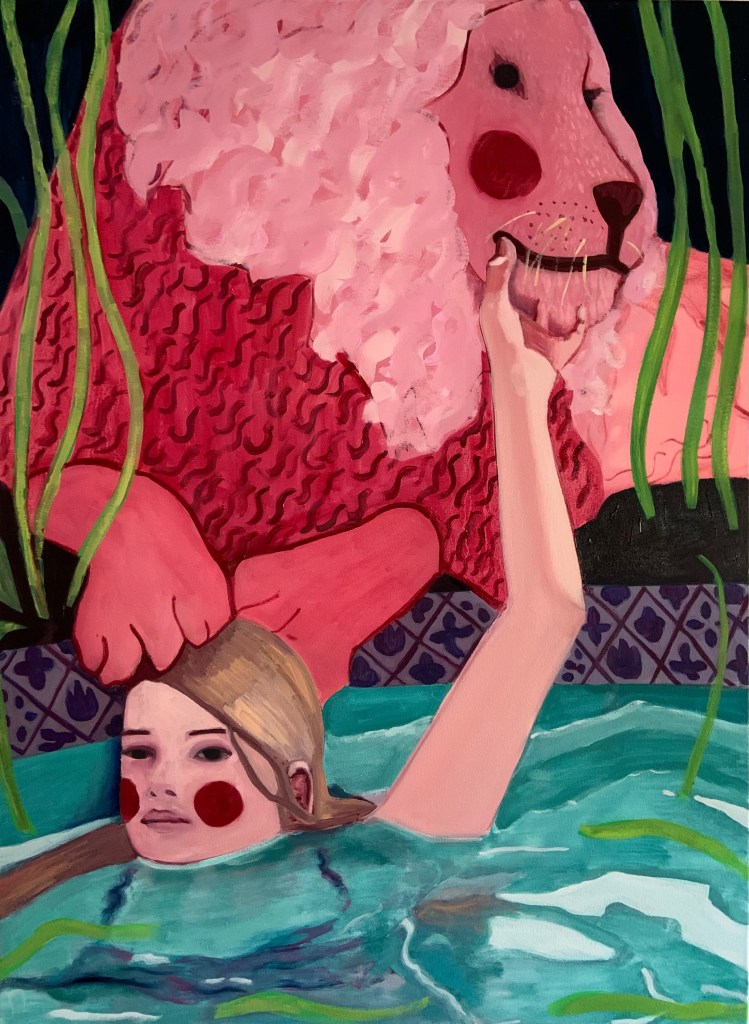
Parenthood ended the luxury of procrastination for Zena. Before children, she could wait for inspiration; now, her creative process is a race against “wild” time. With her son in school and her daughter in nursery just three mornings a week, she has traded slow reflection for intense, high-pressure discipline.
“It was a matter of working like a maniac for three hours”, she explains. Those 180 minutes were all she had to move from “mother-mode” into “artist-mode”. It required a level of mental discipline that most professionals would envy. Even now, as her children have grown, and she has more time, her rhythm remains unchanged.“ Studio sessions were always between dropping off and picking up the children from school.” This kind of efficiency – switching into creative mode on cue – shows that creativity doesn’t always need long stretches of silence. Sometimes it just needs a short, intense window and the pressure of time to do its thing.
The path to an independent practice wasn’t a single “pivotal shift,” but a series of quiet, courageous moments. After nineteen years in London, Zena moved to Cardiff in 2015. She arrived with two small children and a creative practice that felt stagnant, almost left behind in the move. The spark to start painting again didn’t come from a gallery invitation or a funding grant, but from the simple, defiant words of her young son: “I can draw anything I want.”
“I thought: ‘Hell, so can I!’” Zena remembers. That moment of realisation led to a two-week online drawing challenge – just ten minutes a day – that brought her creativity back to life. From there, the momentum grew. A year later, she entered the Cardiff Made Summer Exhibition and won the first prize – a solo show for the following year. This was the turning point where the art world began to take notice, “People started buying my work and I realised I had a chance at making this a viable career rather than a hobby.”
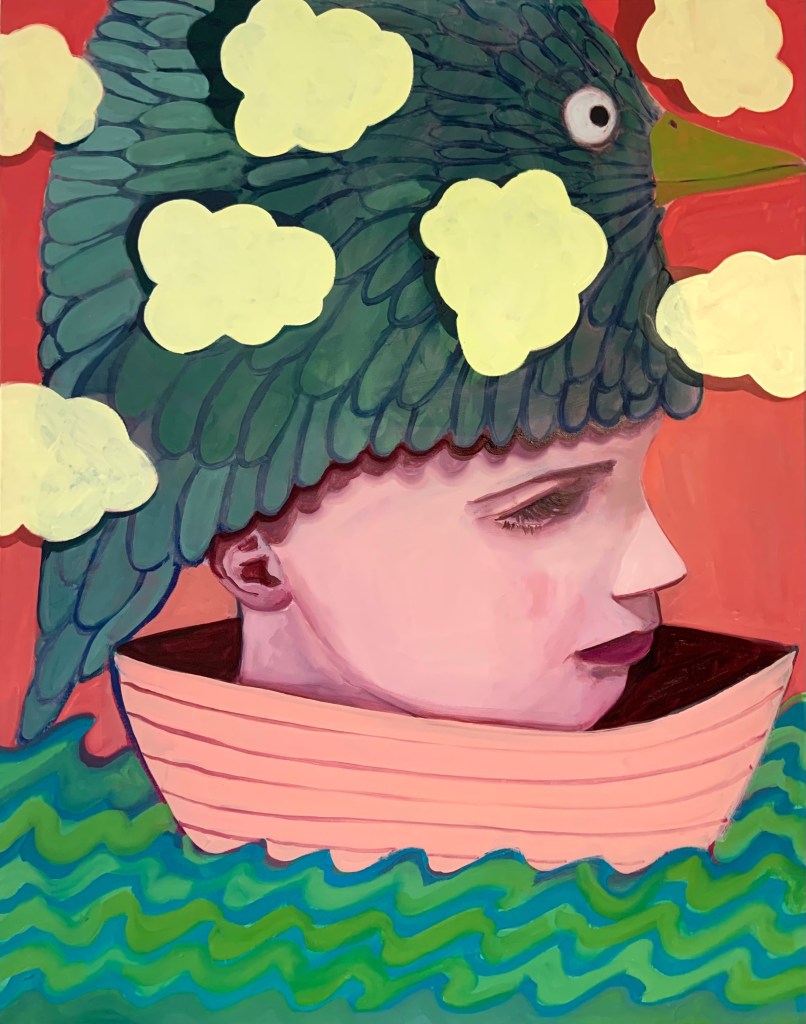
Zena describes herself as “a little bit fickle,” a quality that prevents her from falling into the trap of repetition. In a market that often rewards artists for finding one “look” and sticking to it for decades, Zena’s approach is refreshingly restless.
“It astounds me that some artists can paint almost identical paintings in the same style for years,” she says. “It’s not a criticism – it’s just that it would drive me up the wall.”
For Zena, the joy is in the discovery, not the product. In her studio, she avoids the safety of digital planning or software tools that many modern artists use to distort or perfect their images. Instead, she meets the canvas with a rough sketch in oils. “I am not a planner – I just can’t,” she admits.
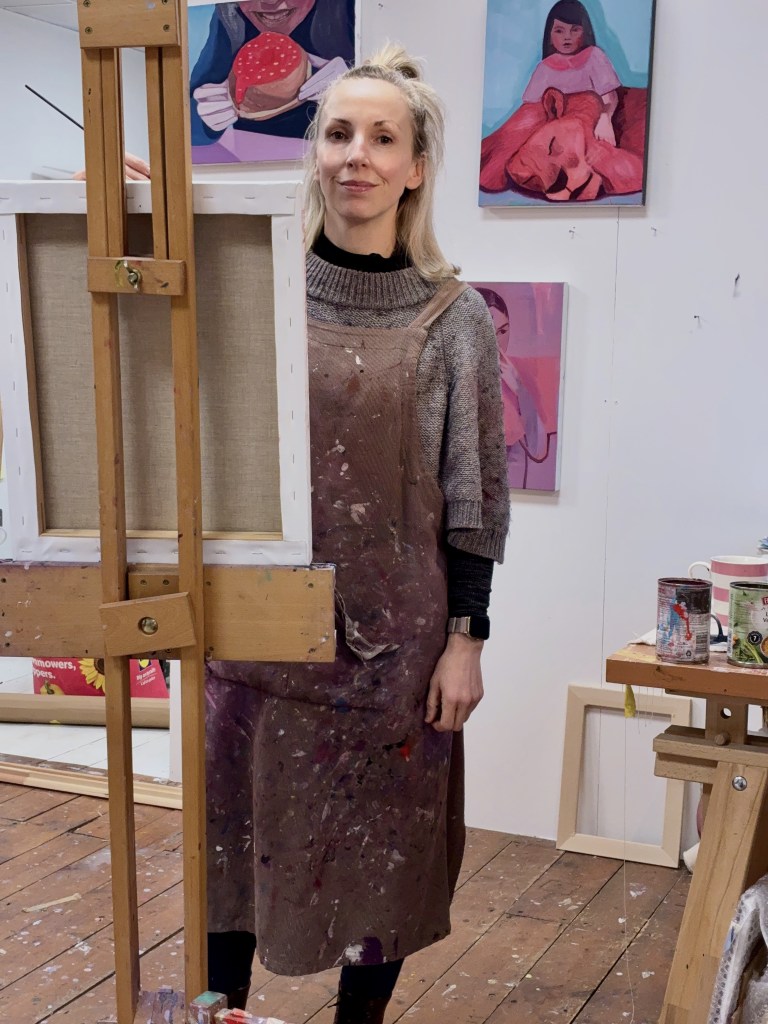
This commitment to the raw process ensures that each painting has a different feel, a different emotional weight, and a different colour palette. “When I’m painting, each piece is a lesson, and once I’ve passed the test, I move on.” She rarely revisits old works to try and better them. This fast-paced, intuitive approach keeps the work feeling fresh and prevents it from becoming too precious. When asked how she ensures her paintings of children don’t look “childish,” her answer is refreshingly unpretentious: “I actually wouldn’t mind if my work looked childish!”
This lack of pretence is what makes her work so powerful. She isn’t trying to prove she is an adult artist. She is trying to capture the truth of a moment. If that moment looks childish, so be it. Childhood is, after all, her central theme.
While her current work is inspired by her life as a mother, Zena has realised that her interest in the “domestic” is actually a life-long obsession. Even back in her London days, before she had children, and before she was painting, she was exploring the same territory.
“I thought this was a fairly new thing for me, but now I can see it was always there, even in the days I was working in mixed media and performance,” she reflects. “It was always about the home, the domestic, the parent figure and the child.”
Zena’s move to Wales did more than just restart her creative pulse. It opened her eyes to a wider community. Coming from the London bubble, she was struck by the sheer volume of talent in her new home that was being overlooked by the wider art world.
“I set up Contemporary Cymru as I was becoming more and more aware of the amazing artists working in Wales that I had not come across when I was living in London,” she explains. This realisation – a whole living creative world operating beyond the attention of the big city – shaped the vision for Contemporary Cymru. It wasn’t just about making a list of names, but also about correcting a geographical bias that had long kept Welsh talent on the sidelines. Zena became acutely aware that artists were there, but they weren’t visible.
The platform challenges the traditional idea that an artist has to “make it” in London to be considered relevant. It is a project rooted in the idea of the “open door”: ensuring that the next artist who moves to Cardiff, or the student who graduates from a Welsh art school, finds a community that is already connected, celebrated and impossible to ignore. In doing so, she has transformed her own studio practice from a solitary pursuit into a shared journey, weaving her own success into the broader narrative of a nation’s creative rebirth.
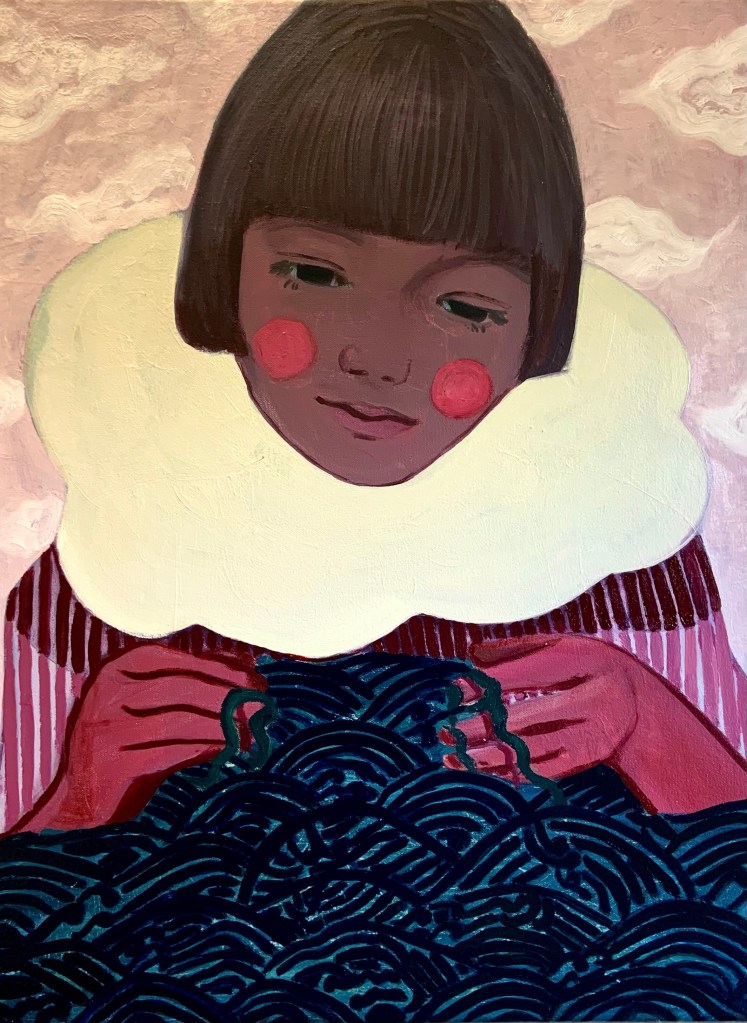
There is a deep resilience in Zena’s refusal to paint for the “living room”. Even though her practice is now self-sufficient and profitable, the money hasn’t changed what ends up on the canvas. “I have carried on painting what I need to paint and don’t worry about whether it would look good in someone’s living room,” she says. By putting her own vulnerability as a parent on canvas, Zena offers viewers a form of release. Her work isn’t just a portrait of her own kids; it’s an invitation to chat about “strength, resilience, and how important our childhood is in shaping our lives today.” It is a bridge between the private struggles at home and the public eye, reminding us that there is beauty in chaos. Zena’s work proves that the most enduring art is not found in polished execution, but in the unvarnished truth of domestic wildness.
 neunmagazine.com