
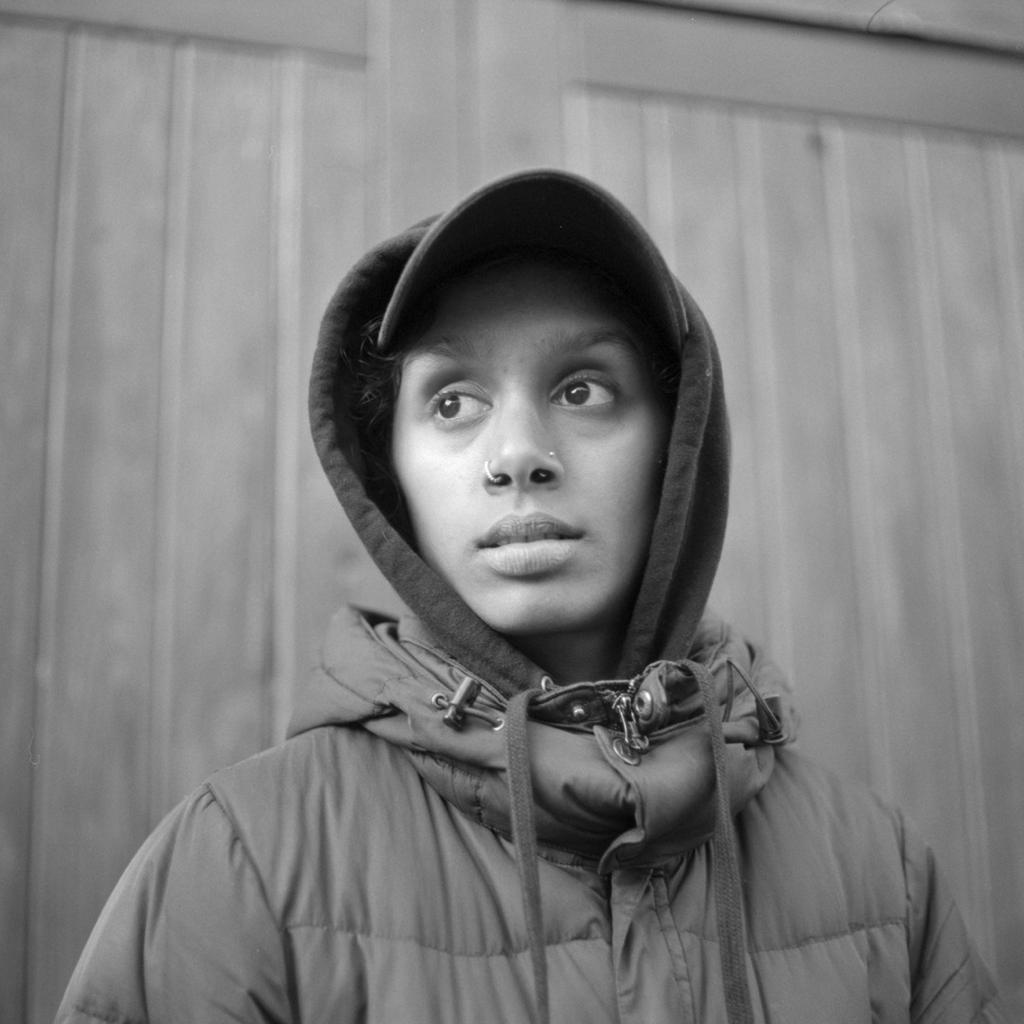
A poet, playwright, and sex educator rehearses futures for young queer Tamils where questions are not forbidden but expected.
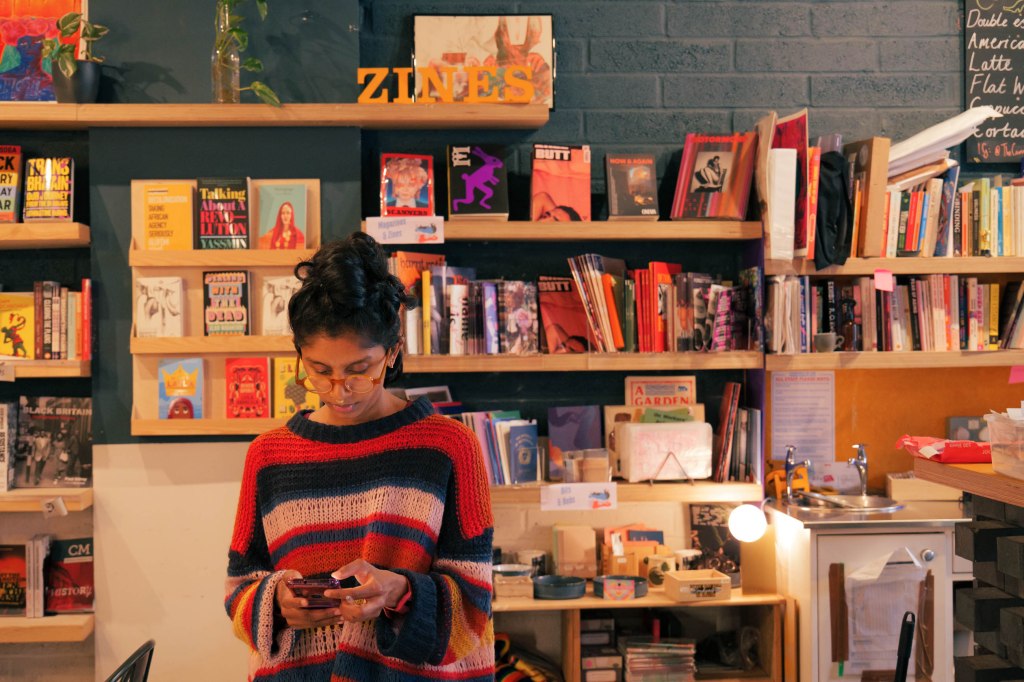
In their living room in London, where Gayathiri Kamalakanthan writes, there’s a bookshelf. Not unusual for a poet and playwright, except for what it represents: a table where they’re not eating alone. Octavia Butler sits there. Toni Morrison. Dean Atta. Meena Kandasamy. Akwaeke Emezi. Queer writers of colour whose work has become what Gayathiri calls “building blocks for what the future could look like.”
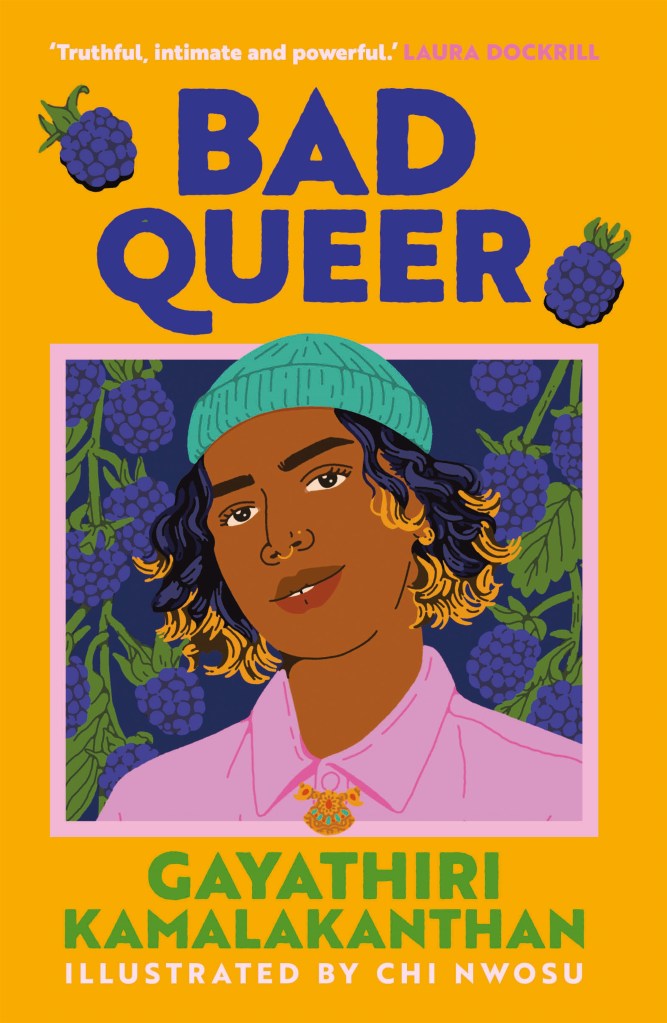
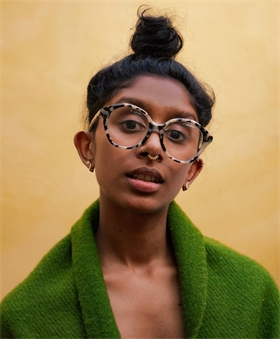
It’s an appropriate image for someone whose entire practice spans facilitating sex education workshops in classrooms, staging their debut play Period Parrrty (which ran for a month at Soho Theatre last October), and crafting their forthcoming novel-in-verse in Bad Queer, publishing with Faber on March 26th. All of it is about collective creation rather than solitary resistance. Gayathiri, a Tamil poet, playwright, and sex educator born in the UK to parents who fled the genocide of Tamils in Sri Lanka, doesn’t just tell stories. They rehearse what’s ahead. They write out conversations before having them in real life. They’re reimagining the scripts they inherited.
“I’m not the first one,” they tell me during our conversation. “I won’t be the last.”
This is not modesty. This is lineage.
For years, Gayathiri lived divided. Queerness here, Tamilness there. Two identities that couldn’t occupy the same space, or so they believed. At home, exchanges about the family’s escape from Sri Lanka during the civil war weren’t regular subject matter. “I think my family, and lots of other Tamils, people who have survived wars and genocides like this, you want to look to the future and establish some stability,” they explain. The trauma stayed unspoken. Questions went unasked.
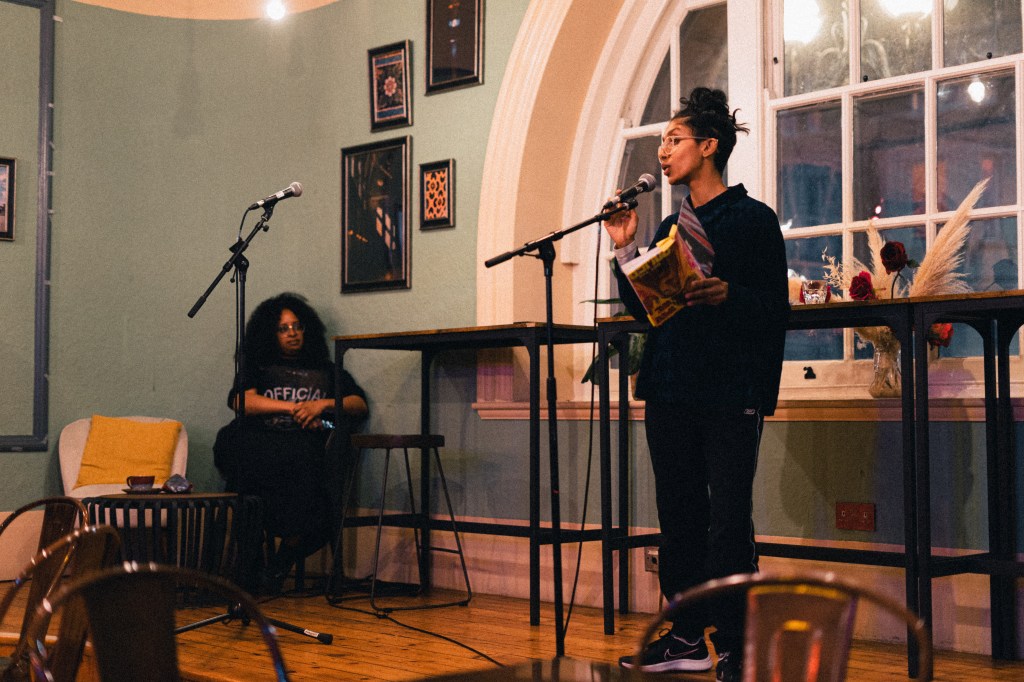
It wasn’t until their mid-twenties that Gayathiri began interviewing family members, archiving stories, and weaving those narratives into Period Parrrty and Bad Queer. “We took it in little snippets, and we paused,” they recall. “Quite a gentle pace.”
But the real transformation came through language itself. Meeting other queer Tamils. Finding a Tamil teacher who taught them words like irumaiyinmai (non-binary) and thiranaer (trans). “I didn’t have that language before, and that’s huge,” Gayathiri says. “To think that there’s no way of describing this in a language, and then, actually, there is, and I’ve just not been taught it.”
This revelation extended beyond vocabulary. They discovered that the law persecuting queerness in Sri Lanka was British colonial legislation. That Tamil culture, before colonisation, held deities who shifted genders, temple artwork depicting bodies in multiple configurations, a fluidity that had been systematically erased. “Colonialism, not just in Sri Lanka, but across the world, has meant we haven’t inherited the queerness of our cultures as we should have.”
Eight years ago, Gayathiri began working in sex education, teaching students about consent, boundaries, the language to talk about their bodies and desires. It was work born from recognising what they’d never had: “That ongoing lesson, not at home or at school.” The starting point was simple. Give young people words. Create a territory where young adults would feel comfortable to share, confide and explore. Dismantling conversations that were never offered to them.
“Writing is a place where you can experiment and try out conversations before you might have them in real life,” Gayathiri tells me. This is not a metaphor. It’s methodology.
When the first lockdown halted their sex education work in 2020, Gayathiri found themselves with time and space to explore the unspoken. The concerns students asked in classrooms – about bodies, desire, consent, what they wanted and what they didn’t – kept circling. “I wanted to write a story where a young person really knew who they were in terms of their queerness, and also someone who was still having awkward, clumsy conversations because that’s human nature when it comes to touch and desire. But really, they were empowered to use their words.”
Bad Queer, their debut novel-in-verse, became that rehearsal space. The protagonist, Surya, is a non-binary teenager navigating first love while surrounded by a queer Tamil family – including a trans parent. “There’s nothing you’re not allowed to ask about,” Gayathiri says of Surya’s household. It’s the family they’re crafting for themselves.
“As a parental figure, I won’t always have the explanations, but I want to be open to finding solutions alongside my child. I want to be a tellable adult.”
The phrase stops me. A tellable adult. Not a perfect parent. Not someone with all the explanations. Someone safe enough to tell.
“Often, more harm is done when a child is scared of telling their caregivers what’s going on with them,” they explain. “So being tellable rather than scary and intimidating is key.”
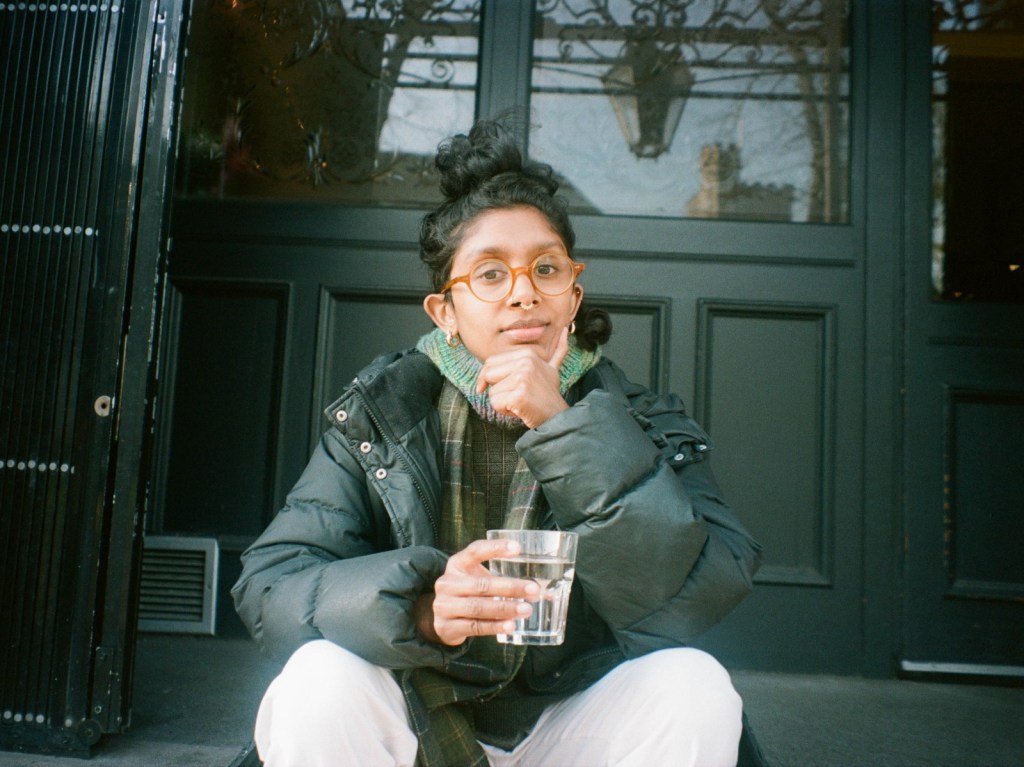
This philosophy runs through a poem in Bad Queer called “Queer Parents,” which explores how having LGBTQ+ parents doesn’t automatically mean a child knows how to navigate the world safely, or that they’ll be carbon copies of their parents, or that those parents will be perfect.
“For me, rehearsing imperfect parenthood within our communities means giving ourselves and future generations the right to be human. Parenting is a continuous process of becoming.”
It’s a philosophy that refuses perfection as the outcome. Gayathiri continues:
“And for many of us who have never had elders who share our identities, we are trying to do something we’ve not experienced before. So yes, we’ll get some things wrong, we’ll apologise and try again. And the next generation will benefit from us modelling this too.”
It’s a radical departure from the idealised narratives often offered to queer teenagers – the “it gets better” promise, the happily-ever-after. Instead, Gayathiri offers something more honest: rehearsal. Practice. The acknowledgement that no one has all the definitive versions, so we create them together, messily, with room for revision.
When I ask Gayathiri about the role of community in Period Parrrty and Bad Queer, their answer is immediate: “None of my work would exist without them.”
Period Parrrty emerged from a conversation with a friend at the Reproductive Justice Initiative. Bad Queer was shaped by The Tamil Channel, where Gayathiri learned Tamil language for queerness, and by the literary lineage of Octavia Butler, Toni Morrison, Meena Kandasamy, Akwaeke Emezi, and Dean Atta.
At Word-Benders, in the poetry workshop series Gayathiri runs that centres queer Black writers and writers of colour, participants read poems together, discuss what they evoke, and then compose in response. “This is about shaping and sharing a space, languages, references that we can place at the centre – as opposed to the margin,” Gayathiri explains. “Our cultures, music, smells, rituals and histories are no longer side stories or told unjustly by someone else.”
When Gayathiri walks into their living room to write, surrounded by books, they’re not alone. There’s a “medley of people championing me on,” they tell me. “That rage and love. I am alongside these people.”
This isn’t solitary resistance. It’s collective change – and sometimes, that change happens in a theatre full of Tamils watching a teenager reimagine tradition.
When Gayathiri’s family came to see Period Parrrty at Soho Theatre, they weren’t alone in the audience. On some nights, 70% of those watching were Tamil. “There was such a sense of community stability,” Gayathiri recalls. “It was a landmark moment, coming together like that.”
The play centres on Krish, a non-binary Tamil adolescent preparing for their period party – the traditional ritual marking womanhood. Except Krish isn’t a girl, and they’re determined to reimagine the celebration as something degendered, something theirs. It’s about cultural reclamation and intergenerational love, set against the backdrop of the Sri Lankan genocide.
For Gayathiri’s family, some ideas in the play were new territory. However, they felt ownership of the story nonetheless. “One hand of the play, they’re identifying with, and they get it. And the other hand is sort of reaching out to them and asking them to come on board,” Gayathiri explains. The Tamil language is threaded throughout – a hundred lines of it. The history of genocide that Western powers haven’t acknowledged. The rituals, the music, the familial bonds. “That sort of intersectionality helps to foster understanding. If I’m going to accept one, then it’s hard to reject the other.”
This approach – creating bridges rather than demanding immediate comprehension – runs deep in Gayathiri’s work. “Our elders are not portrayed as villains but as people whose goals are shaped by what was taken from them during the Tamil genocide and the stability they hope to provide for future generations,” they say. “They are deep wells of hope and strength, and this is the same hope and strength that makes me feel that this bridge is worth building.”
It’s a work of love and patience, the kind that invites families to sit in a theatre together, watch a young person navigate their period party, and unfold in real time. They’re not forced to understand everything immediately. The story simply holds enough of what they recognise – enough Tamil, enough history, enough love – that the link becomes viable.
And yet what does that freedom actually look like when you’re not sitting in a theatre, not surrounded by family, just living your daily life?
Gayathiri used to need examples. Deities who shifted genders, temple artwork, and documentation that Tamil culture was queer before colonialism erased it. “You can read all the books, go to all the museums,” they say, “but someone somewhere will tell you your reading is wrong. So choose to love because loving is the best thing we can do.” – Bad Queer.
The question became simpler: are we being kind?
When criticism arrives – and it does – Gayathiri sits with it. “Do they have a point that aligns with my values? Or do I need to move away from this relationship? Or is there a bridge we can build to understand each other?” The questions themselves become practice. Freedom isn’t the absence of conflict; it’s the capacity to navigate it with intent.
“The freedom to shape a life that you feel good about living,” Gayathiri explains. Not one dictated by templates about sexuality, gender, respectability, class, or career. “Protecting your space. Inviting people in only if they feel safe. Choosing to put your energy where it’s wanted and useful.”
This is what Gayathiri hopes Bad Queer offers readers: not a blueprint, but a chance to experiment. “I hope readers feel empowered to try, bit by bit, to carve out a life that feels good for them. That might look like having more conversations about boundaries and consent in romantic, platonic and familial relationships. It could look like choosing not to answer intrusive questions about yourself. It could look like having more compassion for when you and others make mistakes.”
What Gayathiri offers surpasses representation. It’s a manifesto for becoming people safe enough to tell. For dismantling the inherited silences – colonial, familial, cultural – that taught us to compartmentalise ourselves. For claiming the radical act of imperfection: parents who apologise, elders who evolve, collectives who hold space for mistakes.
This is liberation. Not grand declarations, but families sitting through discomfort, finding connections where there were only voids. Young people learning they can refuse intrusive questions. Workshops where marginalised voices move from periphery to heart.
When someone discovers vocabulary for who they’ve always been – whatever words finally feel natural – they’re not just naming themselves. They’re unravelling every system that demanded their erasure. They’re rewriting what the next generation inherits.
Gayathiri knows this because they lived it. The compartments. The muted questions. The slow, gentle excavation of family stories. What opens when you’re finally not alone.
And now? They’re ensuring others don’t have to wait as long.
The inheritance shifts. The silence breaks. The future transforms.
 neunmagazine.com