
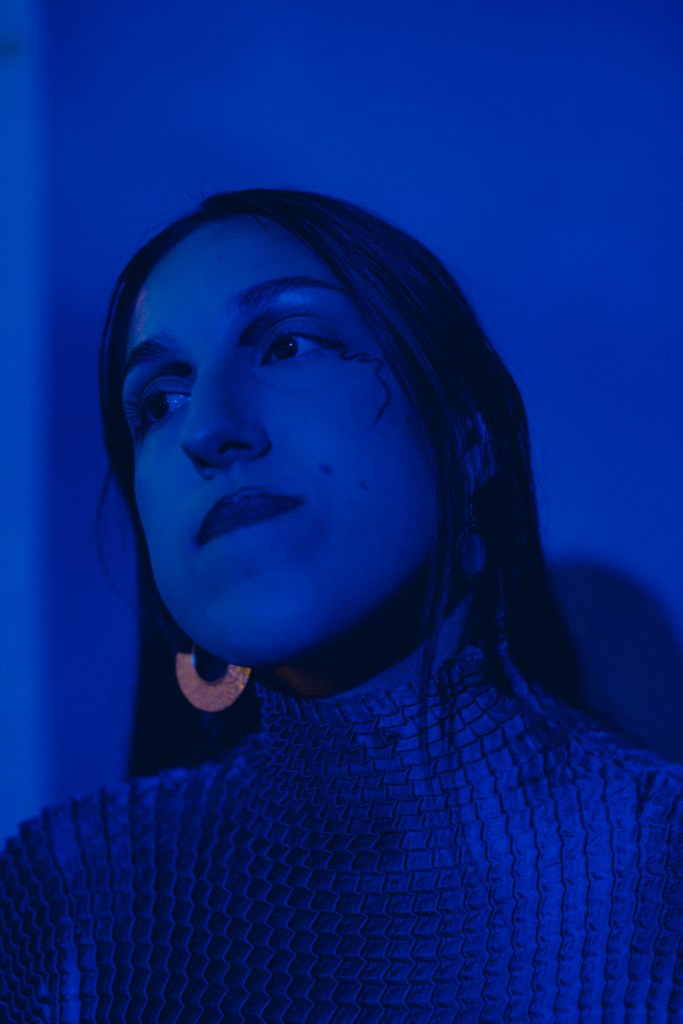
From London’s concrete sprawl, a sound is being coded from the future — one that mourns our disconnection from the Earth and demands we find our way back before it’s too late.
Born Madeleine Jones, she grew up on the outskirts of South West London in a family where music was less of a hobby and more of a primary language. With a father and brother, both on bass, and a mother on piano, her upbringing was defined by the rigorous, sometimes “annoying” discipline of classical practice on the piano and violin from age seven. “I’m so grateful for it now,” she reflects. “It’s just a really big part of my life and my identity.”
This technical foundation was deepened at the BRIT School, where she specialized in Musical Theatre. This period provided her with a diverse performance background, but it was her subsequent move to Goldsmiths, University of London, to study Popular Music that fundamentally shifted her artistry. “They’d make you question everything you did,” she explains. “They made me think a bit more about what I wanted to say, which I think really helped my writing in the long run.”
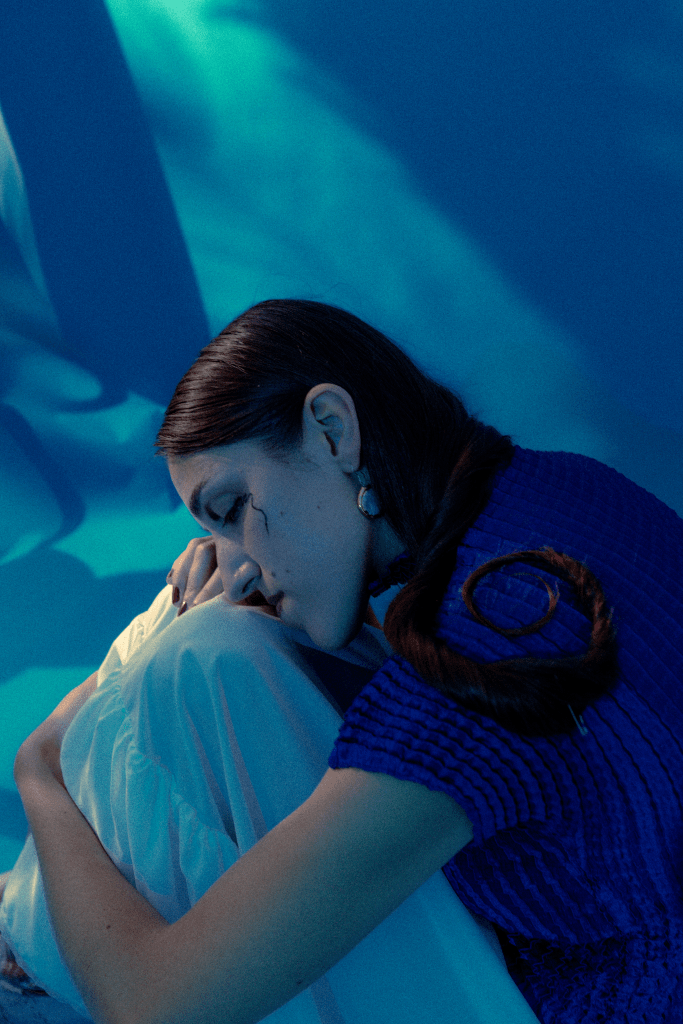
Before emerging as a solo force, MADELEINE established herself as one of the UK’s most sought-after session keyboardists. Her CV reads like a roll call of contemporary British soul and R&B, having toured and performed with the likes of Jorja Smith, Olivia Dean, Mercury Prize-winning poet and songwriter Arlo Parks, Afrobeat collective Nubiyan Twist, and rising R&B voice Rachel Chinouriri. She describes the music industry as a series of “side quests,” a balancing act between paying the bills and protecting the integrity of her own voice.
While these high-stakes tours provided financial security and the thrill of global stages, they also highlighted the gruelling reality of “tour life” — a high-intensity bubble fuelled by constant adrenaline. During a three-year stint on the road with Arlo Parks, she reached a level of comfort that many musicians dream of, yet she found herself “out of balance.” “That was all I was doing,” she admits, reflecting on the years spent in transit.
MADELEINE noticed that the professional stability stifled her personal creativity. She now prioritises shorter “dep” (stand-in) roles rather than long-term touring commitments for other artists [a “dep” is a freelance musician who steps in to cover specific shows or short legs of a tour. It is a high-pressure role that requires a player to learn a complex set quickly]. For MADELEINE, it offers the ultimate luxury: an exit strategy. By protecting her time, she has allowed her own music to move from the hotel room laptop into the centre of her world.
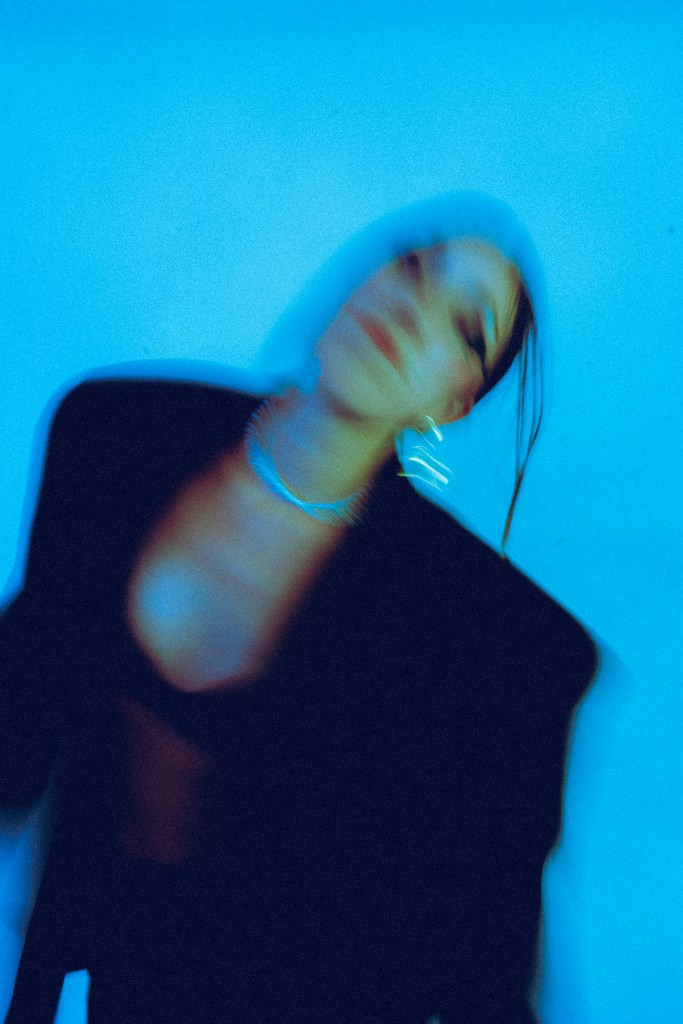
London itself acts as a primary collaborator in MADELEINE’s new work. The city’s industrial landscape — surrounded by “concrete and industry” — feeds directly into what she describes as her “intergalactic” sound. This urban density creates a sort of sonic friction, where the cold, mechanical hum of the streets pushes her to seek out the vast, breathable spaces found only in her synthesizers. “Combine that with the sudden rise of AI and technology being ‘thrown’ into our daily lives and it starts to feel increasingly unhinged,” she notes. “In some songs, I felt like a version of myself from the future, singing a warning back to the present.”
This futuristic turn is anchored by a DIY production style. Working in solitude to “home in” on her message, she takes her tracks to roughly 80% completion before bringing in collaborators like keyboardist and producer Lewis Moody and multi-instrumentalist Will Heaton for the final layer of polish. Her single, Give Back to Her, epitomises this unsettled, dystopian edge. The track was built intuitively around a single drum sample and layers of synths — some so subtle they are barely audible, yet they combine to create an atmosphere where “something isn’t quite right.”
The first track of her upcoming EP, Earth Cry, which will be released on Tuesday 16th June, is an urgent and evocative plea. While her songwriting often begins subconsciously with harmony and chords, her preoccupation with our lost connection to nature always finds its way to the surface. “In a way, the song Earth Cry is a warning from the future,” she explains. “It’s about how far we’ve moved from how we were meant to live: in small, sustainable communities, connected to the soil rather than our screens.”
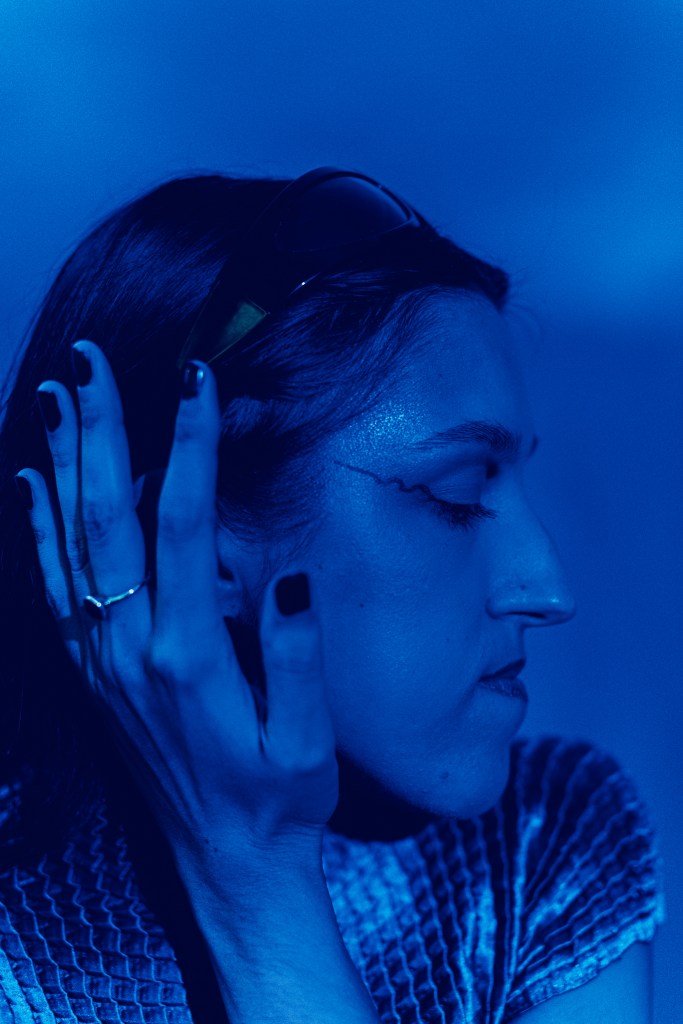
This tension between the digital and the organic is the engine behind the project. Her dream, perhaps surprisingly for an electronic-leaning producer and DJ, is almost anti-technological. She envisions a world stripped of the constant glaze of technology, where people grow their own food and live at a more human pace. She points to music festivals like We Out Here as the closest modern equivalent to this “off-grid” existence, where phones are dead, mirrors are forgotten, and people are finally living “as they were meant to” — out in the elements and present in the moment.
The current global climate has fundamentally shifted her approach to songwriting. What once might have been a craft or a hobby has transformed into a “cry for consciousness.”
“With everything happening in the world right now, it feels impossible — and almost wrong — to just write songs about blue skies and being happy,” she reflects. This refusal to look away from global suffering has forced her music to evolve into a platform for advocacy.
This urgency led to the creation of “Dreamer”, a track contributed to a Women in Jazz compilation project. Originally conceived as a poem dedicated to the children of Gaza, it stands as her most direct political statement to date, bridging the gap between her intergalactic sound and devastating earthly realities. For MADELEINE, acknowledging these global crises is vital; she views each project as a marker on a personal and political timeline, capturing the inextricable connection between the state of the world and her own internal balance.
When tracing the “ancestors” of her current sound, MADELEINE points to visionaries who sit at the intersection of jazz-fusion and experimental electronics. A primary North Star for her is Salami Rose Joe Louis, a multi-instrumentalist signed to the influential Brainfeeder label — the Los Angeles -based imprint founded by Flying Lotus that is synonymous with genre-bending, “cosmic” beat music.
MADELEINE connects with this lineage because it mirrors her own obsession with the “intergalactic.” The influence manifests in her work through a specific blend of high-concept space themes and “beatsy” energy, where technical jazz proficiency is filtered through a gritty, electronic lens. “I love how she [Salami Rose Joe Louis] uses these very angelic, high-register vocals against really heavy, experimental production,” MADELEINE explains. “It gave me the permission to navigate my own sound — to realise I could combine my classical background with this futuristic, slightly ‘wonky’ electronic energy.” For MADELEINE, this isn’t just about a genre; it’s about a shared philosophy of using technology to explore the celestial.
Throughout this 2026 season, MADELEINE is bringing her dystopian soul to the live stage, with key performances at Brick Lane Jazz Festival, Shambala, and We Out Here. To translate the intricate, synth-heavy layers of her recordings into a physical space, she leans into her original recording trio: her brother John on bass and Jack Robson on drums.
“We lean heavily into live improvisation,” she explains. “It’s not just about my solo vision; it’s about the trio finding a collective, locked-in groove. It’s about bringing a living, breathing version of that ‘dystopian’ soul to the audience in real-time.” By stripping away the safety of a backing track, the trio ensures that every performance of Earth Cry feels as volatile and organic as the nature it seeks to protect.
What MADELEINE wants her listeners to carry is something far beyond a catchy hook — a sense of return. She hopes they walk away with a sense of reconnection. “I hope they remember that the Earth is a breathing, living entity,” she concludes. “I want my music to foster a sense of respect and awareness — to remind people that we aren’t just living on the Earth, we are part of a living system that deserves our protection”.
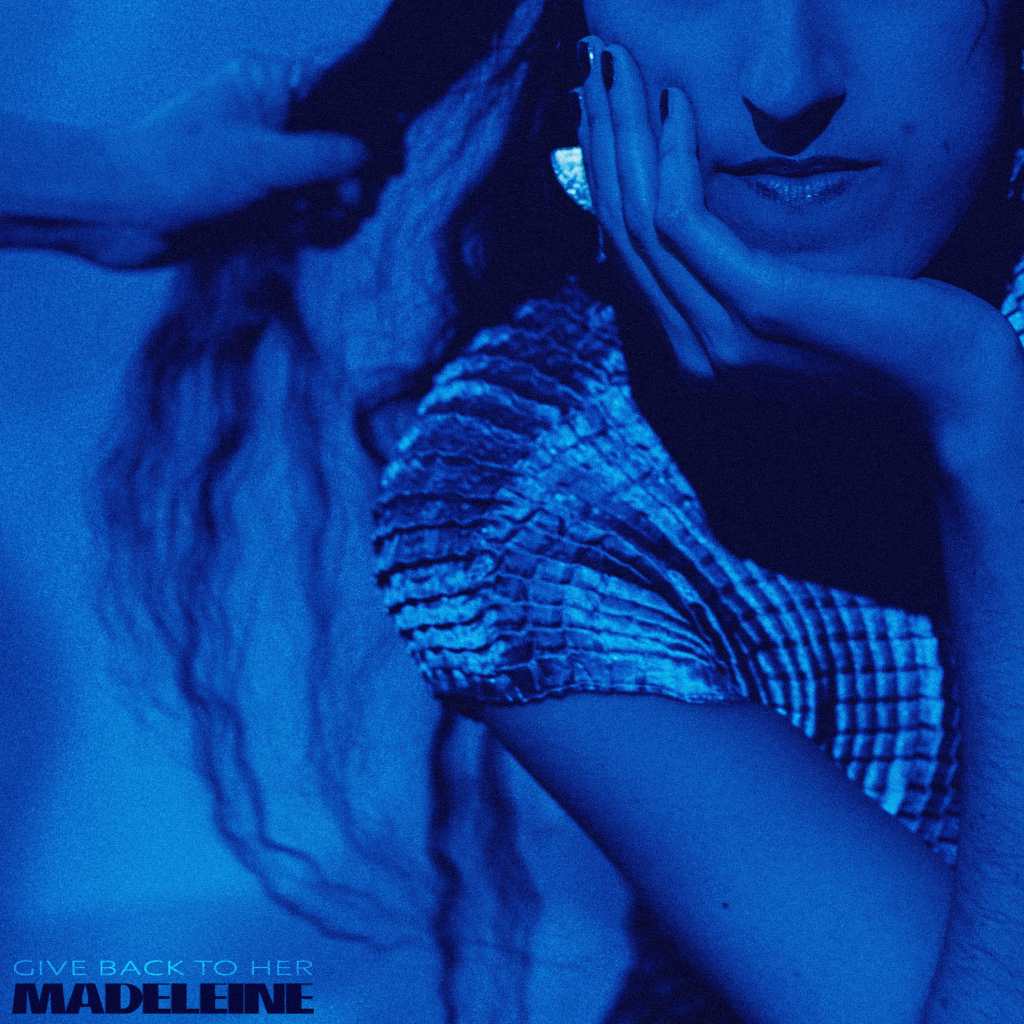
In a world accelerating blindly towards tomorrow, MADELEINE stands apart — not as a prophet of doom, but as a quiet, fierce reminder that the soil beneath our feet, the silence between our screens, and the communities we have forgotten are not relics of the past but the very blueprint for our survival.
 neunmagazine.com