
From gingham dresses to sourdough baking tutorials, the tradwife aesthetic has taken root online as both a cosy nostalgia trip and a political debate starter.
What looks like ‘domestic bliss’ on TikTok is also tangled up in questions of choice, feminism, and reevaluating patriarchal ideals.
The concept of the ‘tradwife’ started out simply as an aesthetic built on nostalgia and American family values, but has now transpired into a lifestyle choice. Alongside the notion of the tradwife aesthetic and lifestyle comes the pressing conversation that is the ‘tradwife trap.’ This turn of phrase captures a complex moment in society and politics. Different sides of feminism balance precariously on the tightrope of what it means to choose the tradwife lifestyle, while also raising questions about the harmful patriarchal standards thought to have been left behind. Is the new and reclaimed tradwife an empowered reclamation of domesticity, or misogynistic regression dressed up as cutesy nostalgia?
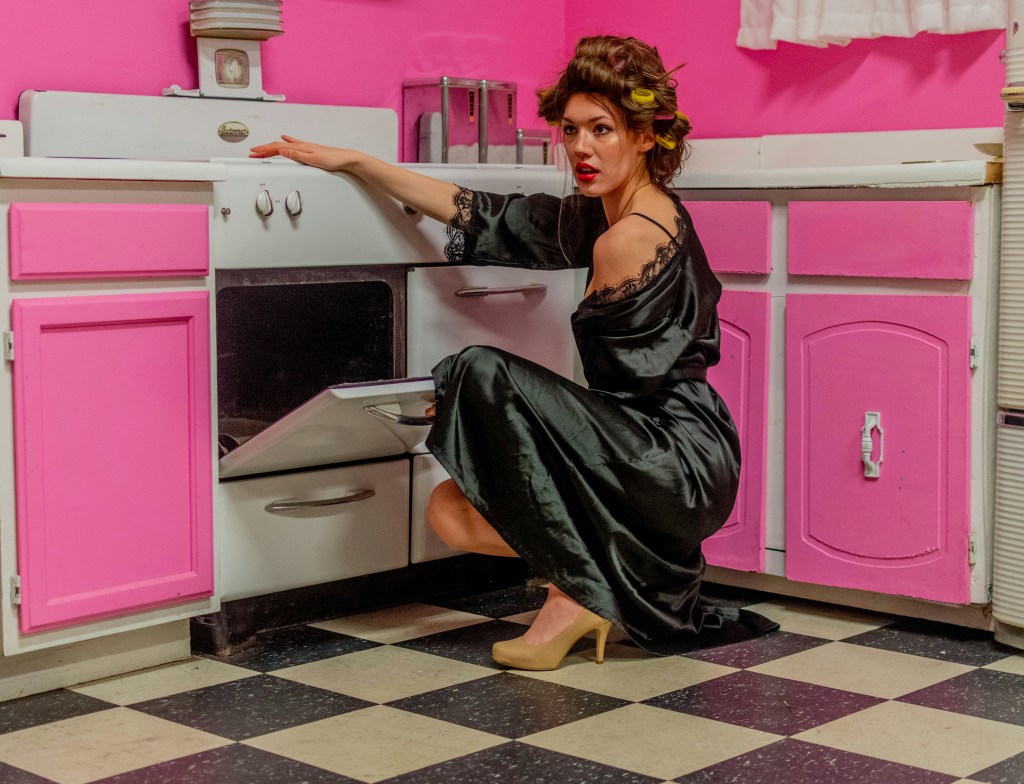
Tradwife, meaning “traditional wife”, brandishes itself in traditional gender roles and what it means to be domestically present and nurturing as a woman. On TikTok, tradwives appear in flowing dresses echoing the 1950s housewife style, intertwined with the modern cottage-core, cosy aesthetic. An inviting, welcoming aesthetic encased in warmth, domesticity, and security makes it virtually impossible not to view this way of living as incredibly appealing. A vintage apron, a gingham dress, a polished manicure: these are not just style choices but cultural signals that normalise regressive gender politics through beauty and nostalgia.
It is important to emphasise that there is nothing inherently wrong with choosing domesticity, raising children, or even finding joy in homemaking. Feminism has always fought for choice. The issue arises when these choices are packaged as prescriptive ideals, weaponised by political movements that seek to roll back women’s rights, or leveraged as propaganda to mask systemic failures. At what point does a lifestyle choice become harmful? What conversations are happening in social spaces that show the tradwife aesthetic is not neutral, but political?
The concept of the tradwife first grew in popularity during 2020, a time when people were seeking comfort during a global pandemic. The pandemic was a life-altering, shocking, and devastating time for the world, which potentially led to humanity seeking refuge in what is familiar, recycling nostalgia and focusing on an era of time perceived to be ‘simpler times.’ America, in particular, is known for its nostalgia trips with the American Dream, Golden Age Hollywood and so forth. Social media platforms like TikTok amplified this, turning ordinary acts such as baking bread and tidying a home into performative, comforting rituals. However, as with any trend that gains traction online, the tradwife movement grew into something beyond what was initially expected.
Tradwife culture, as presented on social media, is characterised by feminine leisure and financial support from their husbands. In return, their role is to run the household with tasks such as baking homemade sourdough with perfect manicures and immaculate showhomes, while also taking on the role of a full-time parent. It’s a belief system that “life is better” for women who immerse themselves in the domestic sphere and leave the traditional workforce. But this narrative masks privilege: most women do not have the financial freedom to opt out of employment. As of 2023, nearly 80% of women aged 25-54 in the U.S were in the workforce, and with no paid parental leave, the “choice” is often viable for a privileged few.
The political implications become more stark when examined alongside figures like JD Vance, who champions the “nuclear family” and denounces the sexual revolution. His rhetoric dovetails neatly with the tradwife aesthetic, which packages gender roles as empowerment. As The New Yorker notes, this imagery has also been co-opted by alt-right followers, where the domestic ideal aligns with nationalist calls for reproduction and submission. What appears on TikTok as cosy and comforting reveals itself, on closer inspection, can also pose as artful propaganda.
Ultimately, the tradwife aesthetic is less about an ideal or image, but more so about how it is reclaimed or weaponised within larger media and cultural narratives.
It takes the language of personal choice, which should always remain a choice, and repurposes it as a cultural script supporting broader conservative agendas. On social media, the #TradWife hashtag is often paired with #ConservativeWife and other specific religious hashtags, reinforcing that the trend is not neutral. By blending nostalgia, femininity, and domestic visuals into aspirational content, tradwife culture provides an image behind which regressive gender norms can hide.
Whether it fades like other TikTok trends or embeds itself more deeply into political discourse remains to be seen, but its impact lingers. The ‘tradwife’ is not simply an aesthetic or even a caricature; it is a cultural battleground, reminding us that aesthetics are never neutral.
 neunmagazine.com