

Across generations and geographies, metal remembers, and memory takes form
Haya Zaru is a Palestinian designer working with different mediums and materials to explore questions of heritage and identity, and the ways we relate to the spaces around us.
Her grandmother, Samia Zaru, is a pioneering Palestinian artist whose life’s work wove art into education and craft into resistance. In Haya’s work, that legacy hums quietly: in the clatter of metal, the rhythm of ritual, and the language of memory passed from one pair of hands to another.
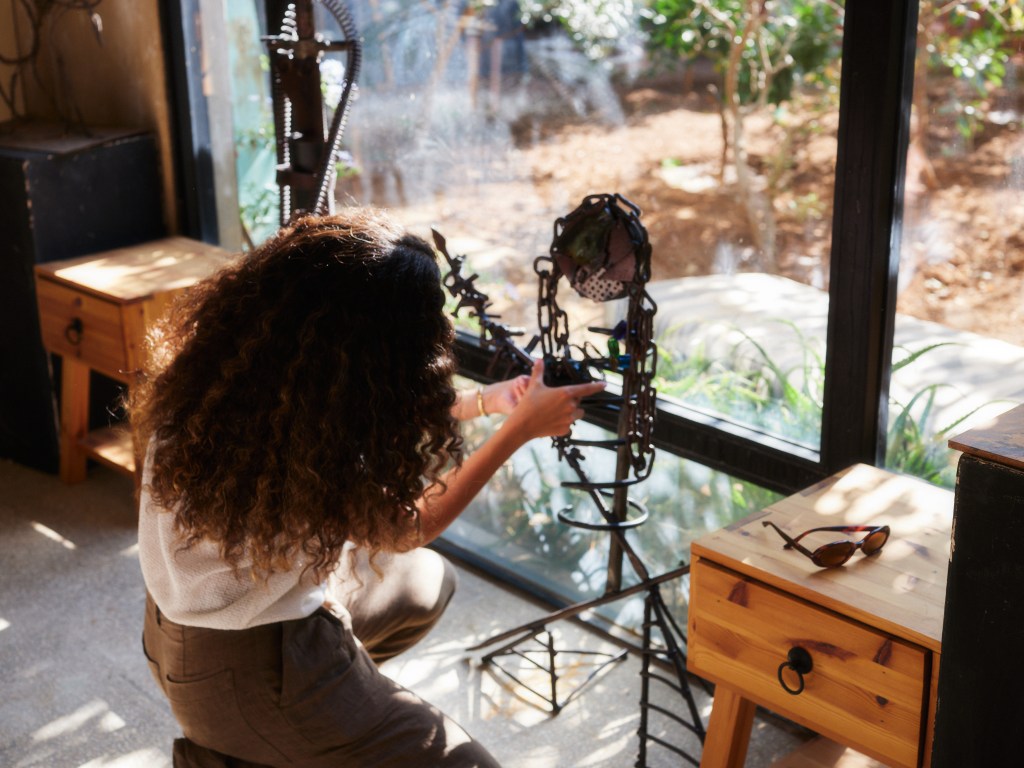
You began sculpting at sixteen in your grandmother Samia’s studio, turning her leftover scraps into your first “metal warriors.” You’ve said these were “the grandchildren of hers.” What was it like discovering her world and making it your own?
I was raised in her world — I didn’t discover it; I was really just awakened into it and welcomed to explore it. As her grandchildren, we were always part of her studio and home; we were born into that creative space, and she made sure to teach us everything.
Now that world feels sacred, almost untouchable, because in my memory, and in the stories that surround it, her world was invincible.
When I began designing, I naturally started to channel her influence in my work. Those first sculptures of mine felt like her grandchildren because they carried the DNA of her pieces — the metal scraps I foraged in her studio. They ended up carrying much of her as a person: the rebellion, the strength, the resilience.
They were my way of both inheriting and transforming her language — of learning how to build a world that spoke to both of us across time.
You’ve spoken about how Palestinian creation often involves “many hands,” while in the ‘West,’ collaboration can feel isolated or even shameful. How do ideas of community and shared creation shape your work?
Designing is shared, lived, and passed along through many, many hands.
I noticed how that part of me contrasts with what I’ve seen while living away from home, where collaboration can sometimes feel transactional, isolated, or even shameful — as if sharing ideas diminishes your own authorship or genius.
My work only lives because of the hands around me and the hands that came before me.
How can art act as a form of connection or “remaining” within a community, preserving memory and identity?
It ultimately all comes down to memory. Our art is how we plant our traces, so our stories live on.
Tell me about the transformative process of your sculptures — when did they become warriors, and where did the title originate?
I wanted to give form to figures I could see myself in.
The name “metal warriors” came years later. I think I was trying to channel what these figures had grown into within the current context of Palestinian resilience — especially in a world that so often tries to offer Palestinians lessons in resilience, as if it were something that could be taught from afar. But it isn’t. It’s lived. It’s stubborn. And sometimes it’s beautiful, though very often it is not.
They became warriors because they continued. Their surfaces record the impact of time, and in that sense, they become a reflection of those lived realities.
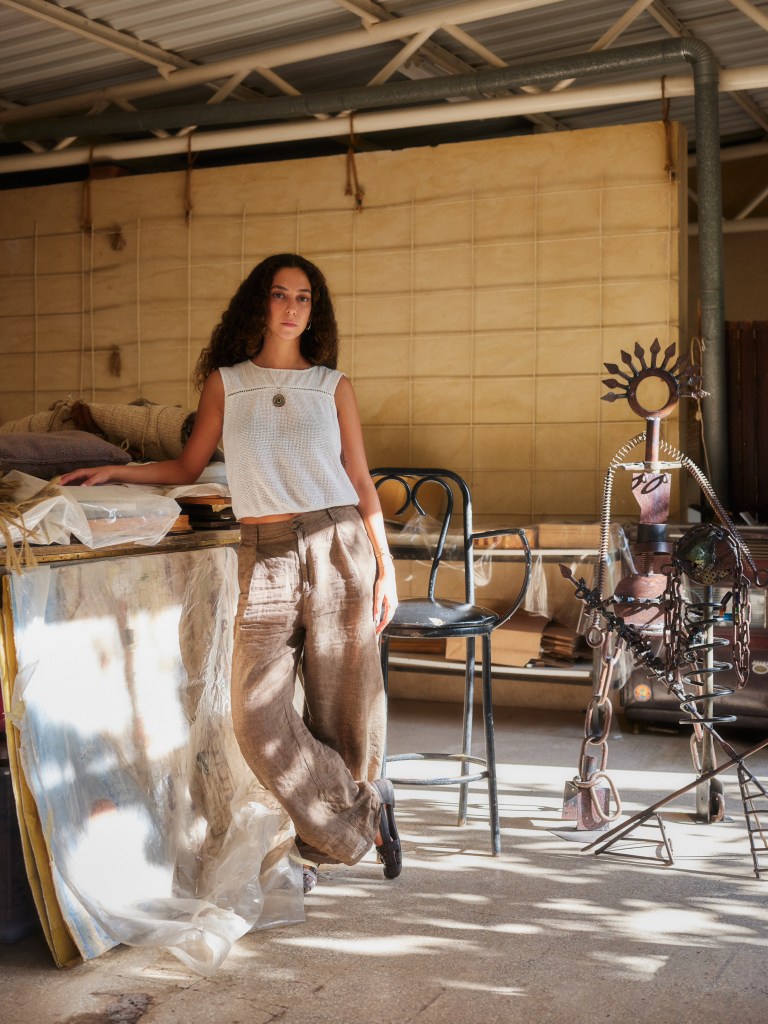

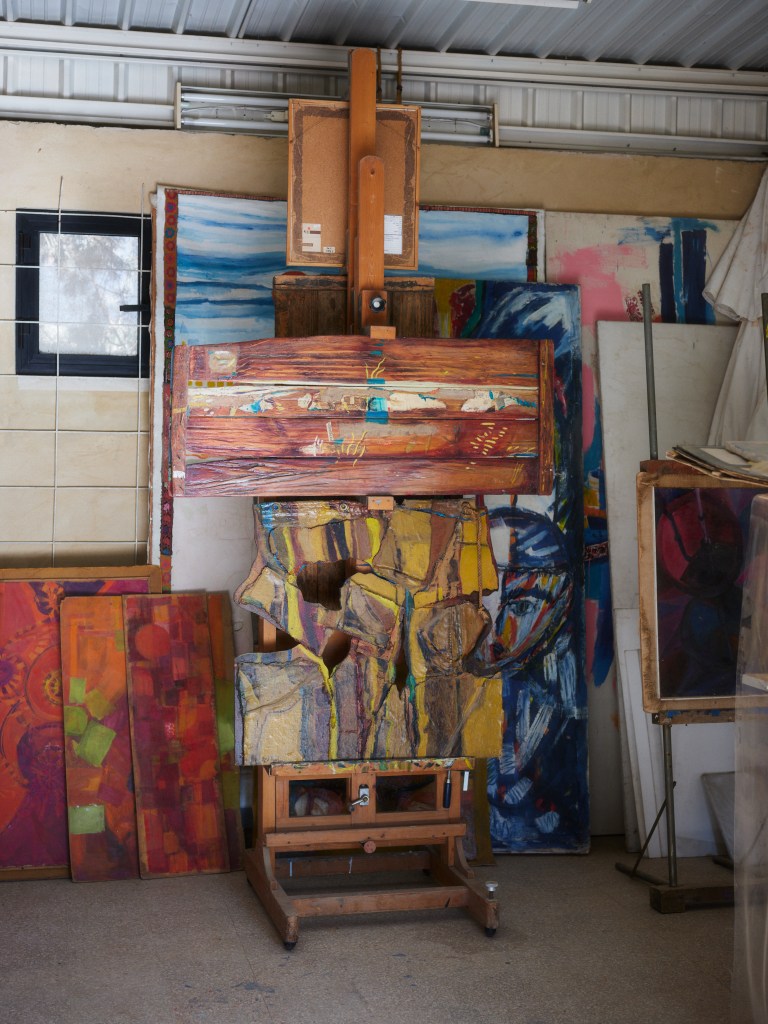


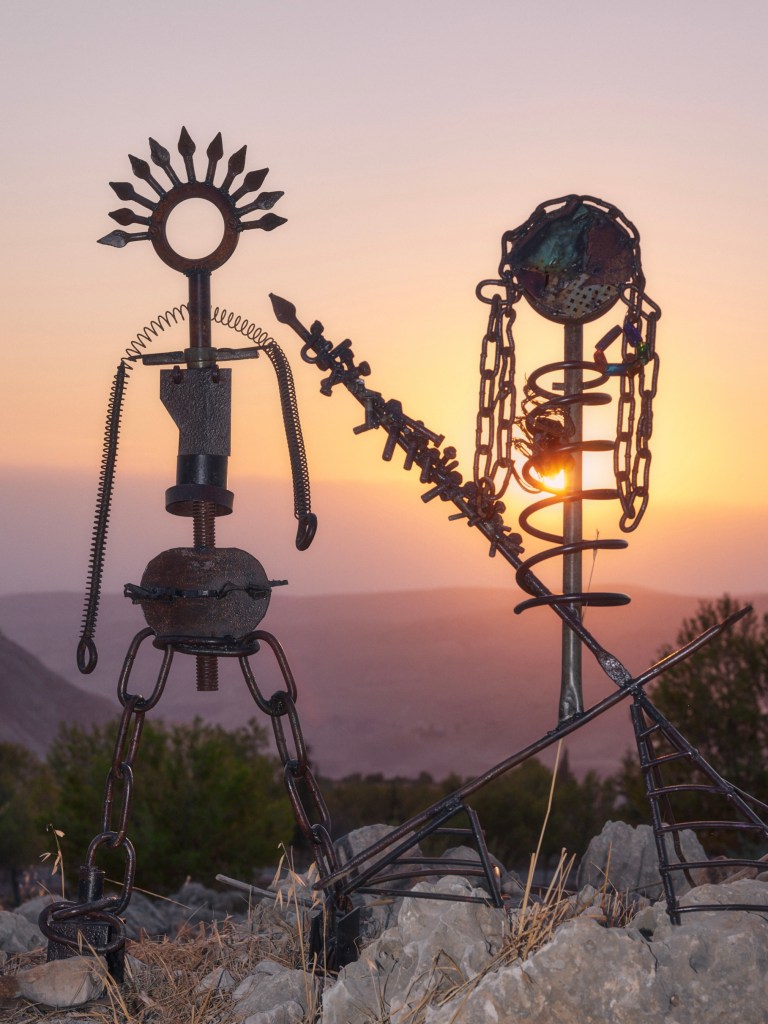
Your work seamlessly blends heavy metals with natural elements and incorporates rituals, such as the ceremonial presentation of your warriors. How do materials and ritual help you convey memory, legacy, and ‘resilience’?
Natural elements and materials are so alive. Working with them feels like unlocking new potentials. I love it when a material is heavy, for example, and I love how it begins to take on agency in the work.
Ritual is how we preserve and pass on memory. An act like watching the sunset with my sculptures to honour my grandmother is a small gesture, but it carries care, love, comfort, and continuity. I think it’s important to create rituals of honouring, remembering, and passing forward.
You’ve documented your warriors in photographs and writings, and hinted at an upcoming documentary. What can audiences expect from this project, and how does it continue the themes you explore in your sculptures?
The short film was very much in the moment. Greg was filming me as I showed him the studio and my grandmother’s home — which is also my home — capturing us as we moved the sculptures into the truck and headed toward the road that leads to Palestine. I had previously researched mountaintops and sunsets in the West Bank and their significance, so that whole day felt like a full circle moment — a way to honour my grandmother’s legacy and our land. The film is really just a behind-the-scenes glimpse of our day, raw and unfiltered.
If your warriors could speak, what would they say?
If my pieces could speak, they’d sound exactly like my Teta Samia — loud, unyielding, and always urgent. I can imagine them calling through the garden.
She once told me, “Stop being afraid, Haya. Rebel!” I still laugh thinking about that — the fire she carries, the intensity in her voice. I love that she has always encouraged me to be rebellious, and now I get to rebel on my own terms. Honestly, remembering her advice, I can’t think of anything cooler — every time I look at my sculptures, I imagine her voice shouting those words.
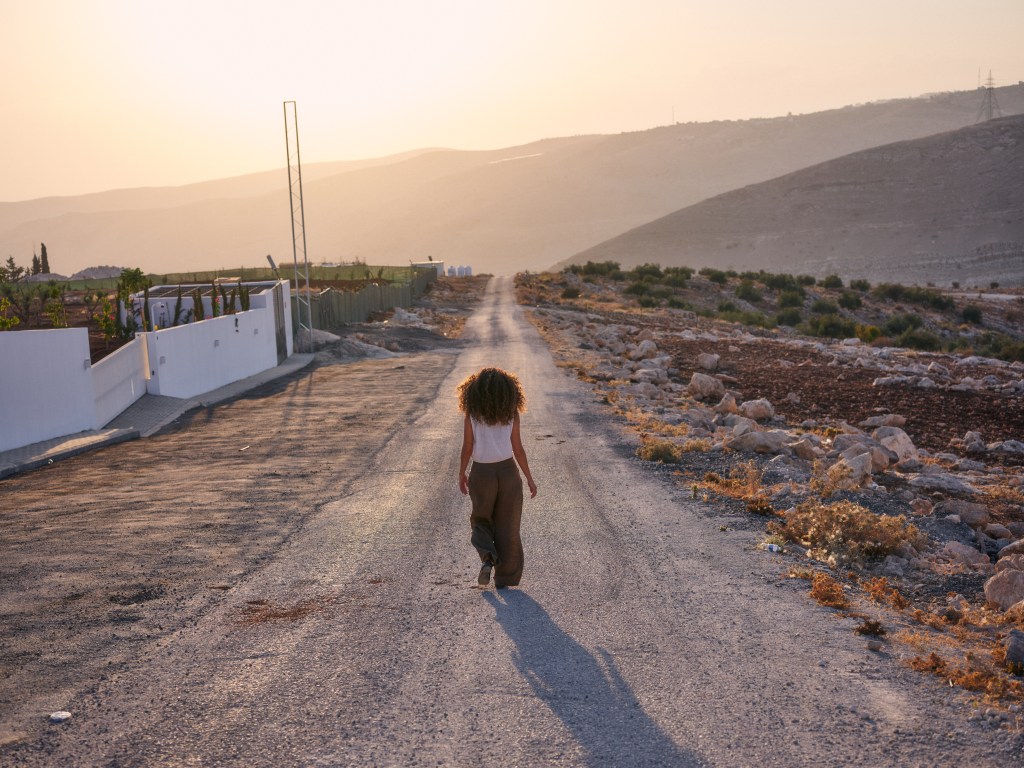
In the garden, time lingers. Samia Zaru’s sculptures still rise from the earth — rusted now, but resolute — guardians of a lineage shaped by hand and heart.
Haya’s warriors face the horizon, where the road bends toward Palestine. They seem to watch over more than a landscape; they hold a conversation between generations, between what endures and what is lost.
Art is more than just creation: it is a way of remembering and remaining.
 neunmagazine.com