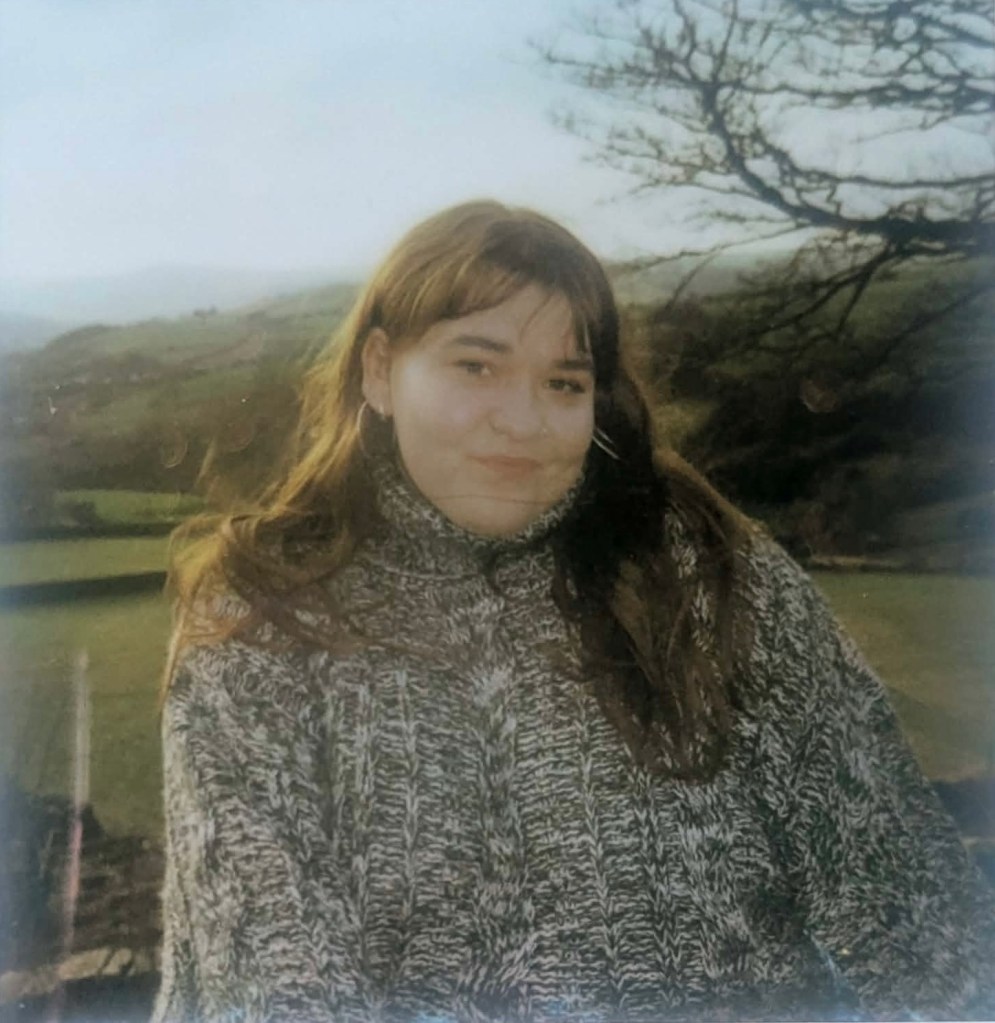
Writer, archivist, community organiser and Arts Emergency Young Trustee — she has spent her life building the spaces that should already exist. This is her story.
She was three years old, standing in her mother’s garden in Wythenshawe in her wellies, digging up the flower beds. Not looking for anything in particular. Just convinced, in the way that only very small children and very brave adults are, that something worth finding was already there beneath the surface, waiting.
Amie Kirby hasn’t stopped since.
That instinct — to dig, to look, to find what others have left buried — never left her. It followed her to Durham University, where she read Archaeology and first felt the quiet, clarifying weight of a world that hadn’t been built with her in mind. It was there, at a pre-drinks social in her first year, that the conversation turned to parents’ occupations. Her peers spoke of scientists, Cambridge lecturers, and professionals. Amie’s mother was a dental nurse. Her father, an office manager. She didn’t feel ashamed. She felt the sudden arithmetic of difference; the realisation that she was navigating a map nobody had thought to give her.
It followed her further. In her final year, she was accepted onto a field trip to Lebanon — a dig she had been looking forward to with the excitement of someone who had found, in West Asian archaeology, a world in which she felt she could be within and learn from.. Then came the email. The flights, the accommodation, the fees. No bursary. No hardship fund. When she approached the university, she was told, with some brevity, that the trip wasn’t “necessary.” She didn’t go. She worked with a museum in the city instead — an experience she now regards as more instrumental to her practice than the trip she lost. The lesson held regardless: the system had its terms, and she had not been considered in them.
She stayed. And somewhere in that refusal to leave, something took root. Not rage — though rage would have been understandable. Something harder to argue with, and harder to extinguish.
Love.
Not the passive kind. The kind that looks at everything that tried to diminish it and says, ‘you haven’t met me yet.’ The kind that insists.
“I think it’s the possibility that something else is there and something better is there,” she says, “and that we’re actually entitled to it and can carve it for ourselves.”
That word. Entitled. It resonates differently when Amie says it. It isn’t arrogance. It’s archaeology. A conviction, hard won and carried carefully: the gift was never theirs to grant. It was always hers. Born in her. Nothing external required.
So she built.
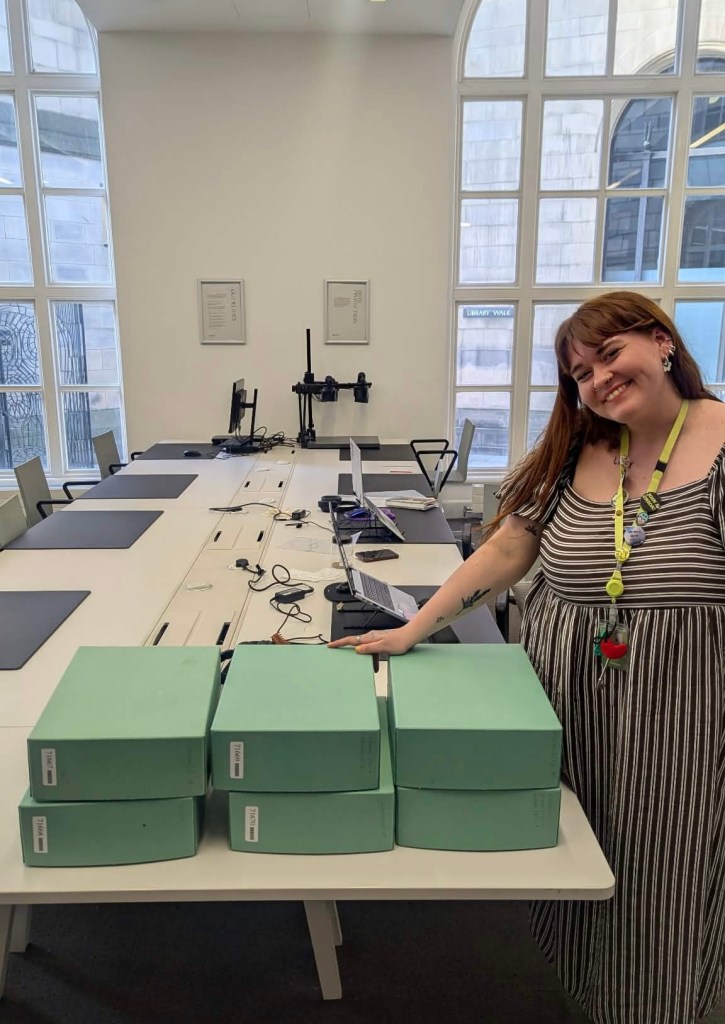
And then, in 2022, something broke through. Amie has Type 1 diabetes — a condition that shapes her relationship with every room she enters. Imagine her: alone in the lobby of Tate Modern, blood sugar dropping, an orange juice carton in her hand. In a museum she loved, the exhibition still humming behind the closed door. People passing. The quiet indignity of having to stop; of sitting where the art isn’t, slurping juice from a carton because to do otherwise — to ignore the drop, to push through — would mean not making it back in at all.
But inertia, for Amie, has never been a destination. It’s a catalyst.
Sitting there, unglamorous and unwitnessed, a question formed — not inwards, not towards self-pity — but outwards. Towards everyone else who had ever had to stop. Who had ever simply been forgotten. Not: ‘why doesn’t this work for me?’ But: ‘what would this look like if we did it together?’.
This was the birth of the Crip Culture Collective. A community for disabled and chronically ill people to move through museums on their own terms; unhurried, unjudged, unapologetic. “I’ve learnt,” she says, “that the space is what the group themselves make it.” It belongs to them entirely. As it always should have.
She was only just beginning.
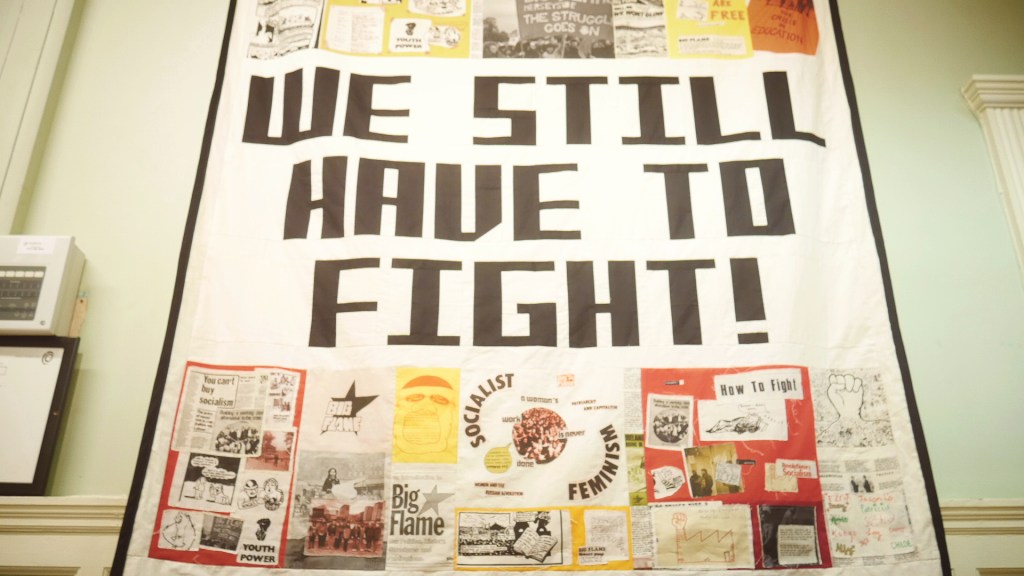
Then came Big Flame.
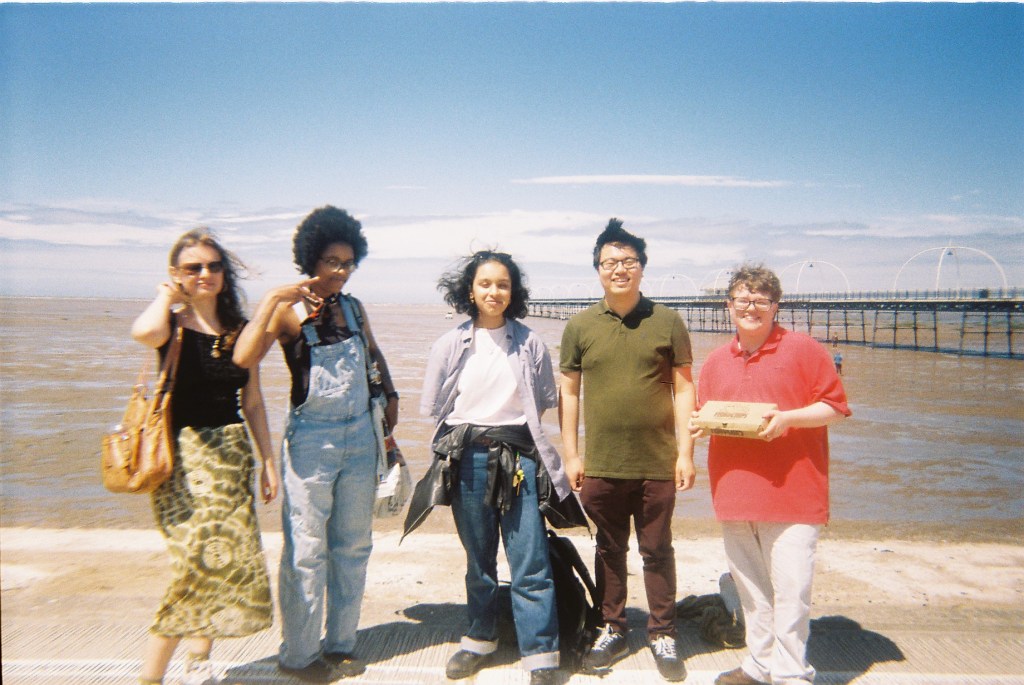
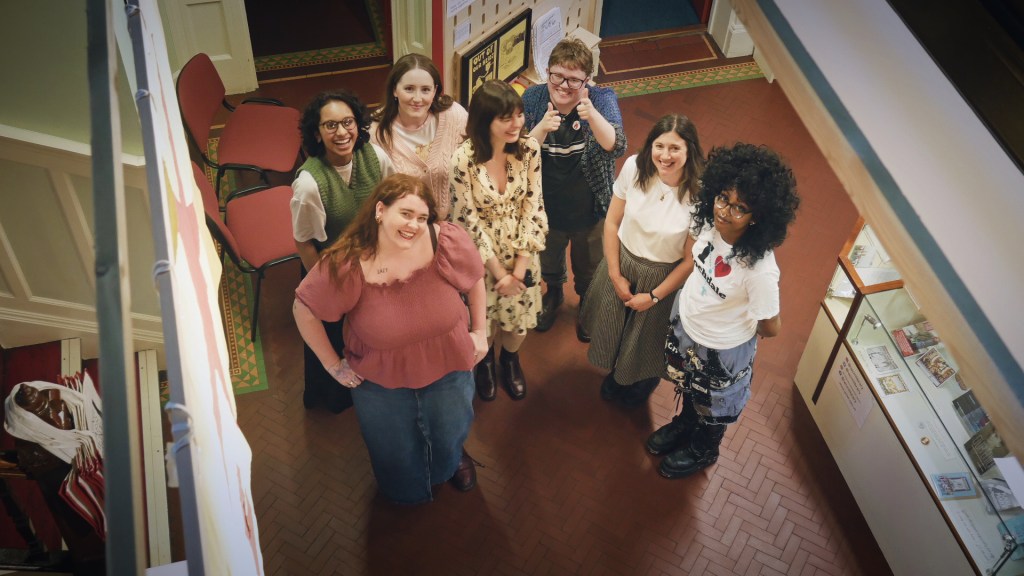
At the Working Class Movement Library in Salford — one of Britain’s most significant archives of radical labour and working-class history — something shifted: sixteen to twenty-five year olds, all from working-class backgrounds, sitting with the archives as one; with the pamphlets, the bulletins, the campaign ephemera of people who had fought, decades before them, for a more equal world. Week by week, something happened that no funding application could have predicted.
They recognised themselves.
Amie speaks of what she refers to as “archiving from below” — the reforming act of taking power from institutions and placing it in the hands of communities, “facilitating encounters where ordinary people decide what is important enough to be remembered and documented.” To sit with an archive, for her, is not a passive act. It is almost meditative; an act of listening for the echoes which still resonate.
One young person in the group — queer, curious — found an essay in one of Big Flame’s internal bulletins. It was called ‘Gay Flames.’ They scanned it, printed it, and covered it in annotations; highlights, responses, the live conversation of someone in dialogue with a voice fifty years gone. That annotated version went into the exhibition. Amie returns to a line from writer Carmen Maria Machado that has stayed with her: “what is placed in or left out of the archive is a political act.” That annotated page was both — a decision about what deserved to survive, made by someone who had every reason to feel excluded from the official record. Proof that the archive is not a sealed record — it is a challenge, if you choose to accept it.
The group named themselves the ‘Little Flames.’ Not because Amie suggested it. Because one of them, in a brainstorm session, simply said: “We’re the little flames, aren’t we?” They were.
Every one of them.
An activist who had been part of Big Flame gave an oral history interview for the project. He said something that has stayed with Amie since. “The struggle reconstitutes itself.” The shape changes, generation to generation. But the reason — the deep, stubborn, loving reason why people get up and fight for a world that is more equal — that never changes. It is the same flame, passed from hand to hand, across time.
Amie is twenty-six. She is barely older than the young people she facilitates, and she felt the imposter syndrome acutely. “You come in with an understanding,” she says, “that even though you’re the primary facilitator, you’re all there to learn with and from each other.”
At Goldsmiths — the University of the Arts London — in a manifesto-making exercise, she picked up a paintbrush and wrote six words.
The art world is our world.
She did it on a “whim,” she says. It came from “that raw passion — that love.” But there is nothing accidental about what it means. There is that particular pause before she says what comes next; the pause where something true is being drawn up from somewhere very deep.
“We have no choice but to believe it.”
She said it once. Then wrote it again, as if once wasn’t enough. It is not a slogan. Not a manifesto line. It is a reckoning — issued quietly, firmly, with the absolute authority of someone who has never once, despite everything, believed otherwise. “I have to believe that the art world is my world. It’s our world, it’s everyone’s world. It’s something that shouldn’t be closed to people.”
“All it takes,” she says, “is one person to put a voice to your anxiety.” Suddenly you are not the odd one out. Suddenly the thing you thought was your private failing turns out to be a shared condition; a wall that was built, and can therefore be dismantled, by anyone willing to pick up the tools.
Because this is not a story about struggle. It’s about existence. About the radical act of simply, stubbornly, continuing — of reaching across and saying: we are already here. We have always been here. Not despite where we come from, but because of everything we carry within us.
It is in this very existence — where we are seen, accepted and celebrated, rather than measured by what we possess — that we thrive. Not merely survive.
As Arundhati Roy — one of her most vital touchstones — wrote: a better world is not only possible; on a quiet day, you can hear her breathing.
“Go to the archives,” Amie says. “Seek out stories from the past. Use them to light your way.”
“Don’t do any of it alone.”