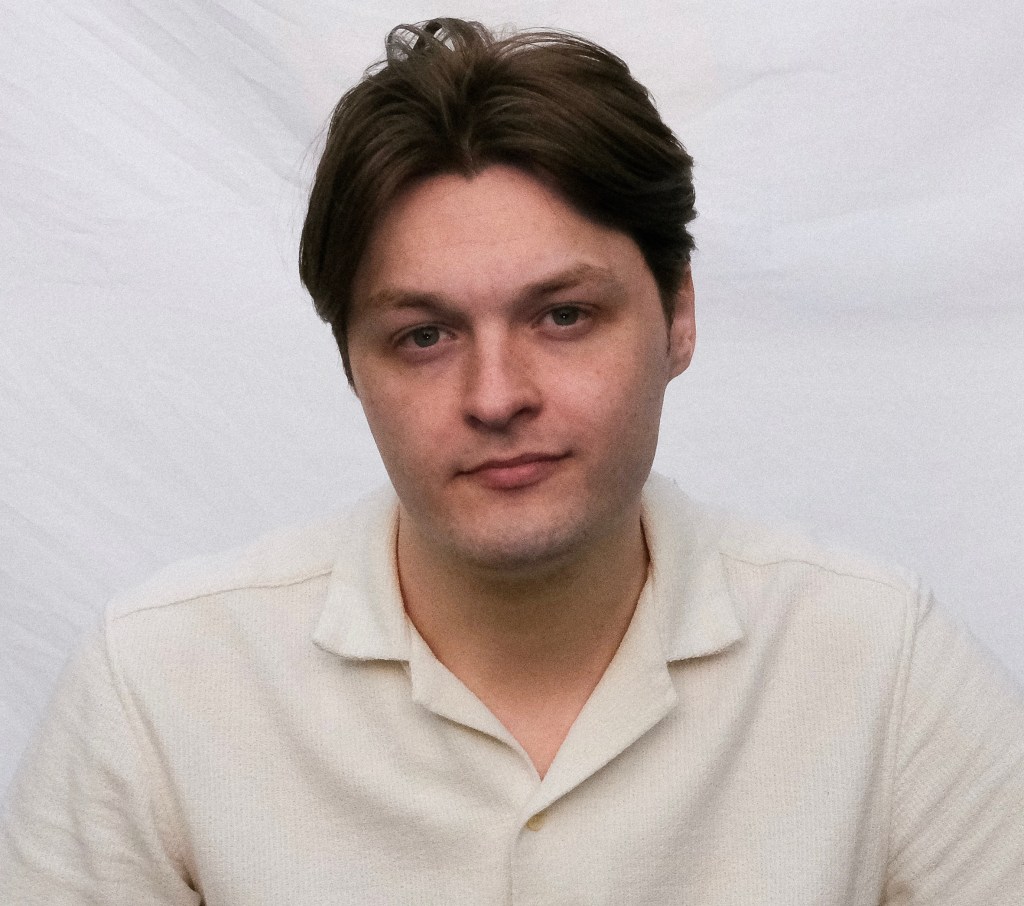
A documentary filmmaker from Ashton-under-Lyne, he started making films at fifteen with no contacts, no connections and no route in. At 25, he is award-winning, and is one of the most important voices in the conversation about class and the creative industries. These are his words.
Sam Oddie does not yet fully understand what he has. He speaks of his work with precision, passion and humility — unaware, it seems, of the full magnitude of the emotional genius that drives every frame, every question he asks of his subjects, every story he chooses to tell.
A filmmaker from a small town in Greater Manchester, Sam started making films at fifteen with his twin brother; little productions for grandparents, end-of-year screenings for the whole school, a camcorder and a conviction that this was his world. Nobody in his family worked in the arts. Nobody around him could show him what that life looked like. And yet the pull never left him.
neun’s working-class campaign exists to ask questions. One of which is: what does the creative world lose when it shuts certain people out? The statistics are brutal. Just 8% of those working in film, TV and radio in England, Wales and Northern Ireland come from working-class backgrounds, the lowest in a decade. But statistics do not tell you what it feels like to be inside that reality. They do not tell you what it costs. Sam Oddie does.
Through his films, including the quietly devastating D’vina, which follows Dave, a veteran living with PTSD who finds peace and wholeness in ways the world was not expecting, Sam has established himself as a filmmaker of rare emotional precision. He bears witness. He makes people feel seen. And in doing so, he asks us all to look harder at who we are letting in — and who we are still, unscrupulously, turning away.
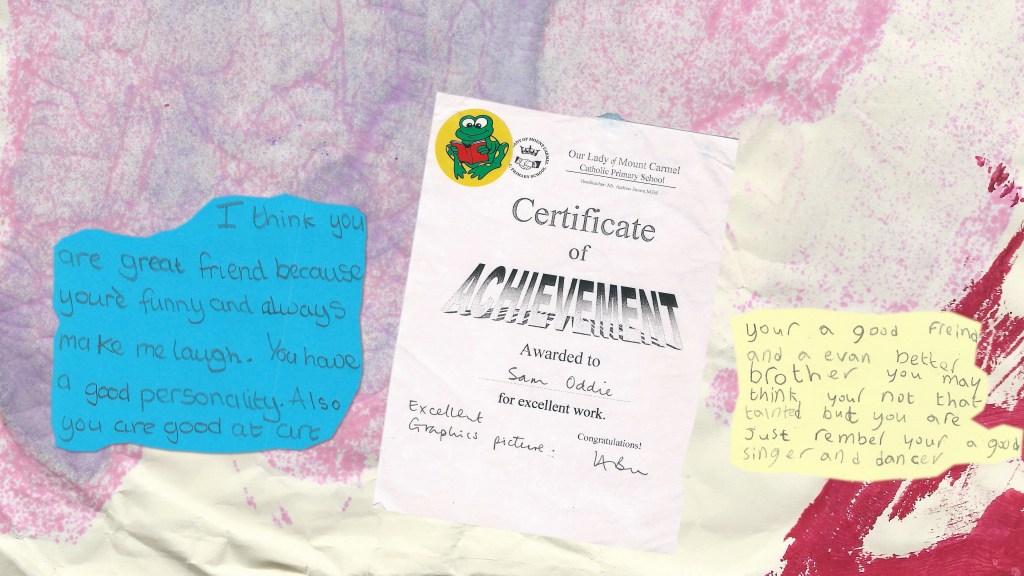
Working-class young people are not encouraged to believe they can have what they want. The people who shape them — teachers, advisers, well-meaning adults — do not do this out of cruelty. They do it out of care. Sam knows exactly when he felt that and what he did with it.
“It did change how I felt about them, but I look at it very differently now than I did back then. I saw them in a very rebellious, teenagery way; I would be lying if it didn’t motivate me to work harder. It gave me the feeling that I needed to prove people wrong. I was a young person with a very ambitious mission statement compared to a lot of people around me, and I felt more alone than I truly was. I thought I had something to prove: that I was serious about being a filmmaker, that I wasn’t asking to do something impossible, like playing for Manchester United or becoming an astronaut. Spite became a terrible but effective motivator that made me go far early on, but it comes with a cost. Even the most well-meaning people often fall into that trap; it is a direct ticket to bitterness and cynicism that is far too common. It is not exclusive to any kind of person. As the years go by, it is the type of story that loses its charm when you hear it from people who have accomplished everything they could possibly want but still somehow feel there is a point to prove. Whatever accolades are left to achieve will never be enough to stick it to whoever ‘they’ are.
I knew quickly that this was not the person I wanted to be. All it took was meeting new people who had enabled me, been supportive of me, who saw, or perhaps lived in, the world I wanted to be in. Though that created an almost equal tyrant, who is motivated by proving people right. I have made decisions trying to make the people around me happy or proud, to reciprocate their faith in me by achieving something, and this has opened the door to disappointment on a number of occasions. I have been fortunate to surround myself with people I admire endlessly, but not everything I do will make sense to everybody, and my path will join up with others, but is still mine to pave.
I am still learning. But I try to listen to what people say and to understand their perspective, which helps me hear what they are really trying to tell me. Those who tried to dissuade me never knew anyone in a creative job; they could only advise me on what they had seen. I once saw them as dream killers, but I see them now as people who were perhaps echoing what they themselves may once have been told. Artists hold that title high above their heads, and I am no different. But what we do and the labour we provide can never make us whole — it is merely how we want to spend our time.”
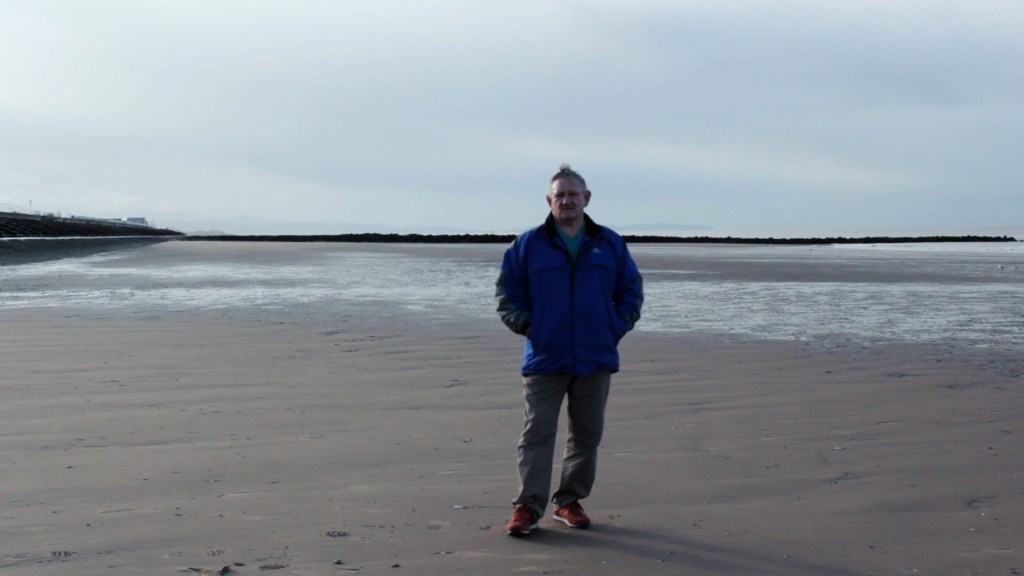
But understanding the system is one thing. What Sam did with that understanding is another concept entirely. At university, searching for a subject, he found Dave, a veteran living with PTSD whose story of identity, survival and acceptance would become his first documentary, D’vina. The film that changed everything.
“After hearing about Dave’s story for just a couple of minutes, I think all of us who were there had a collective vision of the film; we could immediately see it in our heads. It’s a universal topic when you really think about it. I could only imagine the battles you have with your own mind in a situation like this, but in this case, like many, acceptance and grace are on the other end of difficult conversations. Dave’s openness drives the film. He was incredibly trusting and generous with his time. I think you can feel pressure being relieved when you watch the film as he tells his story; I think that’s something we’ve all searched for at some point. Subject-led documentaries work best when there’s something a participant has been eager to share but never had the space to do so in a way like this. We are very lucky to have this story on film. I cannot believe I wasn’t even 20 yet.”
Films have infinite effects. There are those, however which simply unfold you — slowly, poignantly, irrevocably — and leave you, unexpectedly, enveloping love. D’vina is one of them. What it meant to embrace Dave’s story, and what it revealed to Sam, only he can tell.
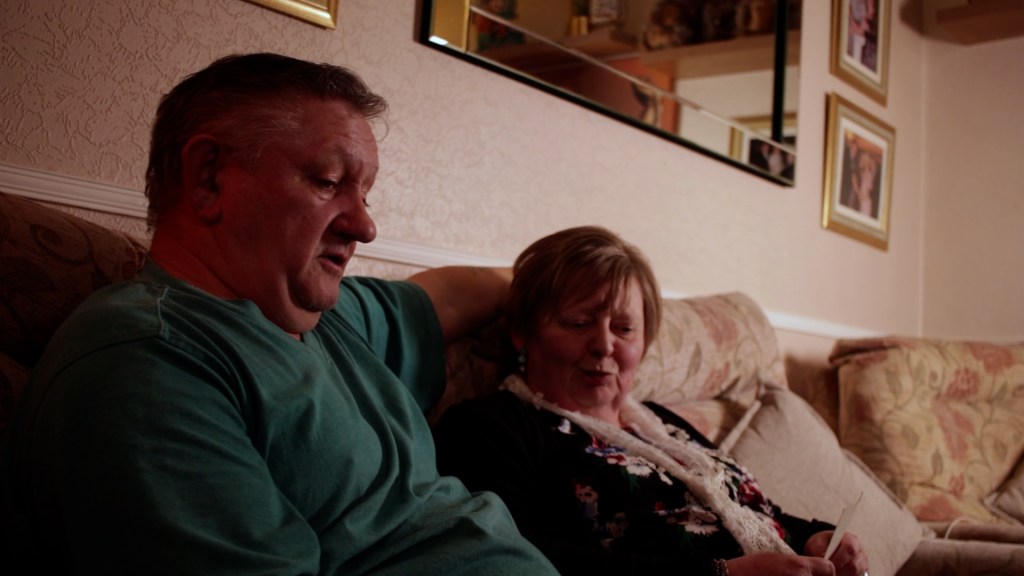
“We wanted to make sure that his story was told in the way he wanted it to be. It is very tricky to tell a multi-decade-long process in ten minutes; that is why I am often inspired by poets like Arthur Rimbaud and Rainer Maria Rilke, who are incredibly expressive in as few words as possible and who paint a loving world view. Most importantly, the acceptance and happiness Dave found came from within. Those he found throughout his life, such as his amazing wife, led him to some respite from the uncertainty he was facing. I remember Dave calling D’vina the best part of being him. The final line, when his wife talks about waking up and having a good life — it was almost like a mantra when we were making the film.
I saw the people I worked with on this film as peers and friends, but I became in awe of their empathy and determination to make this film no less than special. It taught me that it took more than an eye for filmmaking to be good at it. The excitement we had hearing the music and sound design for the first time is a memory I won’t forget; such precision in a very small amount of time, culminating in translating the feeling we had making a scene into how it came to be on screen. Having watched it back before speaking with you, I can see the fingerprints of five people coming together to tell the story of someone who deserves the freedom of knowing his experience enlightened us all. I learnt so much from everyone involved in this film. It was truly formative and led me to where I am now.”
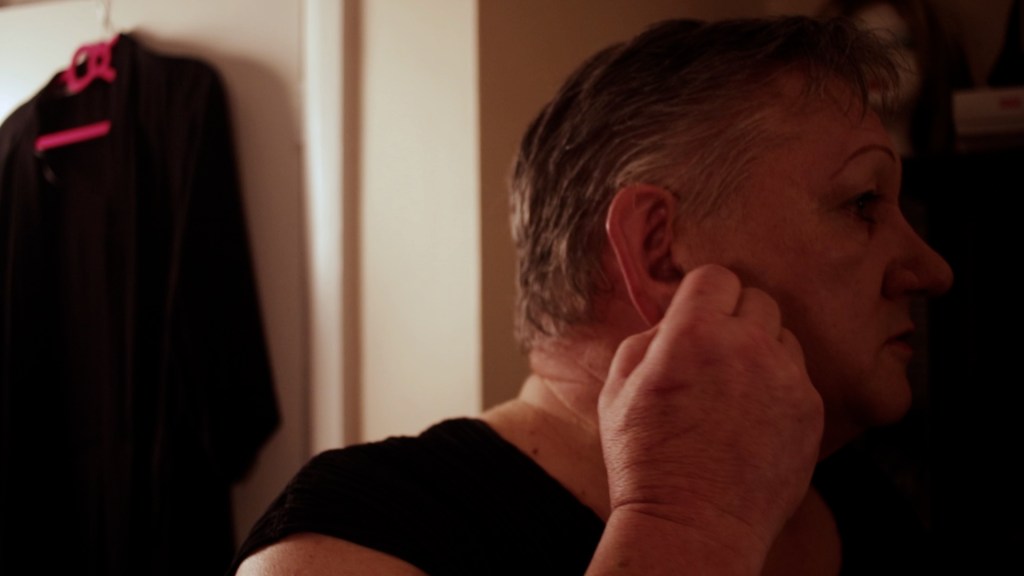
Visibility, for a working-class creative, is not always the culmination it appears to be. Sometimes it is simply exposure — raw, unasked for, and overwhelming. In May 2024, Sam appeared on Channel 4 News as part of a report revealing that working-class representation in film and TV had reached its lowest point in a decade. The attention that followed unnerved him so he took his personal website down and went quiet. What happened next surprised him.
“Generally speaking, up to that point, I had never been big into social media or being online anyway, for no real reason. I think I would have been the last kid in school to get a phone. It just wasn’t my thing. As a filmmaker, I think a lot about what I want my films to say over a period of months, so I find it better to have my work speak than to say something a lot less considered.
I put a lot of pressure on myself during that time. People were reaching out with their stories over that summer, which was really touching, but it left me quite unnerved to speak on behalf of these people. There is even a comment under the YouTube video right now talking about never seeing someone from Ashton in the mainstream before. I wasn’t sure if I was good enough to do it, if my films could hold up against other people as part of the conversation. I felt like a spokesperson for an industry I wasn’t part of; I never intended or looked to put myself in that position either. I needed space to know if it was something I wanted to do more of or not.
The decision I came to is that I was given a gift, the chance to talk about something I am passionate about, and that is all that was really expected of me, which I never had a problem doing. Everything feels different now. I am lucky to have been pushed out of my comfort zone and placed in this position, because it has led to new journeys and to becoming a person I am very proud of through the good faith of others. While the website is still gone, it is no longer by design. I will get around to it. The time to reflect helped. I am now able to switch the filmmaker side of me off and on when I need to. That separation really saved me from going insane and judging myself so severely. It is nice to leave the anxiety and doubt at the door when it is time to switch it on; when the moment is over, it is a relief to know that what I said can stay in the room, that it is simply something I do. Thinking this way helps me enjoy both aspects of life a lot more. I can tell it has made me better at both, especially over the past couple of months.”
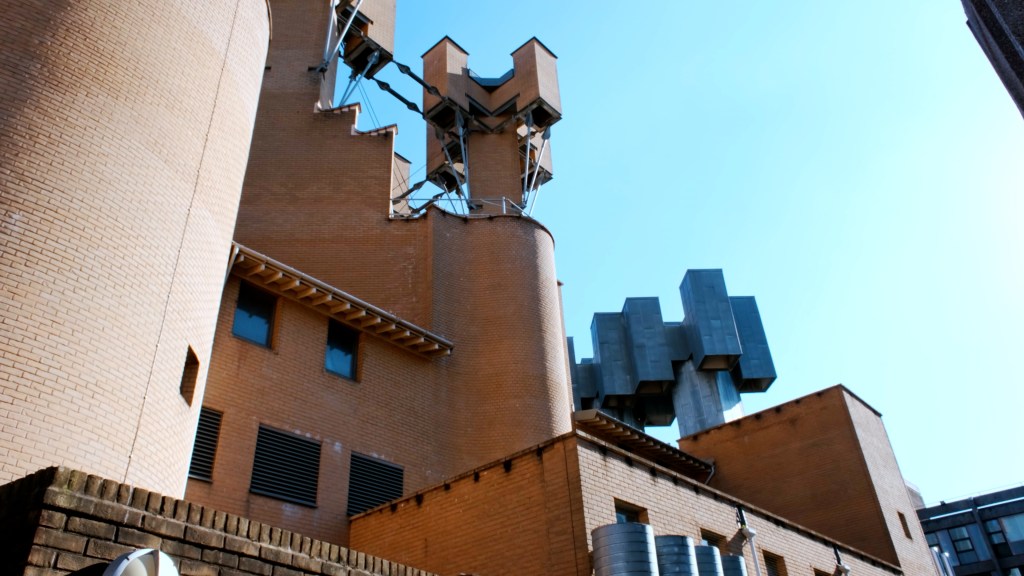
Underneath the spite and the scaffolding, the fingerprints and the silence — there is a question. The simplest one of all. And the most radical. I asked Sam what the seventeen-year-old version of himself still knows that the industry keeps trying to make him forget. He answered with an LCD Soundsystem song playing in his head.
“Art in all its forms is rightfully a very silly thing. As we get older, we continually need to find ways to justify it; perhaps by studying it at university, making it a job, using it as a transferable skill, making it just a hobby, something to do with friends or to kill some time whenever you have any to spare. You must reject this cynicism for as long as you can, and the idea that there needs to be a reason for everything. Art is an essential part of your day as a viewer or as a creator by virtue of itself; it is pure resonance. It doesn’t need a purpose.
At seventeen, I was blessed with a naivety that I was only a stone’s throw away from being on TV; that the only thing separating me was hard work and the right timing, that all I had to do was more of what I already loved doing. Hope should not be a quantifiable privilege. To be so deliriously in love with a craft should not be reserved for those who can afford it. I am still that seventeen-year-old who showed their film teacher their coursework, who was heartbroken at not winning the end-of-year award for creative work, who worked tirelessly the year after to finally win it. I still remember walking home after meeting my Arts Emergency mentor, thinking of where it could take me. I remember showing D’vina in class, and I still feel the same at screenings now. At seventeen, your whole life is ahead of you — but it is also at 25, 30, 40. You should always believe that something better is possible, that change is an option, and that the unthinkable often does happen. And why could it not be you?
I often dream about the day my first documentary is on TV. I imagine it to be a beautifully sunny day when the flowers are in bloom, much like they have been recently. I will have a coffee and then walk for however long, without headphones, listening to the cars and people go by — instead of being inside my head. Just as I did as a college student, as I did at university, as I do now, to just disappear into the world for a while, as the world sees what I have made. Whether that day comes or not doesn’t matter. There is proof that I will one day leave behind what I was moving towards. Ethan Hawke recently said at the Oscars that the person who is in love always wins. If my goal is to experience a dream — which means the heartbreak and elation that comes with it — then I am the winner. It would also be a dream to one day work with the Minions.”
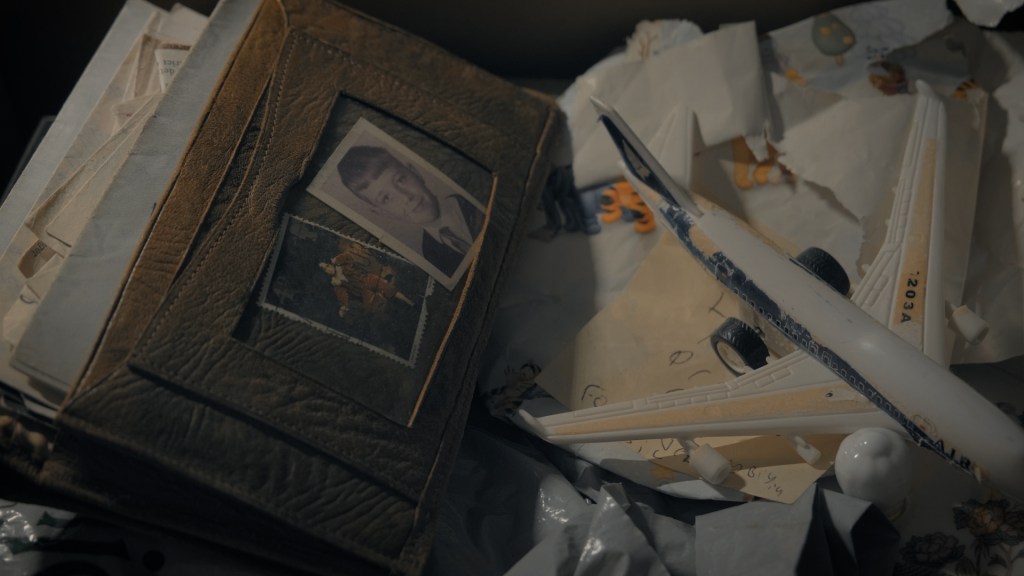
In forty minutes, Sam Oddie gave me everything. Not the filmmaker — though that gift alone would have been enough. The individual. The one who stays seventeen on purpose, who walks without headphones on sunny days, who dreams of flowers in bloom and a coffee and the world finally seeing what he has made. I have sat with many extraordinary people in my years of doing this work. But there are rare moments when you find a gem amongst stones — a beckoning light in a vast ocean — and you understand, with absolute certainty, that what you are witnessing is only the beginning. Sam has the sensibility of a life worn and lived, a maturity of soul that should be possessed only by one weathered by experience. I am mistaken. Astonishingly so. I cannot fathom what he will give to the world. I can only hope the world is, invariably, prepared to receive him.