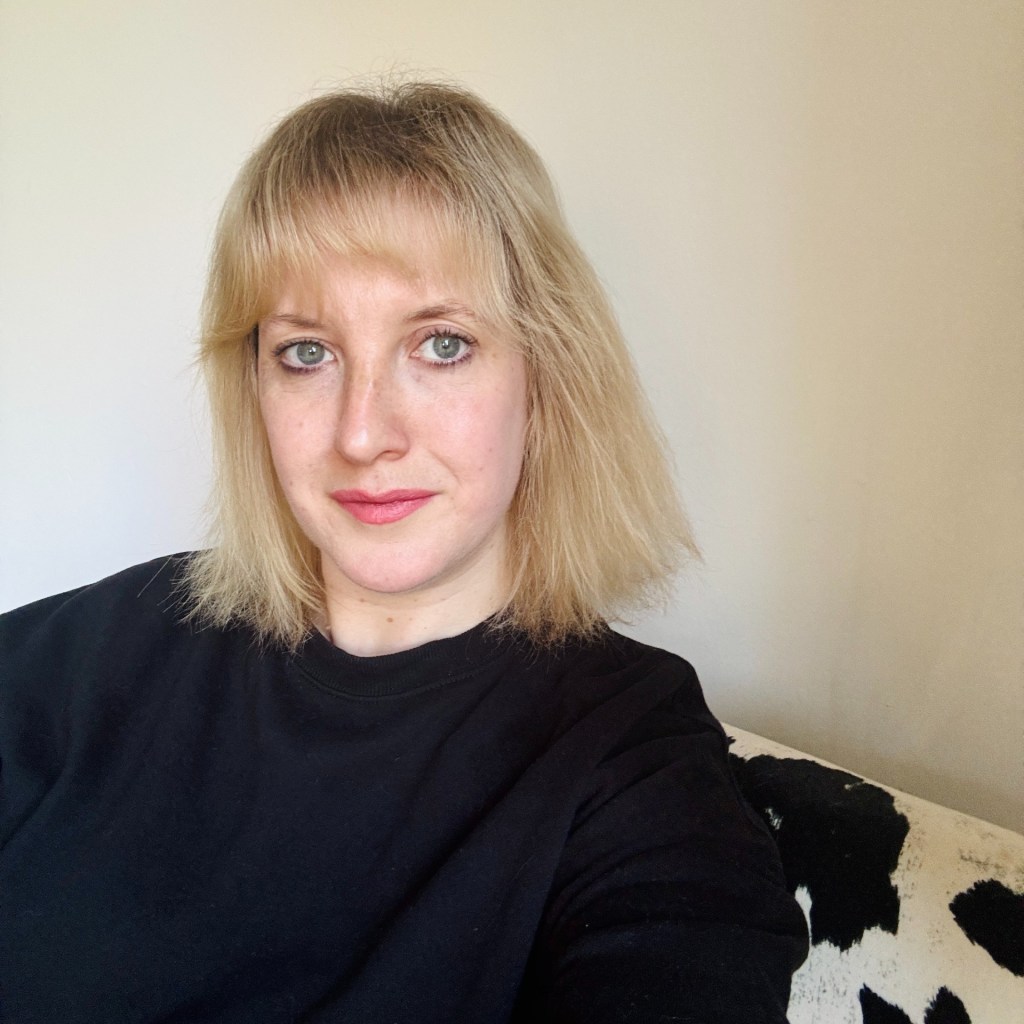
A freelance arts communications professional grew up where the art world didn’t exist as a possibility. Not withheld. Absent. She fought her way in anyway. What she found changed everything she was willing to accept. Not to leave. To dismantle. What happened next wasn’t a movement. It was retribution.
Art. Not the making of it. The world which is built around it. Impenetrable. Self-selecting. Ruthlessly constructed. The right connections. The strategic name-drop. The cultural reference which marks you as one of them before you’ve said anything of substance. White walls. Impeccably illuminated. The chosen artist in the most prestigious gallery. For now. It is a closed system which understands the power of curation — not just of creation, but of people. Of who gets to stand in its vast rooms and who remains, indefinitely, outside them.
Meg Molloy walked into it anyway.
Not because she was invited. Not because the doors swung open when she approached. But because she had spent enough time on the outside looking in to understand, with a clarity that only distance gives you, exactly what was wrong with the view from the inside.
She was born in Margate. Not the Margate of the Turner Contemporary and the regeneration headlines. The Margate that existed before the trendsetters decided it was interesting. A town where none of this was on offer. It did not exist as a possibility. No one mentioned it. Not once.
And it had been this way far longer than Meg had been alive.
“My mum wanted to be an art teacher. She came from a traditional Irish family, and they said no, go out and get a proper job. So she became a nurse. And now she’s watching me in this field.”
Meg went on one school trip to the Tate Modern. She remembers standing in the Turbine Hall as a teenager. That was it. That was the full extent of what her environment told her was available to her.
She didn’t know History of Art was a subject. She had never heard of the Courtauld until she was already working in a London gallery and a colleague mentioned it in passing and, in looking it up, she faced the confounding reality that an entire institution, an entire world, had existed her whole life without anyone thinking to tell her.
“I never even considered a career in the arts because I didn’t really know it was an option, which is crazy.”
She went in regardless. Not out of necessity. This was her love. Her hunger. And to love something completely, to fight your way inside it and then see its ugliness clearly, from within, is not just disillusioning. It changes what you are willing to tolerate. That intolerance became everything.
The only way in: front desk, shop floor. Perfectly educated. In full view of a world which looked right through her. Invisible. But useful.
And she knew it. The way her position spoke for her. Nothing else was relevant.
“I felt like people thought I was stupid because I was working in the shop, I wasn’t upstairs in the office.”
The assumptions arrived before she uttered a word. The glances that studied her and moved on.
In Mayfair, where she later held a senior communications role at one of London’s most formidable commercial galleries, it became more evident. Class. Jarring and ruthless, wrapped in the shroud of all the cultural references she didn’t share. The casual conversations felt more like social ostracism. The thin, oblique line between those who belonged and those who had slipped through, cast into shadow.
And so, she code-switched. Occasionally changed her accent. Moulded herself to fit discreetly into an environment which had not been built with her in mind. Because she had convinced herself, with blunt and immovable certainty, that the only way to change a room was to get inside it first.
“I felt a bit embarrassed to be in that shop role. But I felt like it was the only way in.”
The closer she looked, the more she saw it for what it was. Not just exclusive. Curated to exclude. The working class hands that had always sustained it — making it run, keeping it visible, holding it up from below — were precisely that: below. In the room but never a part of it.
Seeing it. Living it. Almost on repeat — until it tipped the scales. Change was inevitable.
“I just want to let other people in and for them to do what I wish someone had done for me in terms of sharing awareness and access.”
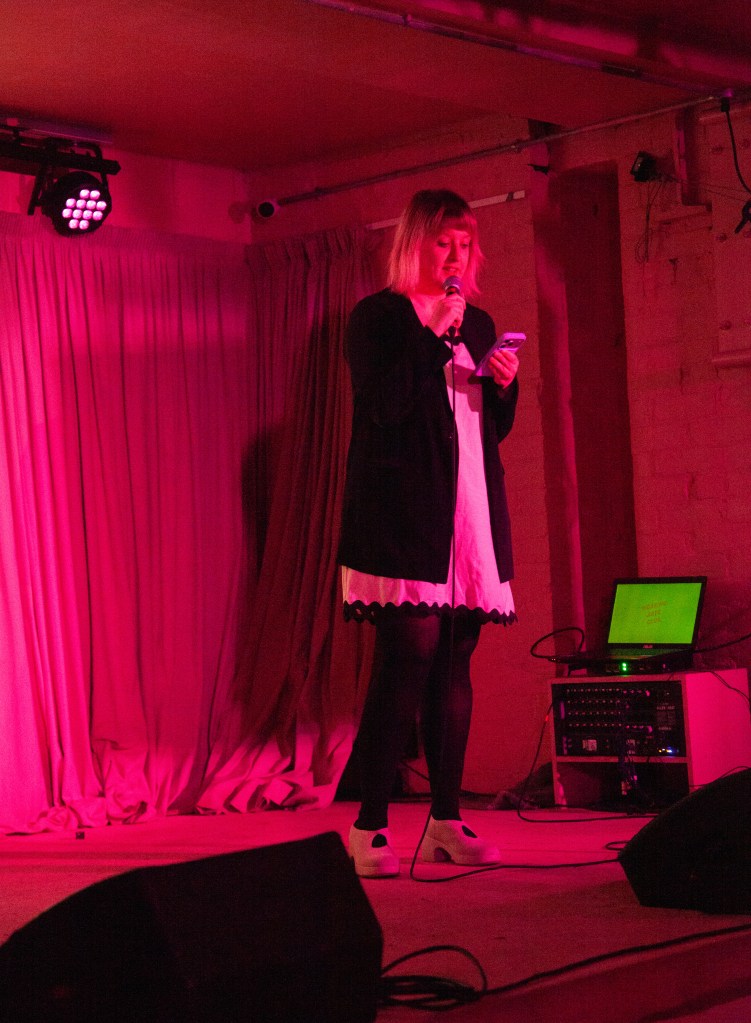
Meg will tell you the art world has never been short of good intentions. Panels are assembled. The appropriate people are photographed at the media-hogging venues. Boxes are ticked with considerable enthusiasm. But something is missing.
“There’s so much smoke and mirrors. A lot of vacuous attempts to look like you’re being seen at the right things. But who is actually doing something worthwhile? Who is actually helping people in a meaningful, sustainable way? Who is actually paying it forward?”
The answer, in her experience, is rarely the institution. It is the individual. The working class person who is inside the room, carrying the weight of a community on their own time, their own money, their own conviction. And even then, they are typecast.
“Working class people are often the operational people in the gallery. Very rarely the sales director.”
So she did something about it. A post on social media. A simple question directed at anyone who might be listening — other working class people in galleries, in museums, in its quieter corridors. She expected perhaps ten replies and a trip to the pub for a chat.
Over a thousand people answered.
Maybe someone else would have done it. But they didn’t.
And what emerged astonished her.
“People hide their class in the art world. So many people emerged and ‘outed’ themselves who I never would have thought came from that sort of background.”
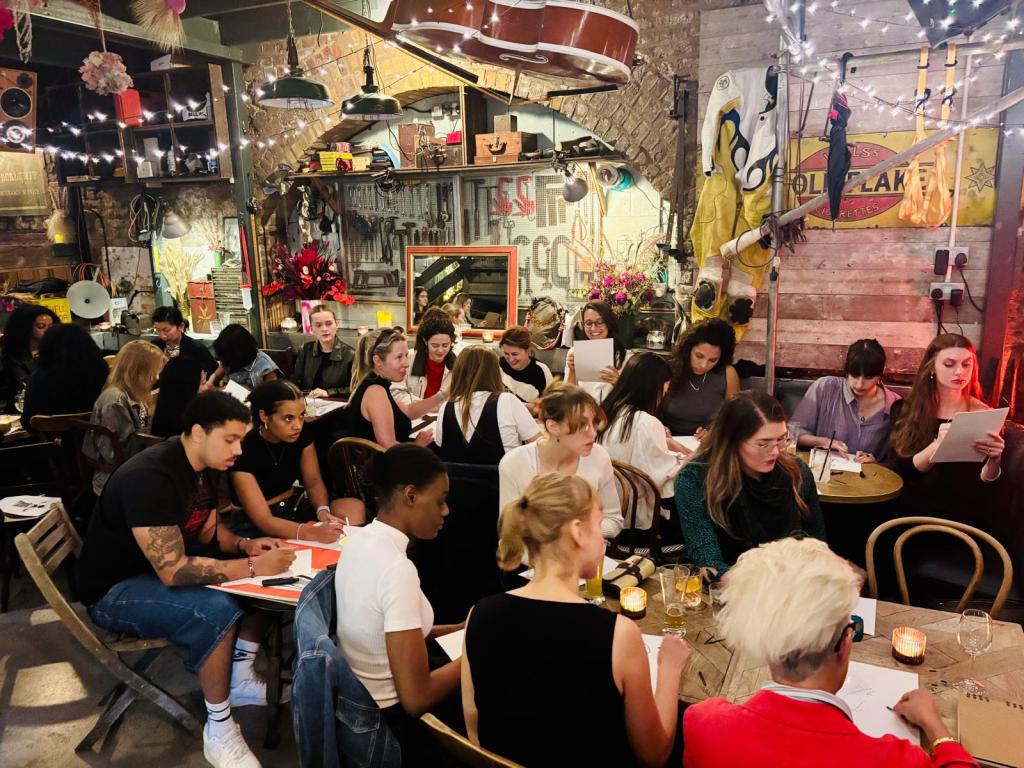
No turning back. But what did she give up to answer this calling?
Not an easy career — nothing about Meg’s trajectory has ever been easy. She fought for over a decade to earn her place. Dulwich Picture Gallery. Studio Voltaire. Global communications campaigns for exhibitions and art fairs, working alongside artists of the calibre of David Shrigley and Yinka Shonibare. By the time she landed what she calls “her first proper art job,” she was thirty years old.
“I feel frustrated that I entered into the art world later than I wanted to, because of a lack of money and access.”
She had arrived. Salaried. Respected. Head of Communications at Stephen Friedman Gallery. The door she had spent a decade fighting to open was finally, fully open.
She didn’t walk away from it. She stayed. And in every hour the system didn’t own, she built something it had no idea was coming.
Not in anger. Not in defeat. But because of a love she cannot shake. Because the world she had fought so hard to enter was still, fundamentally, the same world it had always been. And she could not unsee what she had seen from the inside.
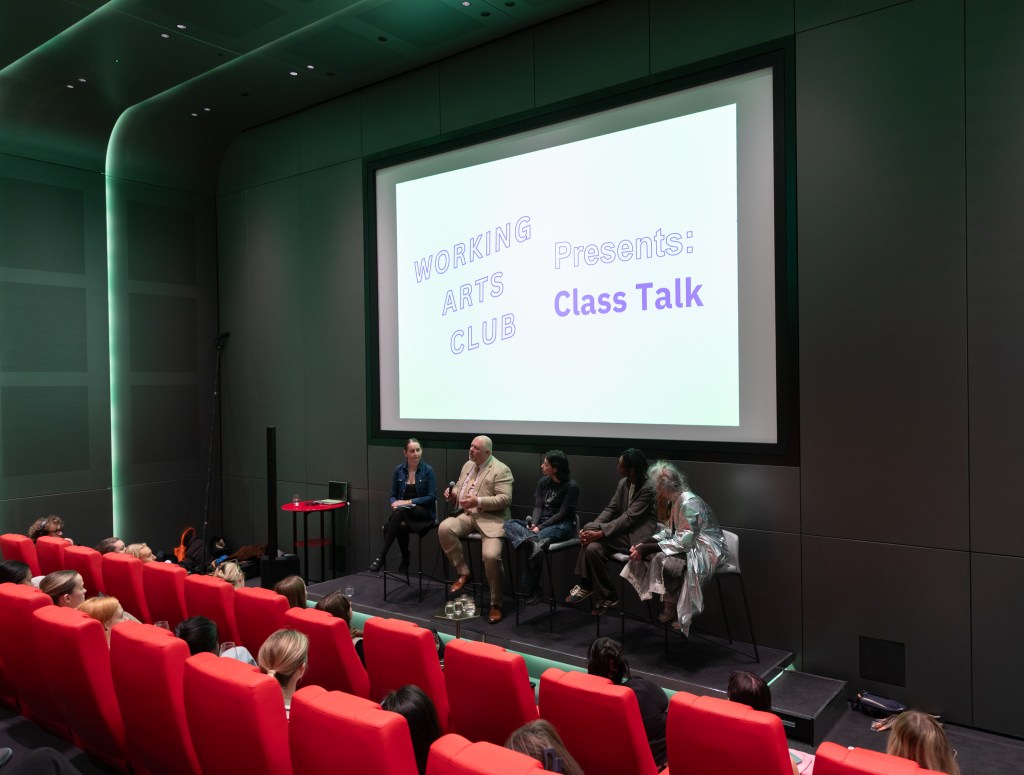
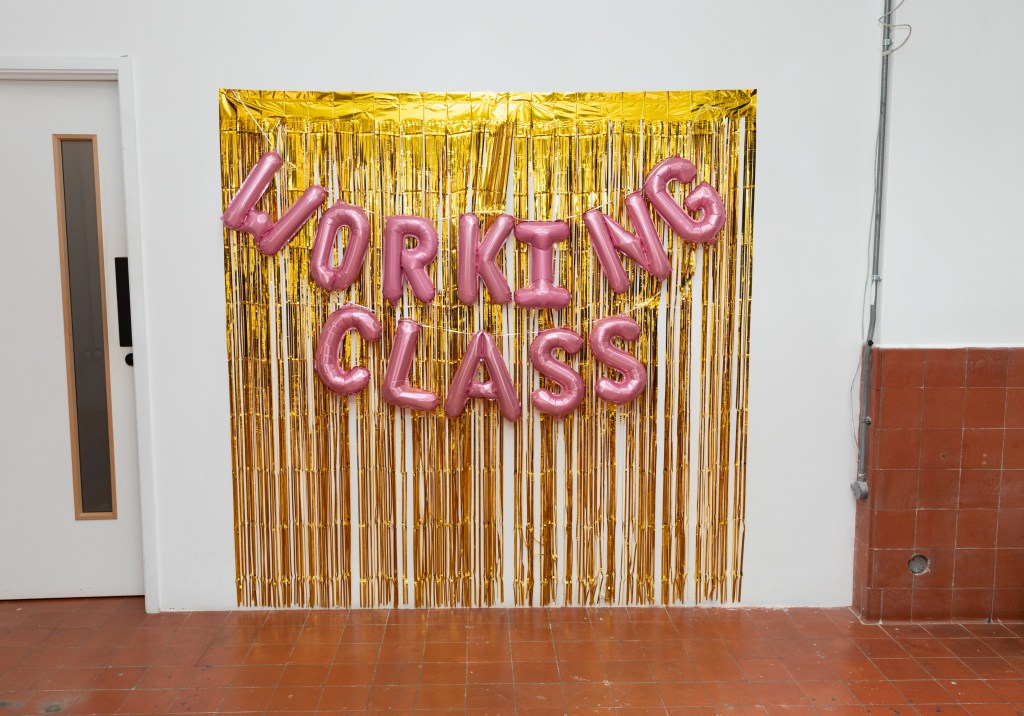
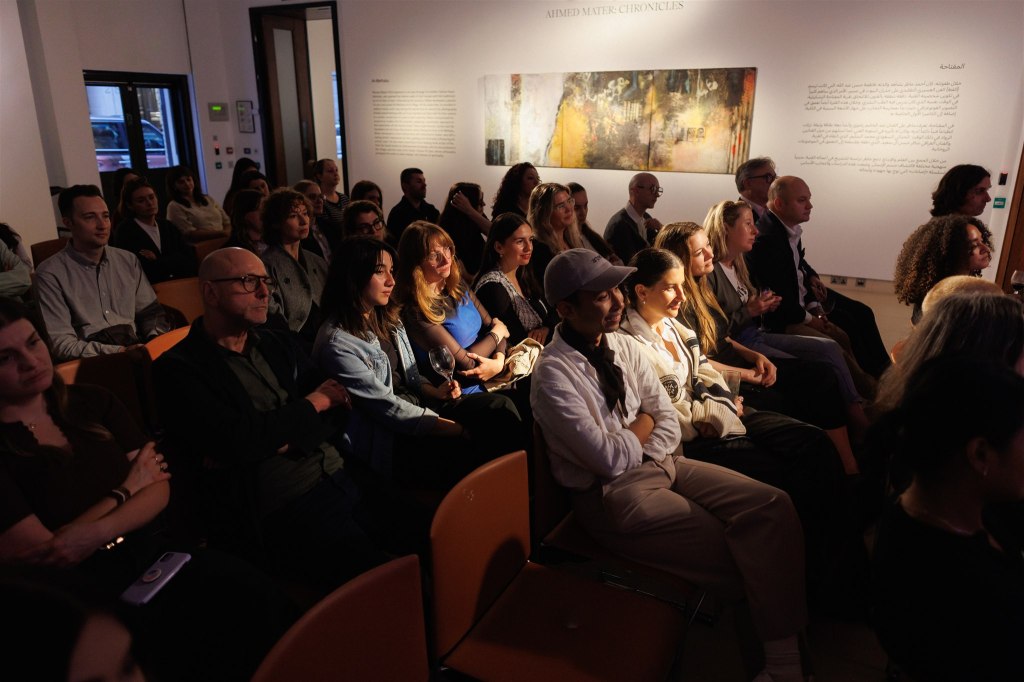
In 2024, Working Arts Club was born from that response — and what it has grown to become is astonishing. Collaborations across the V&A, the Royal Academy, Christie’s, Frieze and Photo London. An expansive membership. A community whose reach extends beyond London.
“What I’m doing is fundamentally built on free labour. For two years.”
She says it plainly. No self-pity. No martyrdom. Just the fact of it, stated the way working class people have always stated the cost of things — because there was never any point in dressing it up.
She is a new freelancer now. The stable salary, gone. The safety net, removed. An Arts Council application that could change everything — or not. Into that precariousness she pours every spare hour, sustaining a community of people who need her to keep going.
“My concern is that I will burn out. There have already been instances where I’ve come close.”
She is not simply exhausted from the labour. She has become a person on whom an entire community depends to hold the door open. This is a different kind of cost. The cost of having become, without ever planning it, the one who keeps showing up.
Her parents don’t fully understand what she does. It is, she says, a very working class thing. But they are behind her entirely. She feels their pride. It spurs her on. To stop would mean the system had won. And that is not something Meg is willing to do.
“I never really planned any of it. I just thought, this is a problem. I’m going to chat with some people. And it ballooned.”
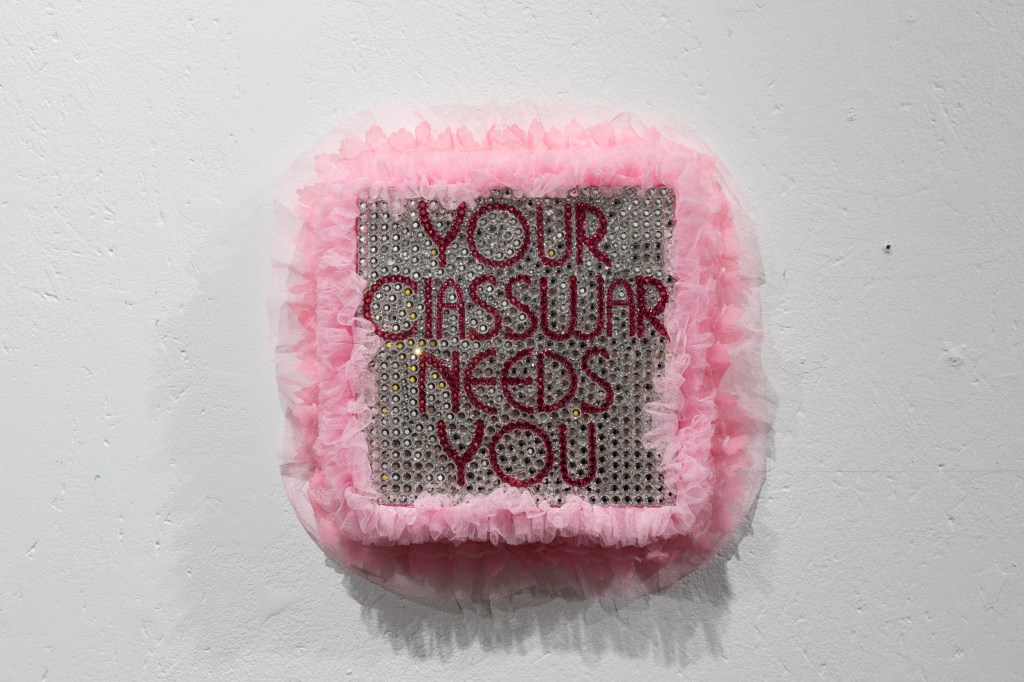
Meg Molloy is the evidence and the witness. She has lived what she is fighting to change. That vulnerability sitting alongside her extraordinary achievement is what the art world does not know how to hold. And she refuses, with unmitigated stubbornness, to pretend that is someone else’s problem.
“If we don’t have diverse voices in the art world — is it even the art world anymore?”
Precisely.