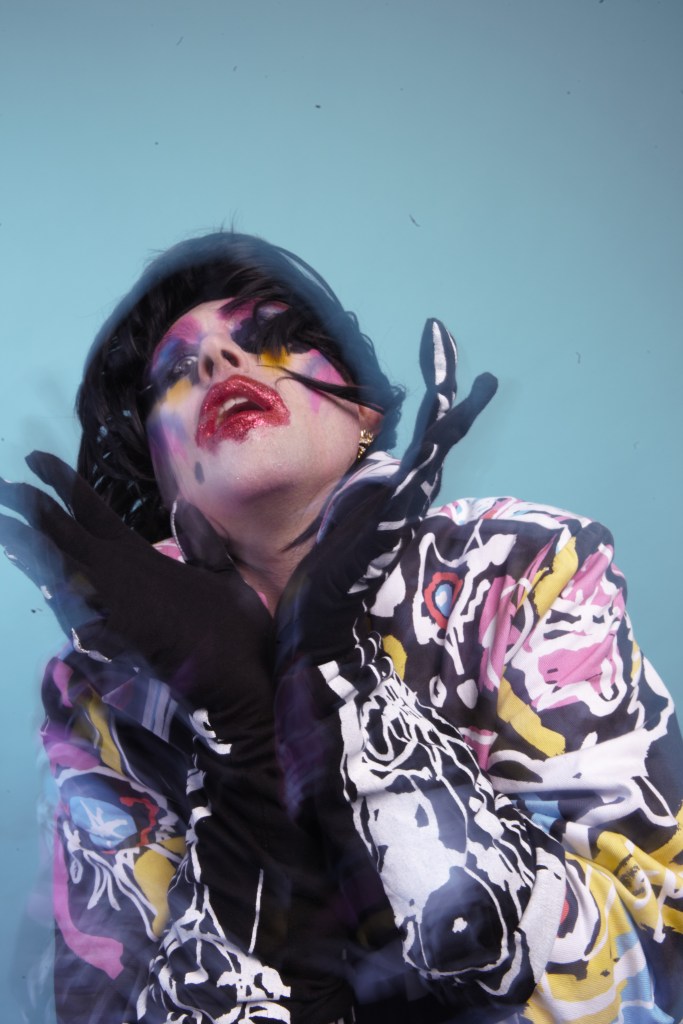
From childhood, Adam’s life has been shaped by sparkling diversity, ingrained resourcefulness and unshakeable resilience. As he embarks on creating his latest collection “Leben und Tod, Fantastisch” (Life and Death, Fantastic) for SS27, the multi-disciplinary artist offers a candid look of what life as a working class creative person really looks like.
Speaking from his apartment in Berlin with one of his paintings in the background, fashion designer and artist Adam Frost tells me he is taking our Zoom call on a broken MacBook. “The chip in the middle has gone funny”, he laughs, “but I’ve done gigs in Berlin with this laptop like this! People kept asking: ‘Why is your laptop half folded?’ And I always tell them it’s just for effect. ‘You know, it’s art. It’s clever, darling!’”
Raised on a council estate in South East London, Adam describes his family’s background as “very working class”. He fondly remembers a buzzing cultural mix of Indian, Vietnamese and Chinese neighbours, including people of all different faiths. His best friend was Mauritian and, referencing his recent move to Berlin, Adam says that he “always had some random German friend as well.” This environment shaped his creativity from a young age. “Imagine, I’m 11 years old, in South East London, and I’m the only white boy in the temple”, as he credits Indian culture and fashion for his love of sequins and “glittery things”.
Entering his tweens, Adam’s family moved to historic Hastings, where he discovered vintage clothing. This “hodgepodge” of experiences has, to this day, shaped his creations in fashion and music. It was also his immediate family that encouraged his creativity. “My granddad was a carpenter and my nan was a seamstress. There was always someone giving me a pen or a pencil, saying, do this, do that. I was always given cultural stimulation. It was just everywhere.”
Aged 14, he made his first garment. “It was the ugliest thing I’ve ever made. But I tried and I kept going.” It’s a quality that has been serving him well. At university, he failed his dissertation (“I’m a writer, but I’m not an educational writer!”) but after finishing his degree, he got accepted for a post-graduate programme at the Royal College of Art. “In my interview, it felt like I was in Harry Potter”, Adam laughs. “The lady who interviewed me knew [Alexander] McQueen and [John] Galliano. I think she was a lot bigger than I even realise now!”
But getting a place on the world’s most coveted fashion course wasn’t the real hurdle for him: “When I first started the Master’s course, I didn’t have enough money. And on the first day of your course you’re supposed to give them a lump sum of money, at least £10,000. And I had to tell them that I didn’t have it.”
Eventually, Adam secured a student loan. Nevertheless, he dropped out after a year. “Through RCA, I met the people I needed to meet. I figured out the industry after doing all these unpaid internships. I knew what I needed, how to fund it and who to work with. It’s really important that you don’t do it on your own. It’s collaborative. And it matured the hell out of me.”
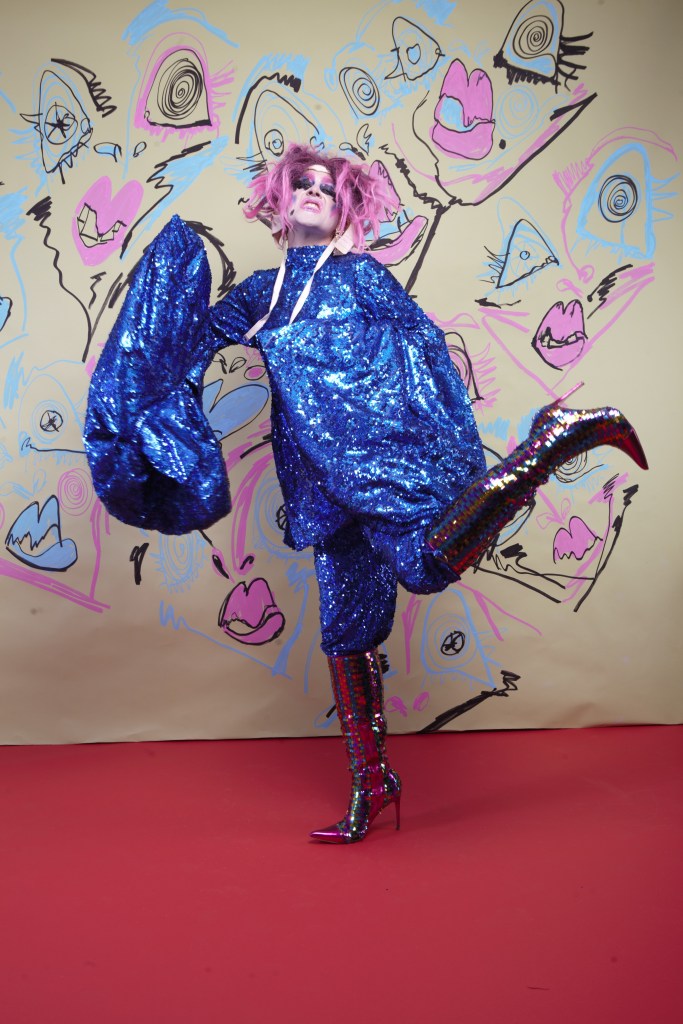
I ask Adam how his working class background has affected him, in particular as an artist. “I don’t have shame in asking for help. But not all working class people are like that. I did some GoFundMes to help with my collections. I think it’s really important in life to not be too proud, because you don’t know what’s going to happen tomorrow.”
He says that he mostly receives support from friends of all different classes, as well as from creative people in all different industries. He adds: “I also think that a really positive thing about being working class is that you really appreciate things. It’s not just handed to you on a plate. You actually have worked for it. As a working class artist, I’ve also become a master at creating something from nothing and making it look very expensive. I’m very clever at curating things and making them look a certain way when they’re not. And if someone gave me 500 Euros, I could make a 20 look collection with it.”
He continues with a smile: “You have to be a bit delulu in any practice if you want to actually do something, and do it properly. Also, knowing that whatever you’ve achieved, you have done it yourself, that there wasn’t anyone else to throw money at you – that’s really incredible.”
Still, he admits that it’s not always easy. “The last GoFundMe I did felt like I was begging. I was cringed out and felt really awkward. It also upsets me when I see artists that come from money and the work’s crap and they’re in the biggest galleries in the world. They’re the same age as me and when I meet them, they’re mean, horrible people. But they’re doing really well – because they’ve got money. If I had all this money right now, it would work out because I’d have the right PR and money to spend on marketing. That’s the bad side, seeing other artists just doing it because they’re bored and their stuff isn’t even that great. That really nags me because I don’t do it for money. I do it because I have to. I live and breathe creating visuals, fashion, music. I have to do it.”
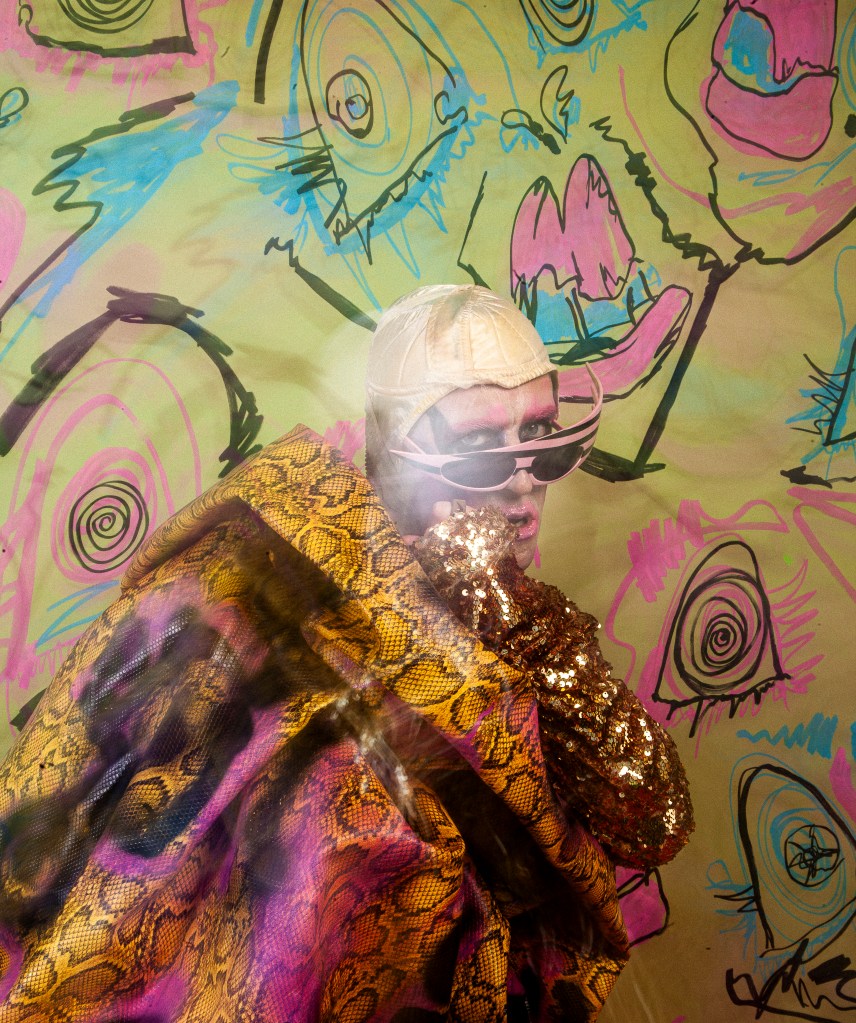
In his career so far Adam has had some incredible commissions, earned through nothing but his talent, graft and relentless determination. He recalls getting a commission for a collection of luxury jackets because of Tayce [Szura-Radix] from Drag Race. Ironically, most of the money he made had to cover his rent when he was still living in London. And yet, even then, the imposter syndrome crept in.
“When a working class artist gets a break, they freak out and start wondering whether they’re actually deserving of that success. I remember going to a Drag Race party by myself because I wasn’t allowed to bring a plus one. Everyone else seemed to have plus ones, but of course, they just knew each other and I was new on the scene. I was so insecure. Daphne Guinness was there, but I didn’t talk to her, she was really intimidating. I wouldn’t be like this now, but before I was so freaked out, almost, like I shouldn’t be at this thing. But anyone who has a passion and works hard should be there – regardless of class and where they’ve come from.”
Adam also believes that the obsession and rigidity of class is worse in the UK than in other European countries. “I do feel like there is a system that’s designed in [UK] society that keeps you in your place because that’s the level you’re at. And you can’t move up. But in Germany, I never hear the term working class. People don’t talk about class here and there’s real respect for the arts. I once did a gig and people were sitting and actually listening. And then, at the end, I got around 100 Euros, all from bucket money.”
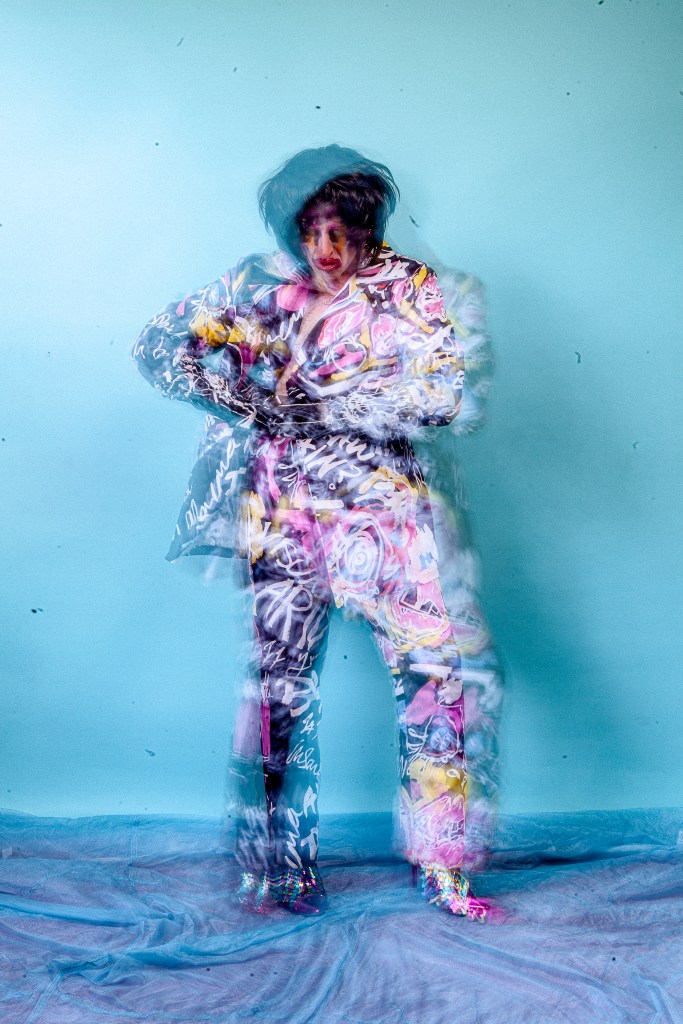
I ask Adam about UK society’s loss for not supporting working class artists and not appreciating their worth and contribution. “To quote Tracey Emin: ‘Where art goes, commerce and business follows.’ The most realistic art comes from working class people, because they’re feeling the hardship most. They have to make art to make themselves feel better. But without working class artists, how can society move forward? Working class art is the voice of the most real people who are working the toughest jobs and live in the toughest living environments! Their art is going to be a lot more reflective of the truth.”
So what part could all of us play to improve the lives of working class artists? Adam suggests making small but meaningful changes in your life. “Instead of buying from large corporations, buy from independent shops and your friends. If your friend’s in a band, buy their album instead of that of a big artist. If your friend makes pillows, buy a pillow from them instead of running to IKEA. If you have a friend who’s got a cupcake business, buy their cupcakes rather than one from a coffee shop chain. Support working class artists’ fundraisers. Buy working class writers’ books. If a working class artist has an event, go to it. If you don’t, they notice it more than anyone, because they’re the ones trying the hardest to get people to go to things. Little bits go a long way.”
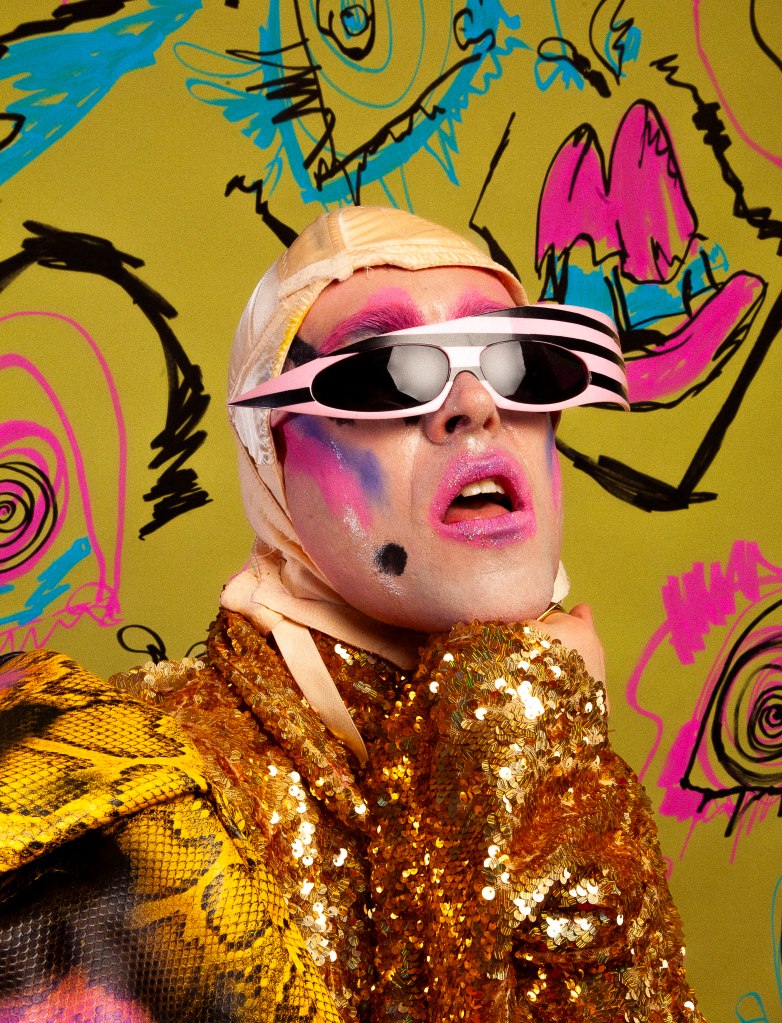
Adam’s energy and determination for his art could light up and power every Techno venue in Berlin. There’s an infectious rawness in his perseverance, that, like the domino effect, carries the energy forward and sets in motion a wave of hope for all working class artists who are having a hard time. But it’s his resilience and faith for the future that are sure signs this artist is here to stay:
“I have a lot of self-respect for my vision and my brain. Even if I sound like a loonie, I’ve actually already proven that I can do it anyway. I’ve had sponsorships, I’ve done Fashion Week and all this other stuff. And I know I can do it again, but it’s a process. You just have to keep the faith, even when it’s crap. Life’s too short. Just get on with it.”