
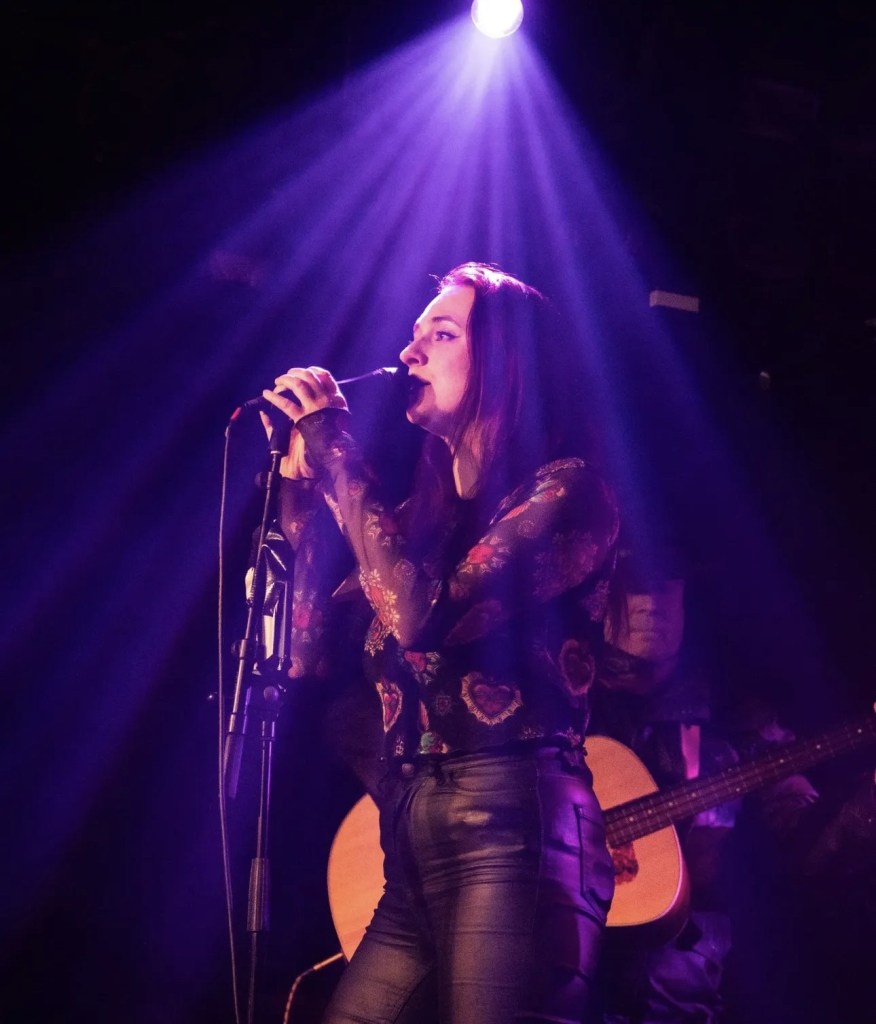
For years, TV Pins’ vocalist lived a double life — hiding her identity behind spreadsheets and corporate corridors while her truest self waited in the wings. This is the story of a woman who accepted who she was, stepped into the light, and hasn’t looked back since.
To be anything other than who you are is an expression of self-rejection. The weight of it is slow, cumulative, hateful, passed down and indoctrinated so deeply it begins to feel like rules. Some find the courage to stand up and shout. But even then it can feel like a deafening cry into the dark. The world believes it has evolved, that it is inclusive, beyond all of this. Pride Month is short-lived. The rainbows disappear. And for millions of people, the reality of simply existing as they are remains just as discriminatory, alienating and dangerous as it has ever been.
Grace Hinks has lived every word of this. And she has only recently stopped having to. For years she moved through the clean, unambiguous world of numbers — endless spreadsheets and cubicles, where a version of herself she could safely present was the only version allowed. Behind it all, her passion was and is being the vocalist of TV Pins, a British alt-rock five-piece with a growing live following and a sound that is visceral, hook-laden and doesn’t sit still.

But it wasn’t only the band she was concealing. Grace is queer, recently married to her wife, and living a life that sits outside most conventional narratives — including the queer ones. In that world, none of it could exist. “I had to completely hide who I am,” she says. “You can’t really tell them what’s going on in your life because they wouldn’t understand you. Always feeling like I was too much. To tone it down as much as possible.” The weight of that, she reflects, is something most people don’t recognise until it is gone.
When they made her redundant, Grace didn’t fight it. She set up her own company, took control of her time, and gave TV Pins the space it had always deserved. “I really believe in this,””she says, “and I want to give it a chance to work properly. Which you can’t do if you’re working fourteen hour days.” The liberation was immediate. “I feel quite free. I can do an interview in the middle of the day now.”
It is a small thing. But it’s a milestone.
“It feels like a sort of family,” she says of TV Pins. No egos. No hierarchy. Every idea heard and judged on its own merit. For someone who spent years editing herself down to something manageable, that matters more than she can easily say.

And then came Version of Love.
Written mostly by Duncan, the band’s guitarist, the second verse was crafted in support of love, however it’s manifested. Hearing her own experience inside someone else’s words was something she hadn’t anticipated. “Within the context of the band, I obviously really relate to these lyrics,” she says. “It has been my lived experience.”
The line she chose as her own: because you and the people like you number more than me, I have to hide me.
“That’s my favourite line,” she says. And you understand immediately why. The song, like Grace herself, is only the surface of something much deeper.
She got married to her wife just weeks before we spoke — almost in passing, she mentions it, as though it is the most natural thing. Which, for Grace, has always been.
But her life, she says, is more complex than even that. Her wife is asexual. Their relationship is open — honestly, with full knowledge and consent of everyone involved. One of the women Grace was dating attended their wedding. “It’s all a bit non-monogamy,” she says, laughing softly.

Outside the music, she describes the enormity of queer joy as the freedom to walk into a room and not change a single word of yourself before you speak. Her wife. Her friends in Manchester, whom she simply describes as a neurodivergent, diverse, gloriously varied group as — “my queer safety net.”
It has not been an uncomplicated year. In January, Grace lost her grandfather. On Boxing Day, her grandmother — her nan, she says, her hero — passed away at home, in front of her. They were her second parents. The house she grew up in was suddenly without them in it. That grief finds its way into the EP’s next single, Endgame. Where Version of Love celebrates, Endgame mourns. Two sides of the same coin, she says. “Catch me wailing by the willow tree.” She whispers it. You accompany her silence.
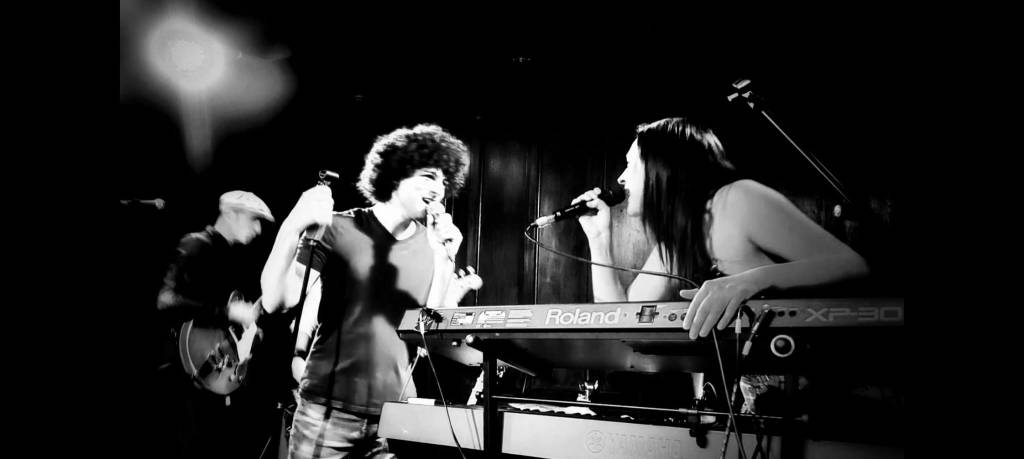
Grace has ceased to live in the shadows.
She has a message for anyone still waiting for the moment it feels safe enough to step forward. For anyone still editing themselves down to something the room can handle. For anyone who has not yet found the people who will hold them as they are.
“They are seen,” she says. “Even if they don’t feel seen.”
And to anyone still waiting, still hiding, still afraid — she has three words left.
“Keep looking. They’re there.”

 neunmagazine.com