
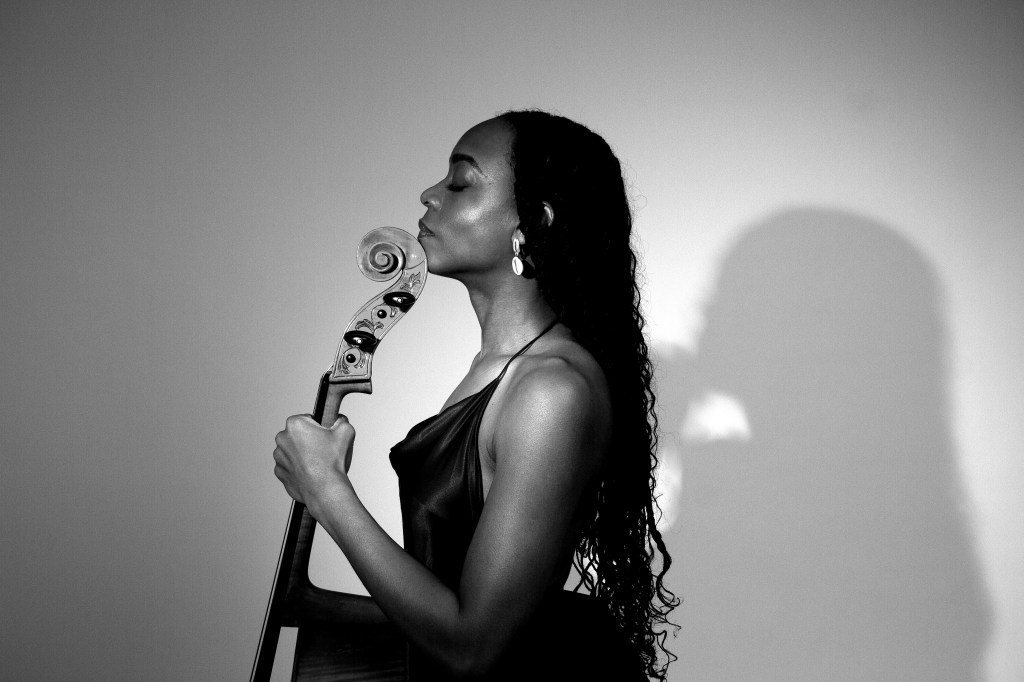
Cellist, composer and singer-songwriter, she has spent her career moving between worlds — classical conservatoire and the Apollo stage, orchestral commissions and intimate song. With her forthcoming album New Roots, she does something altogether different. She turns to face the generation that made her possible. And she listens.
Her maternal grandfather died weeks before her single, Pioneers, was released.
He did not live to hear it played in full. He did not live to see the album announced, the title chosen, the artwork finalised. He lived long enough to know that his granddaughter was still telling the story — their story — and perhaps that was enough.
For Ayanna Witter-Johnson, the timing was not cruel. It was clarifying.
“His passing has deepened my relationship to the music on this album,” she says. “It has pulled into sharp focus the enormous gratitude I feel for his generation and the sacrifices they made for me to have the opportunities I have had.”
He was part of the Windrush generation. One of the thousands of Caribbean men and women who crossed the Atlantic in the late 1940s and 1950s, invited by a British government that needed hands to rebuild a country broken by war. They came in their late teens, their early twenties, carrying hope and a spirit of determination. Their gaze set ahead. They found work. But they were also met with racism. Fear. They stayed regardless.
They built the NHS. They drove the buses. They raised their children in a country that was not always certain it wanted them. They handed down what they could — folksongs sung around the house, occasional summer returns to their homeland, Jamaica, the particular diligence of people who understood that nothing was guaranteed.
Ayanna grew up inside that inheritance. She felt it before she could name it.
“There’s a lot of trauma really in the relocation,” she says, “a lot of joy but it’s still being worked through in the subsequent generations.”
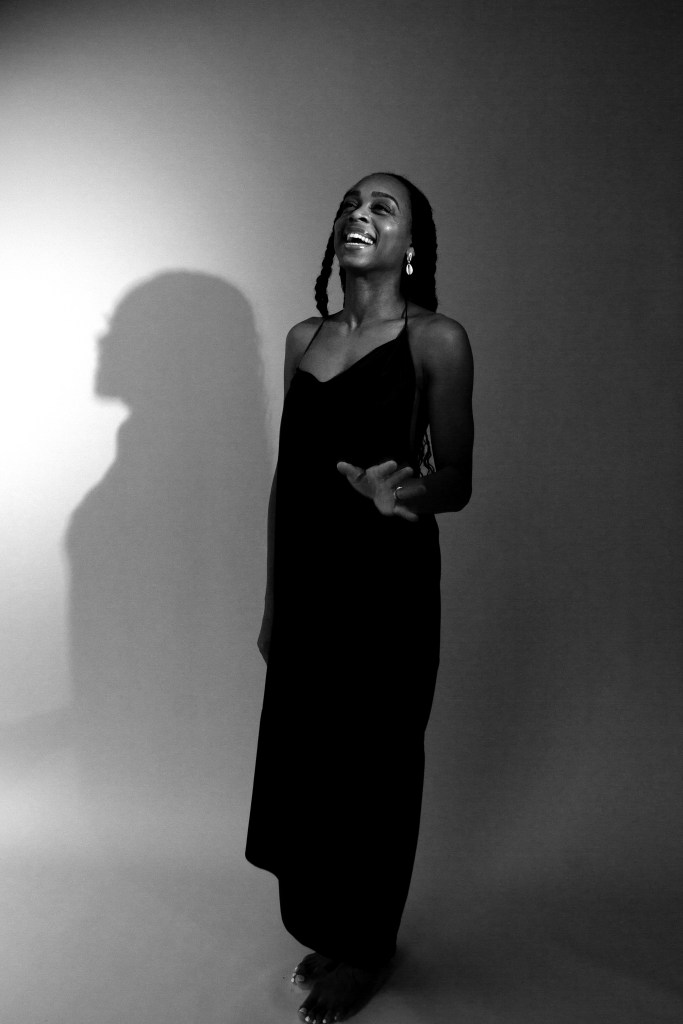
She is one of those subsequent generations. Her upcoming album, New Roots, due for release on 18th September, and its lead song Pioneers, is where the reckoning becomes music.
“These songs are no longer just mine,” she says. “They feel like vessels for memory, legacy, and the people whose lives made mine possible.”
Family is the thread of our heritage. Ayanna’s grandmother had handed down to her their culture and history, and had kept it alive in the everyday fabric of London. She had also, without knowing it, placed the instrument of her granddaughter’s life into her hands.
Her grandmother bought her a cello at the end of her school years. He had belonged to the school governor — an instrument with a history of his own, passing now into the hands of a young woman who had no way of knowing yet what he would become. She named him Reuben.
She was grateful. Overwhelmed. And then, over time, she moved on.
A gap year. A dramatic change of direction. Music set aside, or so it seemed. When she arrived at Trinity Laban to study classical composition, Reuben came too — but unnoticed, without purpose, without a clear role in what she was building. They were together but not as before. The partnership had not yet found its purpose.
“Up until then he had been just a space for me to explore and enjoy classical music,” she says. “I wasn’t singing and playing.”
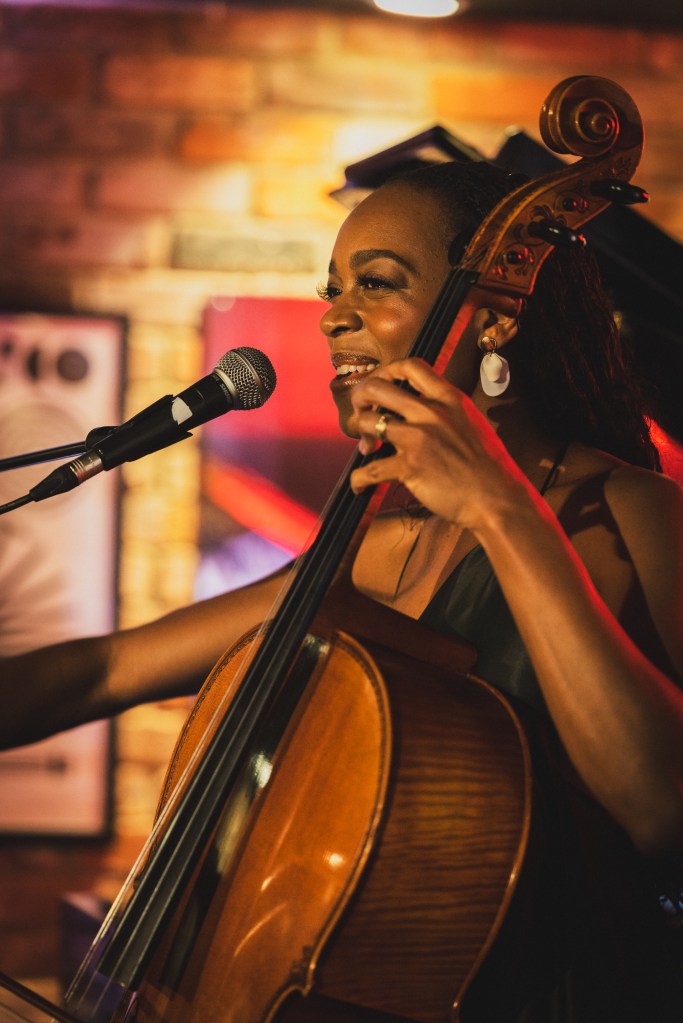
Then came the part-time job down the road. A small gig, a little extra money, a woman who needed someone to perform. Ayanna said she sang and played cello. The woman had no piano.
And so Reuben returned. Not by grand design. Not by intention. By necessity, the particular kind that has a way of looking, in retrospect, remarkably like destiny.
“Because of the circumstances, it moved into a different kind of relationship,” she says. “As my accompaniment, as my friend.”
That is when the partnership truly began. Not in a conservatoire. Not on a stage. In an ordinary room, because there was no piano, because she needed to earn, because sometimes the things that are essential to us find their way back.
Nothing, it turns out, is accidental.
And yet, some things need to be claimed.
Ayanna left London. Destination, New York.
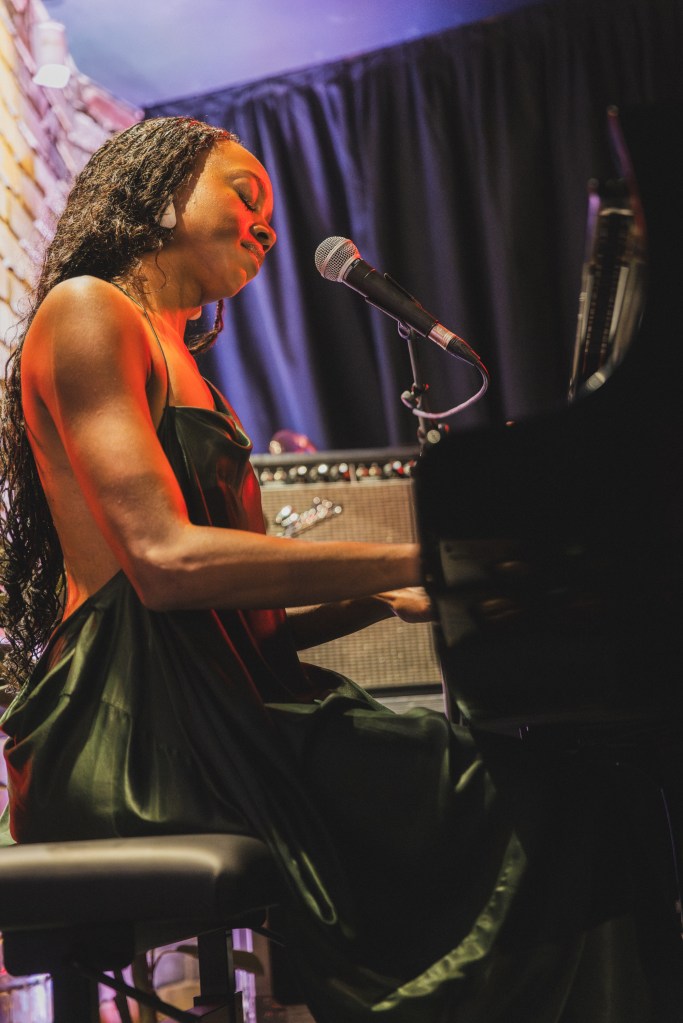
She had achieved a place at the Manhattan School of Music with a first-class degree from Trinity Laban Conservatoire already behind her. The conservatoire was everything it promised to be. Rigorous. Prestigious. A universe unto itself. But she had her heart set on the Apollo Theatre in Harlem, New York.
The conservatoire did not encourage her to go.
She had her reasons.
“There’s a life beyond studying,” she says. “I have to have experiences that are going to support that journey when I leave here.”
The conservatoire could give her rigour. It could give her technique, discipline, language for the music she carried inside her. What it could not give her was the thing she needed most — the ability to stand before a live audience with nothing between her and their scepticism, and just move them.
This was something she would have to own herself.
She applied for Amateur Night Live at the Apollo Theatre in Harlem. A competition which had launched Ella Fitzgerald. Jimi Hendrix. The Jackson 5. A stage which had witnessed greatness and never once lowered its standards to accommodate it.
Round after round before a live audience who owed her nothing — no courtesy, no patience.
She became the first non-American to win.
“It was about communicating with an audience in real time,” she says. “About taking risks. About finding my own voice. That felt just as important to my education as anything happening inside the conservatoire.”
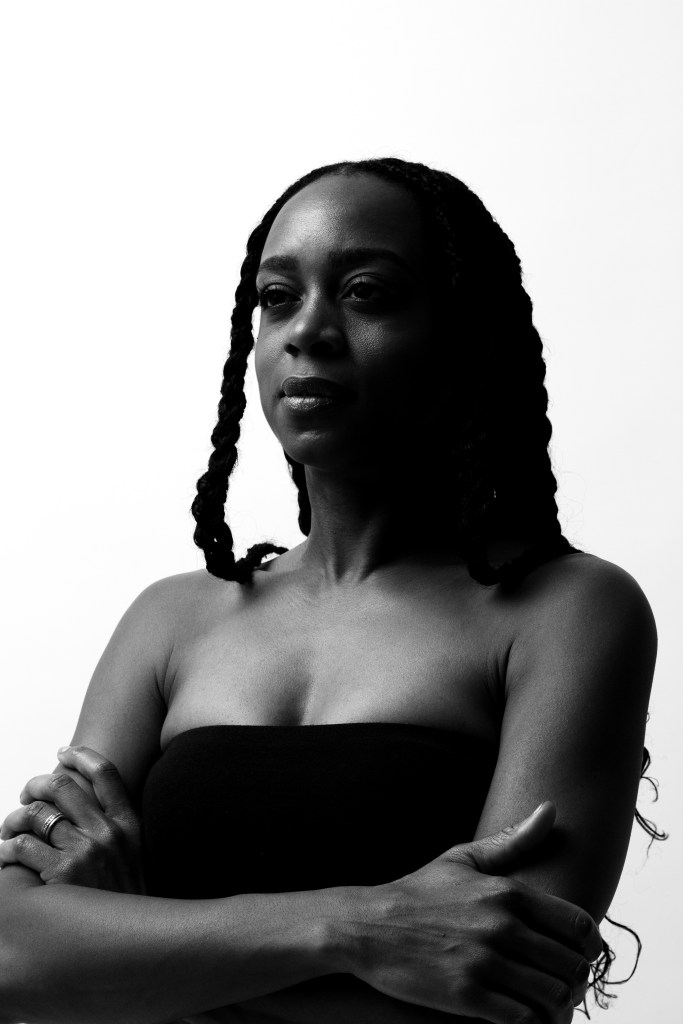
The prize money funded her first EP, Truthfully. But what the Apollo gave her was something far more intimate than a recording. It confirmed that the instinctive whisper inside her — the one the conservatoire had not encouraged, had not valued, had not made space for — was ready to be heard.
She listened. Hard and deep.
Years later, the music she had been moving towards for some time demanded something new from her. New Roots would be produced entirely by herself. No intermediary. No concession.
“There’s a fearlessness that has entered this world that wasn’t there before,” she says. “The first album was like — I’m trying to showcase all the things that I am. This one is very much — these are the experiences I’ve had. This is the pain, this is the joy. There’s a rawness about it. A vulnerability that is different.”
Around her, things had changed. Significantly. In ways she chooses not to detail.
“Producing this record myself was both liberating and confronting,” she says. “There was no one else to defer to when decisions became difficult, and equally no one else to dilute my instincts. Every choice carried my truth.”
New Roots is the sound of a woman who stopped asking for validation.
As artists we succumb to the audience. They appear to manipulate our feelings, our very presence. But the challenge is not to let them. The challenge is to let what is most honest in us speak without reprimand.
“Following your instinct always comes at a cost,” she says. “Sometimes it’s approval, sometimes it’s certainty, sometimes it’s the comfort of fitting neatly into other people’s expectations. But every time I’ve ignored that instinct, I’ve regretted it.”
Courage. The core of our very artistic impulse. Ayanna chose the unfamiliar over the sanctioned. None of it fabricated. All of it hers.
“Every meaningful chapter of my career has begun with choosing curiosity over convention.”
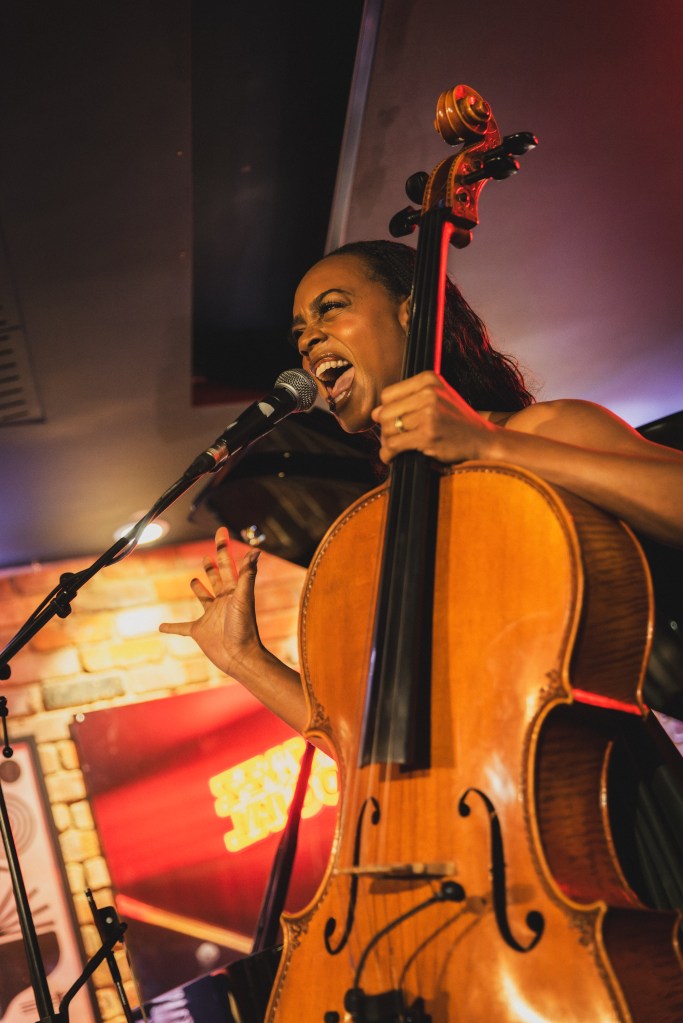
Beyond career and professional ventures, there is a comfortable stillness in her which surrounds her very presence, though the journey prevails.
“I’m a very calm, quiet soul,” she says. “I am very peaceful. There is a sort of introverted side. Happy to be by myself or in a yoga class. Those are probably my favourite spaces to be in.”
These words are perhaps surprising coming from an artist of such range and restlessness. A woman who has stood before the Apollo’s unforgiving audience and has recently completed a major commission for the BBC Scottish Symphony Orchestra to mark their 90th anniversary. A creative life of extraordinary breadth, born from a place of profound introversion.
“I don’t know that I’ve ever felt certain,” she says. “I think I’ve simply become comfortable listening to the quiet voice that keeps returning, even when it doesn’t make sense to everyone else.”
For an artist who has moved through the most courted institutions the musical world has to offer, who has been measured, assessed, encouraged and discouraged in equal part — the freedom to trust her own judgement without seeking their validation has not arrived overnight. It has been hard-won. Lived through. And if that freedom sometimes clamours inside her for her ears alone, it is no less glorious for its serenity.
“For a long time, I’ve felt a responsibility to explain myself,” she says, “to provide context for why my music sounds the way it does, or why it sits between different musical worlds. That responsibility came from a genuine desire to be seen. But I don’t feel the same need anymore.”
There is a beautiful openness to her. Nothing strained. She laughs easily, finds amusement in the extraordinary and then, almost unnoticeably, something shifts. She has heard something. Observed something. And the wisest words flow naturally from her. Effortlessly. Without hesitation.
Intuitively, it is how she writes her music. Through watching. Gazing. Wonderment. And then the manifestation extends to the strings beneath her fingers, without a moment lost between sensation and sound.
She glows.
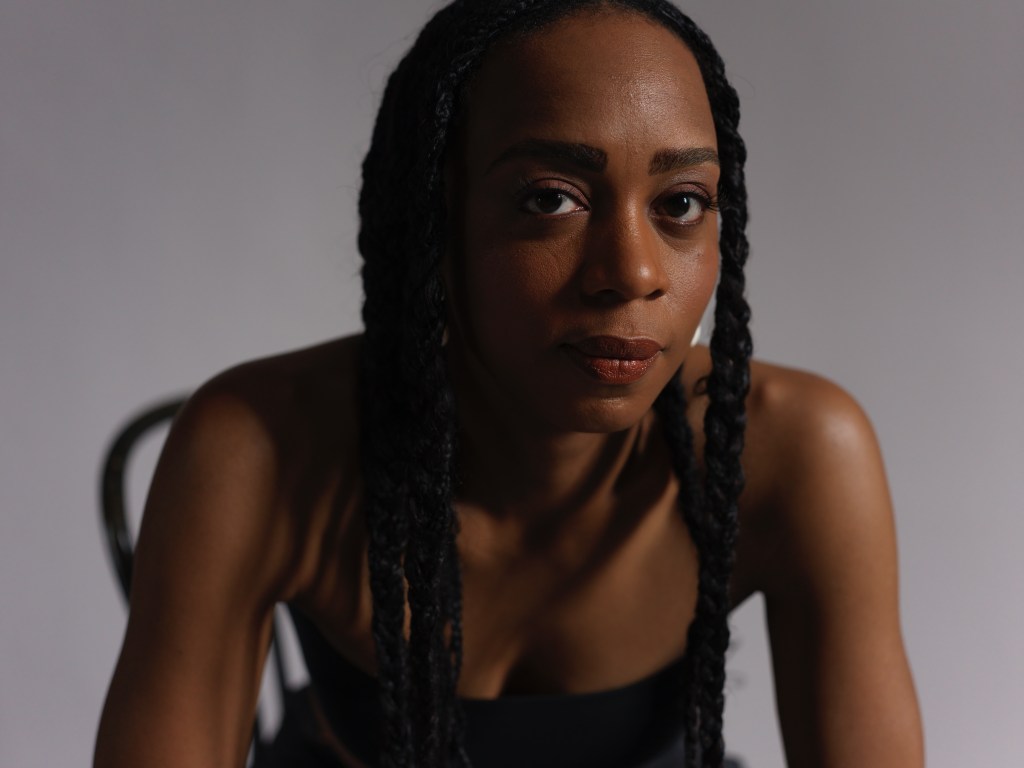
Family is our stronghold. But it does not define us. Destiny is not handed down intact. It is carried forward through every choice we make, good and bad, expected and defiant. We are an extension of our origins. What her family has imparted to her, above all else, is the knowledge that true roots are planted of one’s own accord.
Ayanna Witter-Johnson is sowing hers. Descendant of ancestral pride.
“My British-Caribbean identity will always be woven through everything I create because it’s woven through me. But I’m becoming more interested in writing from the fullness of my humanity than from any single aspect of my identity.”
Somewhere, a generation exhales.

 neunmagazine.com