
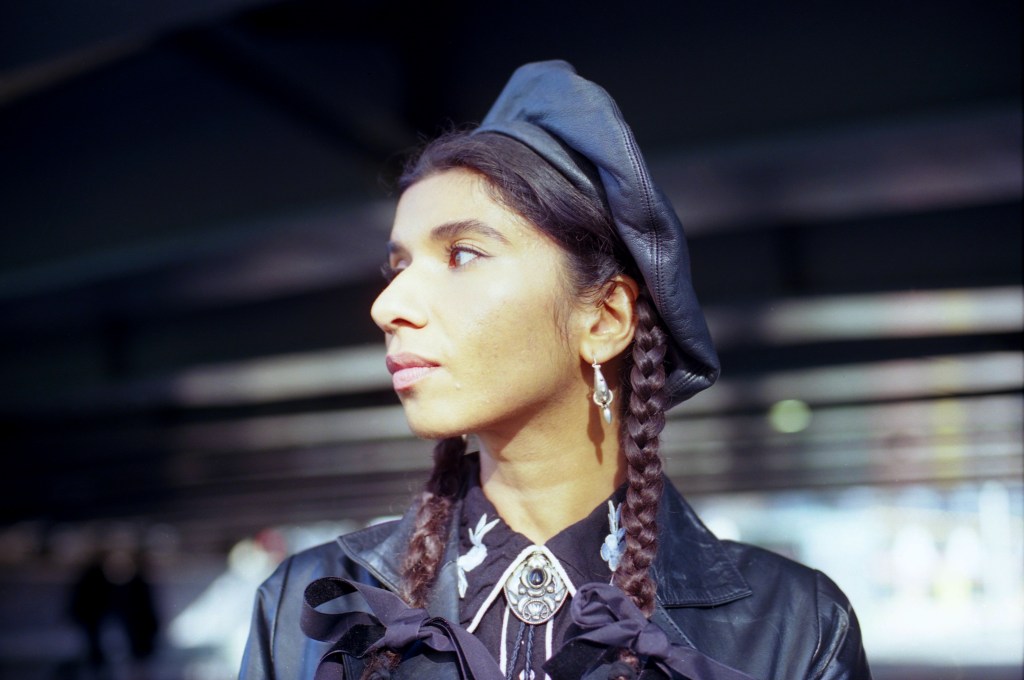
From alias to identity, from burnout to revelation, from loss to creation, she chose, again and again, to be seen on her own terms. Not the artist. Not the platform. The person beneath it all. To be just — Her.
New York. That is where I find her — across a screen, across an ocean, across a distance which, with her, seems to dissolve entirely. Nabihah Iqbal is astonishing in her natural simplicity. Composed. Measured. Cautiously trusting — until, intuitively, she decides she can, simply, be. What you find is not what you expected. Her strength is rooted not in certainty but in something far rarer; an unguarded vulnerability she has learnt, at considerable cost, to call her own. This is her unequivocal self.
She was not always known by her name. Not professionally. Ownership takes time — and it demands courage. She does not use the word afraid. “Apprehension” is closer to what she felt when, in 2017, she made the decision to release music under her own name. Nabihah Iqbal. Not Throwing Shade, the alias she had worn like second skin.
“Look at festival lineups, chart music, or basically anything to do with music in the Western world,” she says. “You don’t really see a lot of names which don’t fit in with standard Western names.” She could think of one — Zayn Malik. Just one. And that told her everything she needed to know about what she was walking into.
Some of her friends said it plainly: “Are you sure? People might think it’s weird. They might not want to share it on a post.” She understood. She even acknowledged it was valid. But it was also, she says, “kind of depressing.” And so she did what Nabihah does — she moved towards the thing rather than away from it. “I wanted to use my name even more because of those thoughts,” she tells me. “It felt like more of a power move.”
It was also something else. A moment of self-realisation — about how she saw herself going forward, how she wanted to be known, how she wanted people to identify with her. Even under her alias, messages were arriving from people — other ethnic minorities, other women — saying they found her inspiring simply for doing what she was doing. She was visible before she was fully herself. Now she was choosing to be both.
The lowest time of her life was, as it is for so many, a collision of events, arriving without warning or mercy. The burglary came first — her studio broken into, her music taken. Everything she had been working towards, gone. She had a broken hand. She was already burning out. And then, as if the universe had not yet finished, her body gave way entirely. Physically weak, mentally weaker still — a place she had never inhabited before and did not recognise. “I think I’m quite a mentally strong person,” she says, “and then suddenly I found myself in this space.” She feared she would never finish the album she was currently working on. She could not, for a long time, even speak about it.
And yet. While a police officer was taking fingerprints in her studio, her grandmother FaceTimed her. Her grandfather — her favourite person in the whole world — had suffered a brain haemorrhage. She got on a plane to Pakistan the next day.
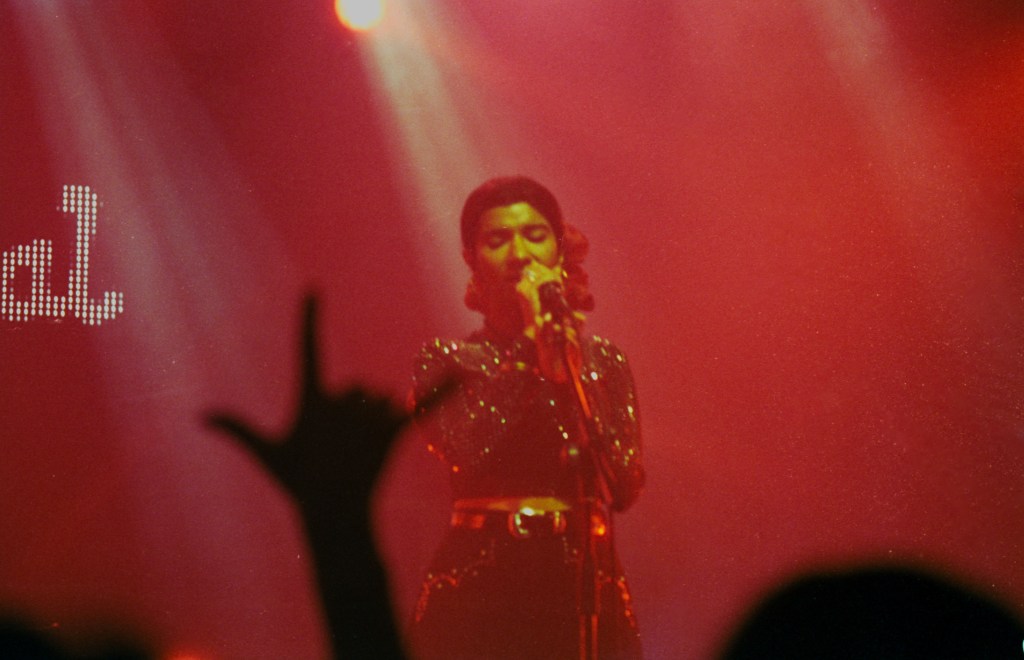
In an instant, life, as she knew it, was unrecognisable. “That whole situation eclipsed the burglary,” she says, quietly, “I wasn’t even thinking about that.” The music, the theft, the fear — all of it fell away. What remained was only what had always mattered most.
She would not have explained any of this to you at that time. But she is now. And in doing so, something extraordinary becomes clear — that the human body and the human mind are more resilient than we dare to believe. “You can bounce back from that,” she says. And she has.
To go to Pakistan was not the plan. It was imperative. And what she found, after the initial shock, was something, which unawares, she had been aching for.
“One of the most important things I realised,” she tells me, “was how valuable health is. That you actually can’t do anything unless you’re healthy.” In Karachi, with the noise of London finally silenced, she began to pay attention to herself in ways that the relentless pace of her life had never permitted. The food. The climate. The body, gradually remembering what it felt like to be cared for. “I was eating really well every day,” she says. “Just being in a good climate — all of that helped.”
It wasn’t the body which needed healing. It was the understanding of what — and who — truly matters. Sitting with her grandmother. Spending two uninterrupted months with her mother — something rare, she reflects, even when you are grown-up. “When you really think about the people that you can rely on,” she confesses, “it’s not that many people.” She felt, in that stillness, the full weight of that truth. And she was grateful.
Karachi gave her a return to the essential. And when she was ready — in every sense of what it could demand of her — she began again.
Occasionally, coincidences may appear to be preordained.
When she returned to London, Nabihah was driving along the M1. The radio was on — Radio 3 or Radio 4, she cannot be certain which. She tuned in midway to a woman she didn’t recognise, speaking about a harmonium. How she had come to own one. How playing it, singing along to it, had helped her find her voice. The tone of that voice. Nabihah listened. Because singing, she will tell you, is the thing she finds most difficult. “I’m not like a singer, singer,” she says. “I just kind of use my voice and it just sounds like my voice.”
At the precise moment when the woman said the word harmonium, Nabihah was crossing a bridge. She glanced at the sign. River Tone.
“It was such a strange coincidence,” she tells me.
The voice belonged to Sharon Van Etten.
This moment actually collided with her rediscovery of Jeff Buckley — his album Grace — and the interviews in which he spoke of his own love for the harmonium. How it had shaped his sound. His cadence. Things, she says, were gathering.
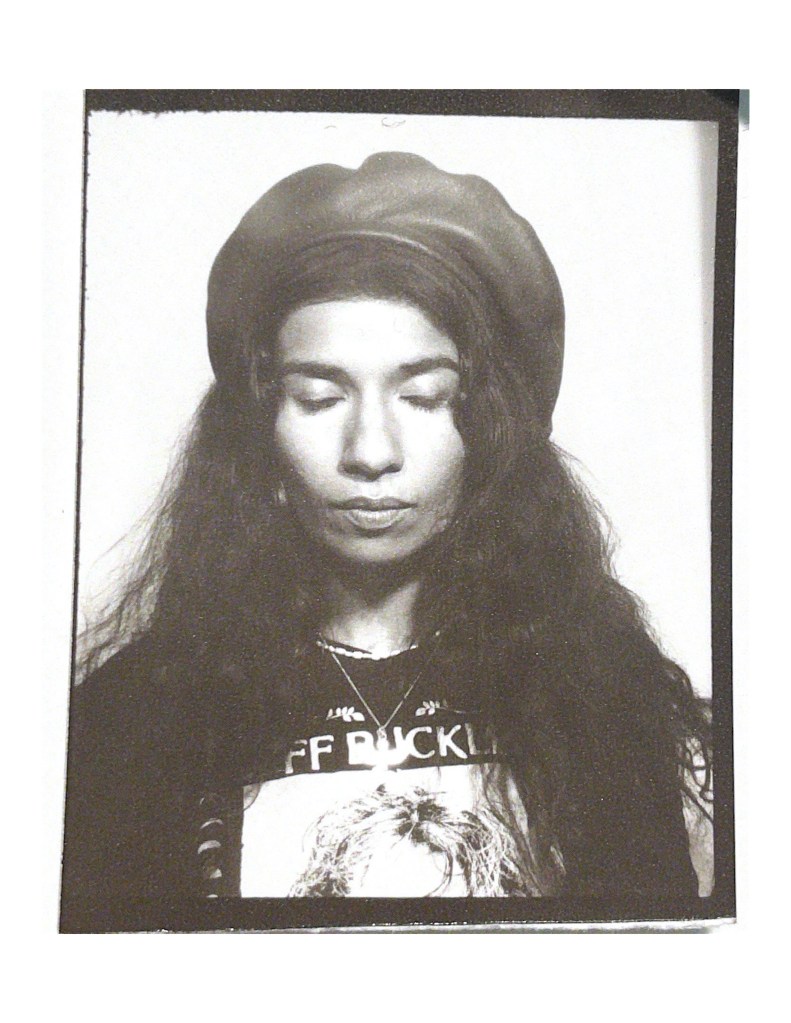
Dreamer opens with the harmonium. It closes with it too. And then the circle completed itself. Sharon Van Etten shared Nabihah’s track on her Instagram. The first track on the album. The one with the harmonium. “I couldn’t believe she even knew my music,” Nabihah recalls. Messages followed. Then came an invitation — to support Sharon on tour across the UK and Europe. In 2025, Nabihah did exactly that.
“If it wasn’t for that conversation I heard on the radio,” she says, “maybe I wouldn’t have started thinking about it.”
When music reaches its culmination, she turns to the written word; as their gravity extends beyond the limits of time. The poet, John Keats, keeps her company.
In her music studio, on her desk, there are always poetry books. When she hits a wall creatively — and she will tell you plainly that it happens — she reaches not for other music but for other voices. “If I’m working on music, I’m not really going to stop and start listening to other music,” she says. “But reading poetry is a really good way of reigniting creative thoughts.” Keats is one of those she returns to, when life hasn’t given her the answers to decipher her present. Not the Keats of school syllabuses and forced analysis. The one she found for herself, later. “When you do literature and poetry at school,” she says, “it doesn’t hit the same as when you actually discover things for yourself later on.”
She finds his life as fascinating as his poetry. Last summer, she took her parents and her husband to Rome — to the house where he died, to the room where he spent his final days, and then to the grave. “Everyone got emotional. It’s just such a profound feeling.”
And it is not difficult to understand why. Keats died at twenty-five, believing himself a total failure. Convinced that nobody would ever read his work, care for his poetry, or remember his name. He asked the stonemason to leave his name off the gravestone entirely. What it says instead is this: Here lies one whose name was writ in water. Ephemeral. Dissolved. Nothing.
His best friend, who had lived beside him in those final months, bought the plot next to him. Fifty years later — sixty, she thinks — when that friend died, he was buried there as instructed. His gravestone reads: Friend of John Keats. With an arrow pointing to the grave beside it.
“Really sad,” Nabihah says. “But also really quite heartening. A friendship preserved in that setting.”
And then she says the thing that makes everything clear — about Keats, about herself, about every artist who has ever created something true in the dark and wondered if it would survive the light.
“Art is so immortal and eternal,” she says, “It can’t really be touched if something is really, truly coming from someone’s soul.”
The critics of Keats’s time called him a product of the Cockney School of Poetry. Dismissed him because he hadn’t attended Oxford or Cambridge. His peers — Byron, Wordsworth, the Pre-Raphaelites — knew otherwise. And now he is regarded as one of the greatest figures in English poetry. Ever. “Nowadays,” she says, “people are so bent on having the validation, the approval of others. When in essence it really should be what you feel about yourself. About what you feel about your creativity and the art that you share.”
She has learnt this. At considerable cost. In ways she will not speak of here. But the music knows. A new album on the precipice. And the world will bear witness.
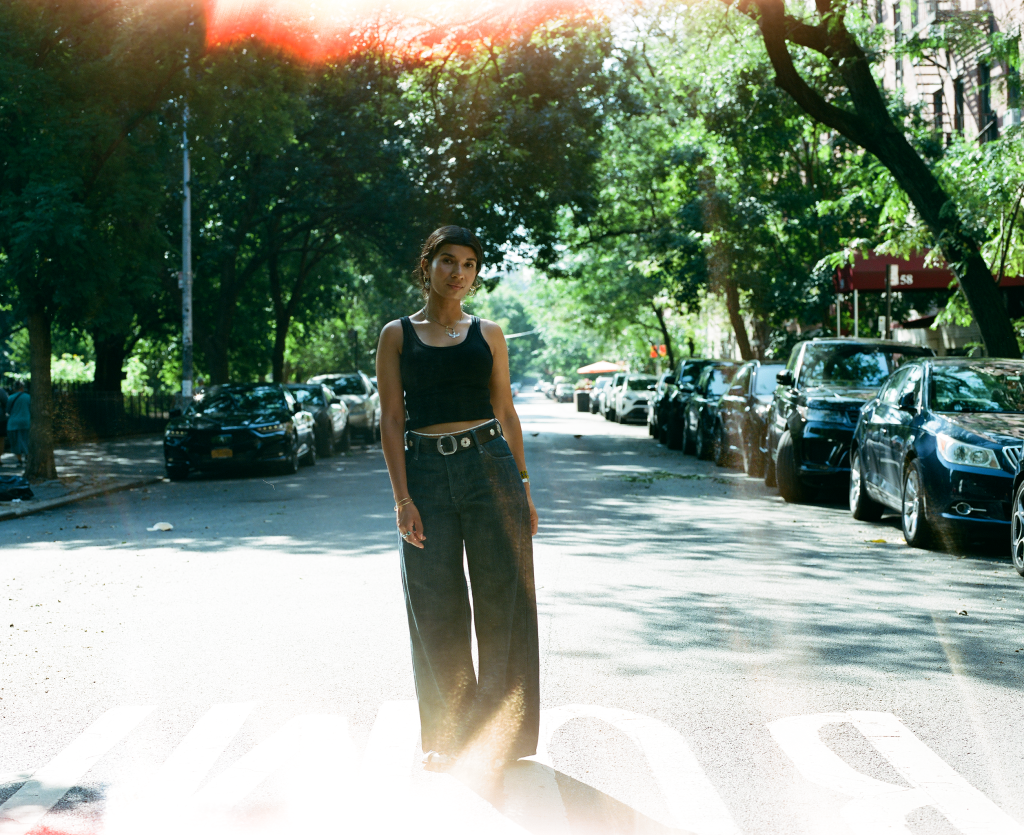
Yes, indeed, it bears witness. And what I found, across that screen, across that ocean, was not the DJ. Not the artist, the thousands of followers, the sold out tours and the album campaigns. I found a woman. As human as anyone. As mortal as you or I. As fragile and extraordinary as each and every one of us.
We forget that about the people we follow. We take what they give us — the music, the art, the performance — and we forget they have souls. That they experience events which we will never know about, to arrive at the place where we find them.
Nabihah carries stories which are not mine to tell. But I know a beautifully resilient spirit when I see one. I know it in the depth of her love for Keats, in the quiet ripple that moves through her when she speaks of his tombstone, in the vulnerability she did not hide but simply, finally, shared.
Bravery transforms vulnerability into courage. In Nabihah Iqbal, it finds its fullest expression.

 neunmagazine.com