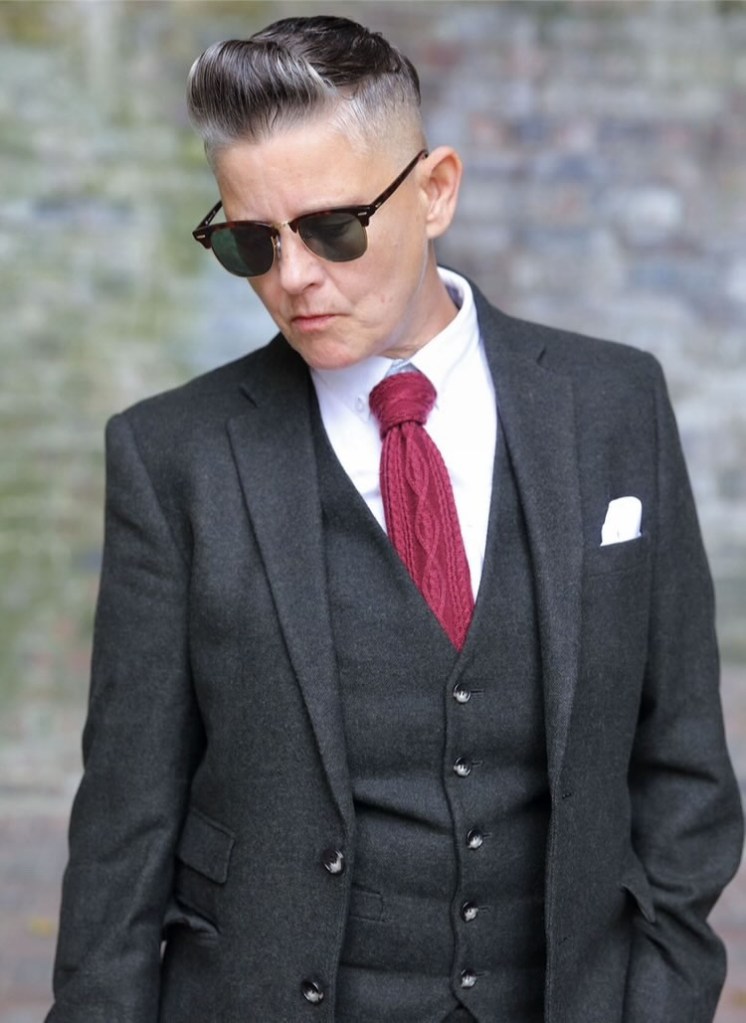
Poet, playwright, resurrector of forgotten worlds. She is not a revolutionary. Not a preacher. She is everything which cannot be ignored — and essential to what must eventually be.
She laughs the way she writes. Without warning, without apology, and straight from the chest.
It is late afternoon at Hay Festival and Joelle Taylor is in the garden of the Green Room, wrestling with her AirPods on a FaceTime call. “Come on, ladies.” A grin. And then, with the particular decisiveness of someone who has never had much patience for anything that gets between her and the real thing — “Fuck it, let’s talk.”
So we do.
I had watched her before I met her. Interviews, readings from C+nto, from Maryville — the voice that moves between the most profound insight and the most disarming levity without pausing to signal the change. What struck me then, and what stayed with me after, was not just the work. It was her — the absolute transparency of her. The sense of a person so entirely at one with herself — mind, body, soul — that there is no gap between what she feels and what she says.
There are infinite articles written about Joelle. Reviews of her collections, profiles pegged to prizes, coverage of SLAMbassadors and Out-Spoken and the T.S.Eliot Prize. They are, in their way, true. But they are not this. This is the heart that beats beneath all of it. The why of Joelle.
She is playful as she is ferocious and she moves between the two with the ease of someone who has never felt the need to choose. In the space of a single answer she will go from the most raucous laugh to a stillness so complete it catches you off guard.
She does not act. She, simply, is.
What does it cost to carry the dead alongside the living? To speak for people who were never allowed to speak for themselves? To have taken on, consciously and without flinching, the responsibility of keeper of the erased — the working-class, the queer, the doubly invisible?
She calls it critical fabulation. Not writing about the silence. Into it.
“I write into the absence. I conjure, try to create worlds from that and their lives, reconstruct what is lost. The story of dykes,” she says, “is one blank page after another.”
She was born in 1967 in Lancashire, growing up in a world entirely isolated from the literary establishment. No writers were sent in to open a world she didn’t even know existed. Access to literature, she tells me, remains a mission in progress.
“Public schools get the laureates. They get the biggest writers in the country because they’ve got the most money. But we don’t get that.”
So how did she find it?
Music. Punk. She listened. And in the lyrics of working-class men on a stage she found a language which stirred something within her.
“I found feminism through some working class, skinhead men on a stage. The Redskins. Crass. And that was my tutelage.”
And then came the catalyst. Wilfred Owen. A poet who revealed worlds. Ignorance withered and curiosity took shape. After Owen the question that changed everything — “Who is the practising creature now?”
“All writing is a breadcrumb. But I have some amazing teachers. Most of whom have never met me. Toni Morrison, setting up that writer’s collective to elevate those black women in America. Adrienne Rich, when she joined up with Alice Walker to reject the National Book Association Prize — she said, it doesn’t matter, I’ll speak for all of us, and I’ll give every single penny to the single black mothers association, which she did. These people — that’s my heritage. These extraordinary people.”
She never belonged. Not from childhood. She tells me this without self-pity, without invitation — as fact, as foundation, as the ground everything else was built upon.
“I never had a space from a child upwards, from sexual abuse, through to very recognisable things we’ll share, like class. And cleverness.”
She says it in one breath and moves on. The dignity of that — the refusal to linger, to wait, to acquiesce — is itself a kind of answer.
And then there is the cleverness. Class and cleverness together — she says it twice, as though the combination still surprises her. No poets sent into your school. No one to show you that language could be yours. It is its own particular wound. Unnoticeable. Chronic.

Gentleman Jack — the BBC drama based on the life of Anne Lister, a nineteenth century landowner — gave queer womanhood its most visible face in popular culture. Anne Lister was a woman of privilege. Her story was acceptable. Class protected her in ways it never protected the women who were reduced to nothingness. A face that looked nothing like Lancashire. Nothing like a coal miner’s daughter.
“I’m not the daughter of Gentleman Jack. I’m the daughter of a coal miner. I’m the daughter of a factory worker.”
The working-class dyke. The one who earned that insult from childhood. Too queer for the working-class narrative; too working-class for the queer one. Falling through every crack in every conversation that should have held her.
She went looking for her story. She found unwritten pages.
So she wrote on them.
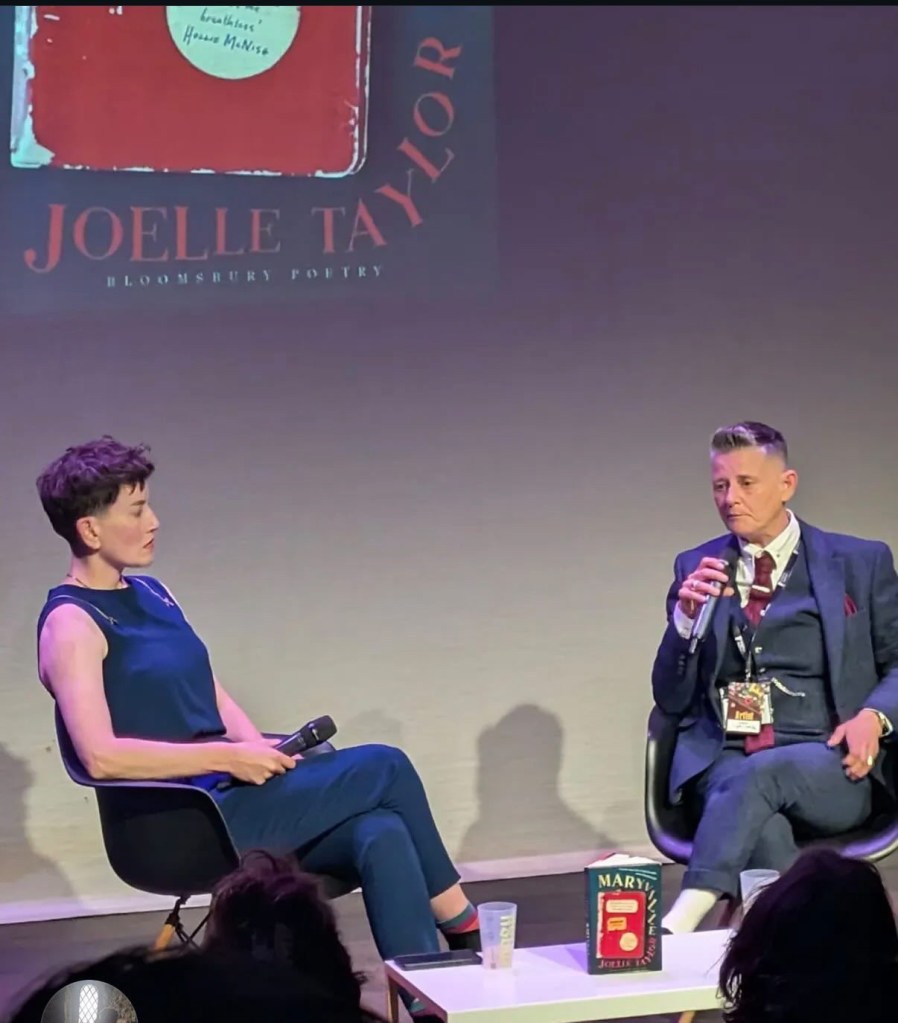
Maryville (Bloomsbury, 2025) is an act of resurrection. Four butch lesbians. Five decades of underground queer history. A bar that held them when nothing else would. The four characters are based on real women — women who lived, who loved, who built community from nothing in the spaces history chose to forget. They are all dead now.
“I wanted to take it outside of the personal memory. Take it all the way back to 1957. Reimagining them as sixteen year olds. It’s kind of a queering of time going backwards.”

She reimagines them into existence. Their confusion. Their alienation. Their utter fury at finding themselves at the intersection of every movement — the women’s liberation movement, the Gay Liberation Front (GLF) — and the belonging, the grounded safety which is theirs together and yet not. Too queer for one. Too working-class for another. Too female for the rest.
“The four butches are just like — what the fuck? What’s going on?”
Her eyes speak of forgotten worlds.
She found them. Saw them. And immersed them in a snow globe. An elegiac analogy of the untold.
“I put it in a snow globe to remind us how fragile it is. How easily, easily it breaks. How snow can rise from the floor upward.”
Nothing is static. What rises must fall. For to create something worth protecting you must first be willing to break alongside it.
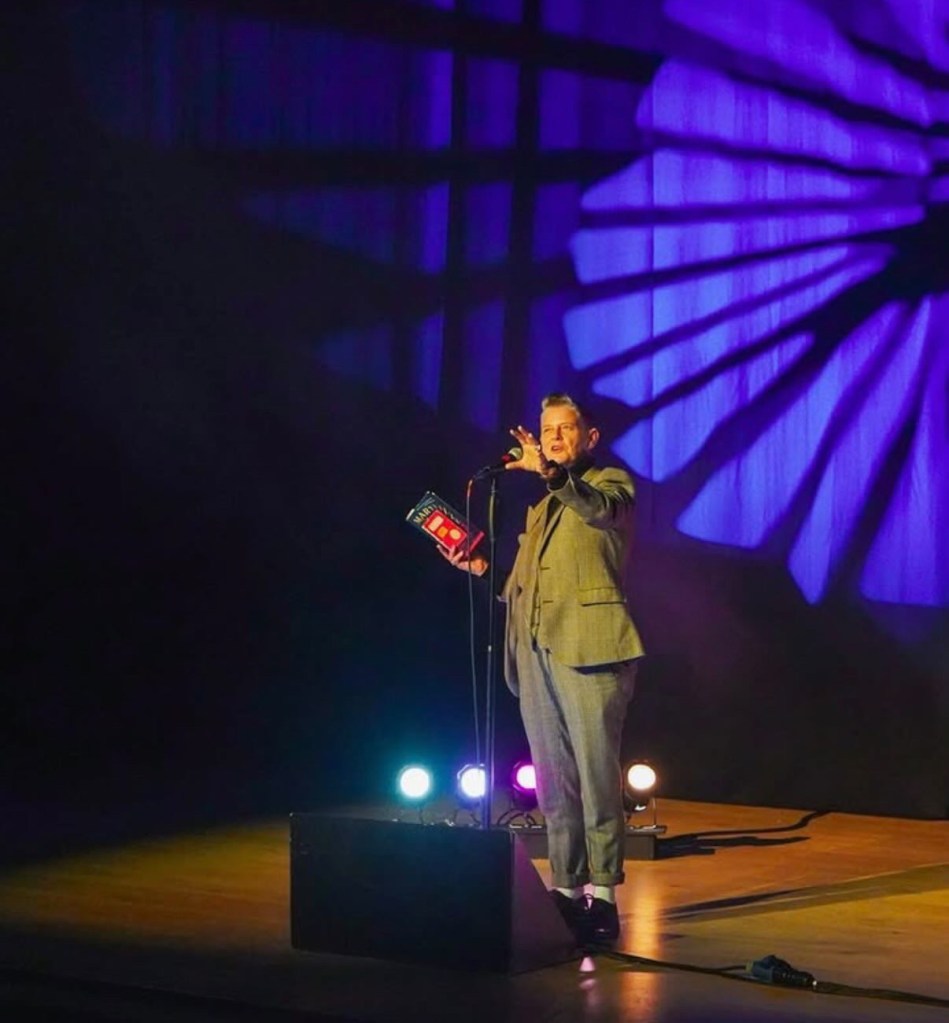
And yet — she almost played it small. Reading the page poems on a stage as vast and historic as the Royal Festival Hall, with the weight of the T.S. Eliot Prize hanging in the air.
Why? Why would a voice like hers feel the need to diminish itself on the very stage it had earned? Not through anarchy. Not through luck. Through the sheer, undeniable talent of her own soul. She was there because the world had listened. Because she was a voice that could not be silenced — not by indifference, not by institution, not by anyone, whatever their distinction.
She had let herself be swayed by the acceptable. To be accepted. To not call attention. Because the fear — that familiar, lifelong sensation of ostracism — had crept in and seized her, her memories pulling her back and temporarily gagging her voice.
Until her audience cut through the black.
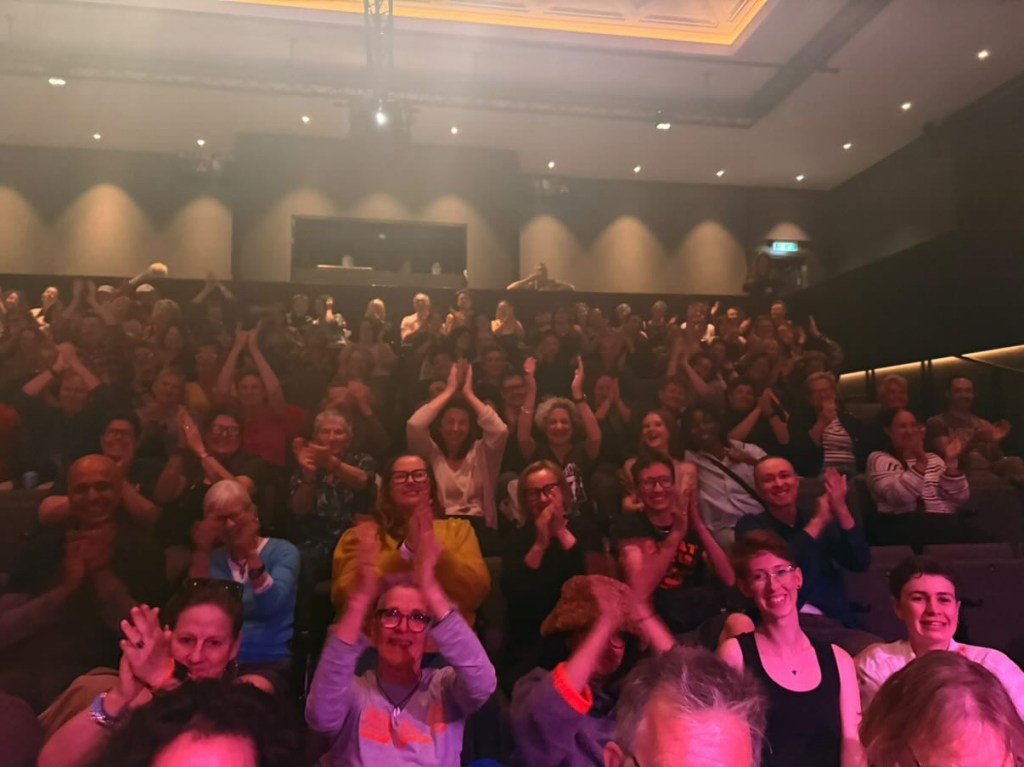
“There was this roar that came from one section of this massive audience. An absolute fucking lion roar. I looked up — there’s a whole bunch of fella faces, bunch of ugly, fucking middle-aged fat dykes. My people.”
Those words — ugly, fat, middle-aged — the very words used against these women their whole lives, returned now as love. As recognition. As unifying gratitude. For them.
“I’m gonna do the big performance. Fuck it.”
She won.
And in doing so, the literary establishment placed themselves in the poorest of lights. The rewriting has played entirely in her favour. It has empowered her to fight harder for the invisible, for the working-class, for the underrepresented. To challenge and reveal the injustices, the unacceptable channels to be seen in the creative world by the supposed elitist few.
“People like us don’t get the opportunities to publish. So our bodies need to be the books.”
Four years ago, accepting this prize, she wept. Today there are no tears. Just complete acknowledgement of what transpired — and who she is because of it.
“Can’t you see how classist, homophobic and misogynist you’re being?”
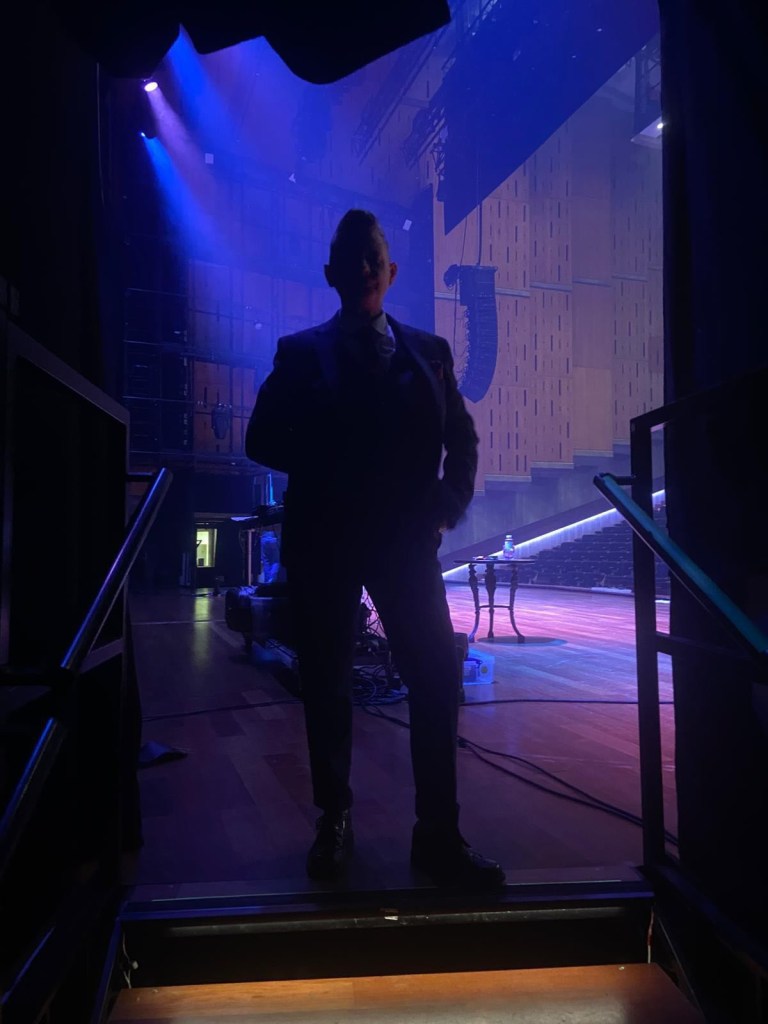
She is a force more powerful than before. Not despite what they did, but because of it. She lives inside the very friction they weaponised against her, and yet she is a T.S. Eliot Prize winner — holder of the most prestigious poetry award in the United Kingdom.
It was not for her. For all of them.
“I don’t care if you’re middle class or working class. I care about what you do with that class. The instinct to create and curate space is about revolutionary heart and spirit. The question isn’t who you allow in the room, but how you manage what happens in the room.”
Battles are considered strategic gains. Yet wars — arduous and relentless — require unity and patience.
“Poetry is like water, it’s got to become the shape of the vessel that holds it. But it’s also like water because it’s very difficult — you can pull it out of the bowl like that, which is what I did. I pulled an opening. But as soon as you’ve done that, it’s rushed back in. And in this metaphor, the water is the literary establishment.”
I ask her what she wants people to feel when they read her.
“I want them to be inspired by these stories. To honour those who came, fictional or real. I want them to feel motivated. To do the small things, to be brave.”
She tells me about the lost clubs. The bars where the LGBT+ community found its commonality not through ideology but through presence. Through the simple fact of being in the same room.
You’d walk in and there was Sharon, her closest friend — “what a twat” — and then someone came for the bar and suddenly you and Sharon were both at the door. Side by side. “Come on, then.”
That room has long been forgotten.
“We are digitally kettled, digitally separated. We don’t speak to one another. We have a pithy sentence and a pithy comment that we don’t even believe in. But we say it because you’ll get 150 likes.”
Conversations on a metre. Ideas monetised. The bigger, bolder, more controversial statement makes you rich. And those most segregated from the world invest most heavily in the division.
“Community is the kryptonite to fascism.”
The antidote is not in the fight of ideologies, not even in protest or policy. It is simply being together.
And yet she is not in any way discouraged. She is thinking about Sharon. About Felicity, her neighbour, down the road. About whoever walks through the door — welcomed, with no boxes to tick. It is a space created from absolutely nothing, born from the selfless way she made it exist.
The small brave things.

She is the lifeline between the past, the present, and the evolving future.
“They celebrate your difference, but Jesus Christ, have you ever sat in a room together? Because that is a revolution. That’s a beautiful thing.”
Joelle Taylor. Earthly. Translucent.